
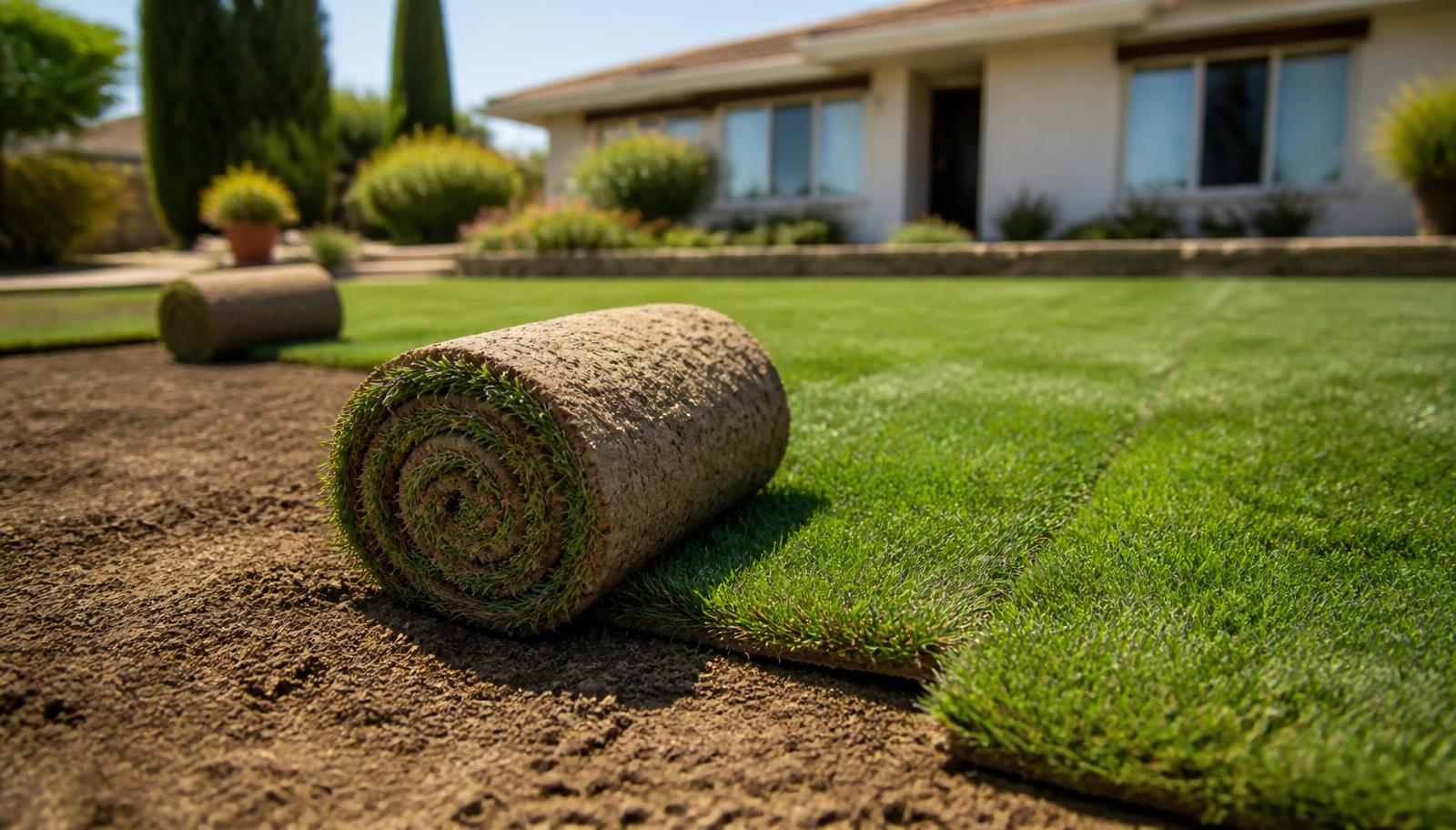
best time to lay sod in Orangevale, CA
Time Your New Lawn Right, and It Roots the First Try
The right planting window matters as much as the sod itself. Time it wrong in Orangevale's clay soil and summer heat, and even good sod can struggle to take hold.
No obligation. Licensed CA landscape contractor.
The best time to lay sod in Orangevale depends on the grass type. Tall fescue, a cool season grass, roots best in early fall from September into October, or in early spring from March into April. Bermuda grass, a warm season variety, does better from mid spring through midsummer once the soil holds steady heat. Both windows give new roots mild weather to grow before Orangevale's peak summer stress arrives. Sod laid outside these windows can still survive, but it needs more water and closer attention while it roots in.
Why Timing Matters in Orangevale's Clay Soil
Many yards in Orangevale sit on heavy clay soil. Clay holds water longer than sandy soil, but it also resists new roots pushing through it. Sod laid during mild weather has time to send roots down before the ground bakes hard in summer heat. Sod laid at the wrong time fights two problems at once, tight clay and stressful weather. That combination is one of the most common reasons a new lawn thins out or dies within the first few weeks.
The Best Window for Tall Fescue
Tall fescue grows fastest when air temperatures sit between 60 and 80 degrees. In Orangevale, that window lines up with early fall and early spring.
- Fall planting, September to October, gives fescue the longest stretch of mild weather before next summer's heat arrives
- Spring planting, March to April, works too, but the grass has less time to build deep roots before hot weather hits
- A summer install can leave fescue stressed and yellow, even with regular watering
- Winter planting is possible but roots grow slowly in cold soil
The Best Window for Bermuda
Bermuda is a warm season grass built for heat. It needs soil temperatures above 65 degrees to root well, which usually falls in mid spring through midsummer in Orangevale.
- Planting too early, while soil is still cool from winter, slows root growth and leaves the lawn thin
- Planting in full summer heat can work, but only with careful watering while roots establish
- The UC Statewide IPM Program notes that choosing a planting time that lets turfgrass establish quickly is one of the most effective ways to keep new lawns ahead of weeds
- Bermuda planted in its ideal window often roots faster than fescue planted in its own
Fescue or Bermuda, Which Fits Your Yard
Both grasses grow well in Orangevale, but they suit different yards. Tall fescue stays green through the cooler months and needs less water overall, which makes it a common pick for front yards that get regular foot traffic year round. Bermuda spreads fast, handles full sun, and holds up under summer heat and heavy play, which makes it a good fit for backyards with kids or dogs. Shade also plays a role. Fescue tolerates some shade from trees or fences. Bermuda needs full sun most of the day to root and spread well. Matching the grass to your yard's sun exposure and use makes the planting window even more effective, since the right grass roots faster in its own ideal season than the wrong grass would in any season.
Why Peak Summer Is the Riskiest Time to Plant
Orangevale regularly sees temperatures past 100 degrees in July and August. New sod planted during that stretch needs frequent watering, sometimes two or three short sessions a day, just to keep the top inch of soil moist while roots take hold. Skip a watering during a heat wave and the sod can brown within a day. Homeowners who plant during a mild window avoid that tight margin for error and spend less time watching a sprinkler schedule.
How Timing Affects Your Watering Budget
New sod needs more water than an established lawn while it roots in. Landscapes in Orangevale fall under MWELO water budget rules, which set limits on how much irrigation water a property can use. Planting during a mild season keeps your new sod's early watering needs lower and easier to fit inside that budget. A summer install pushes water use higher right when demand across the region peaks and evaporation is at its worst.
Signs Your Timing Worked
A few weeks after planting, check for these signs that your sod rooted on schedule:
- A gentle tug test around day 10 to 14 shows resistance instead of the sod lifting free
- The color stays even across the whole yard instead of patchy or yellowing
- Seams stay tight with no curling or gaps at the edges
- New growth shows up at the tips within three to four weeks
If those signs are missing well past the expected window, the planting time or watering schedule may need a second look.
What to Do If You Missed the Ideal Window
Sometimes a summer move in or a delayed project means sod goes down outside the best window. It can still succeed with a few adjustments:
- Water lightly two to three times a day instead of the usual once or twice
- Water during early morning and late evening to cut down on evaporation
- Avoid mowing or walking on the lawn until roots are firmly set, which takes longer outside the ideal season
- Watch the forecast and plan installation around any heat wave, not in the middle of one
For the full picture on soil prep, grass variety, and how install day works, see our guide to sod installation in Orangevale. The UC Statewide IPM Program's guide to lawn weed management also explains why an early, well timed planting gives new turf the best chance to establish before weeds move in.
All Sod Installation Services in Orangevale
Back to Sod Installation in Orangevale, CAPlant Your New Lawn at the Right Time
McGuire Earth Works Inc. tracks the calendar so your sod goes down when it has the best shot at rooting fast. Call (916) 404-0944 for a free estimate, and ask about scheduling ahead of Orangevale's best planting windows before they fill up.
Mon–Fri, 7am–5pm. Licensed CA landscape contractor.