
Drip Irrigation Conversion in Folsom, CA
Not Every Zone Needs a Spray HeadPlanting beds, slopes, and foundation strips are usually the first places worth switching from spray to drip. Here is how to tell which zones in your yard are good candidates.
We convert one valve zone at a time, so your yard is never without water while we work.
Why Convert Sprinklers to Drip in a Folsom Yard?
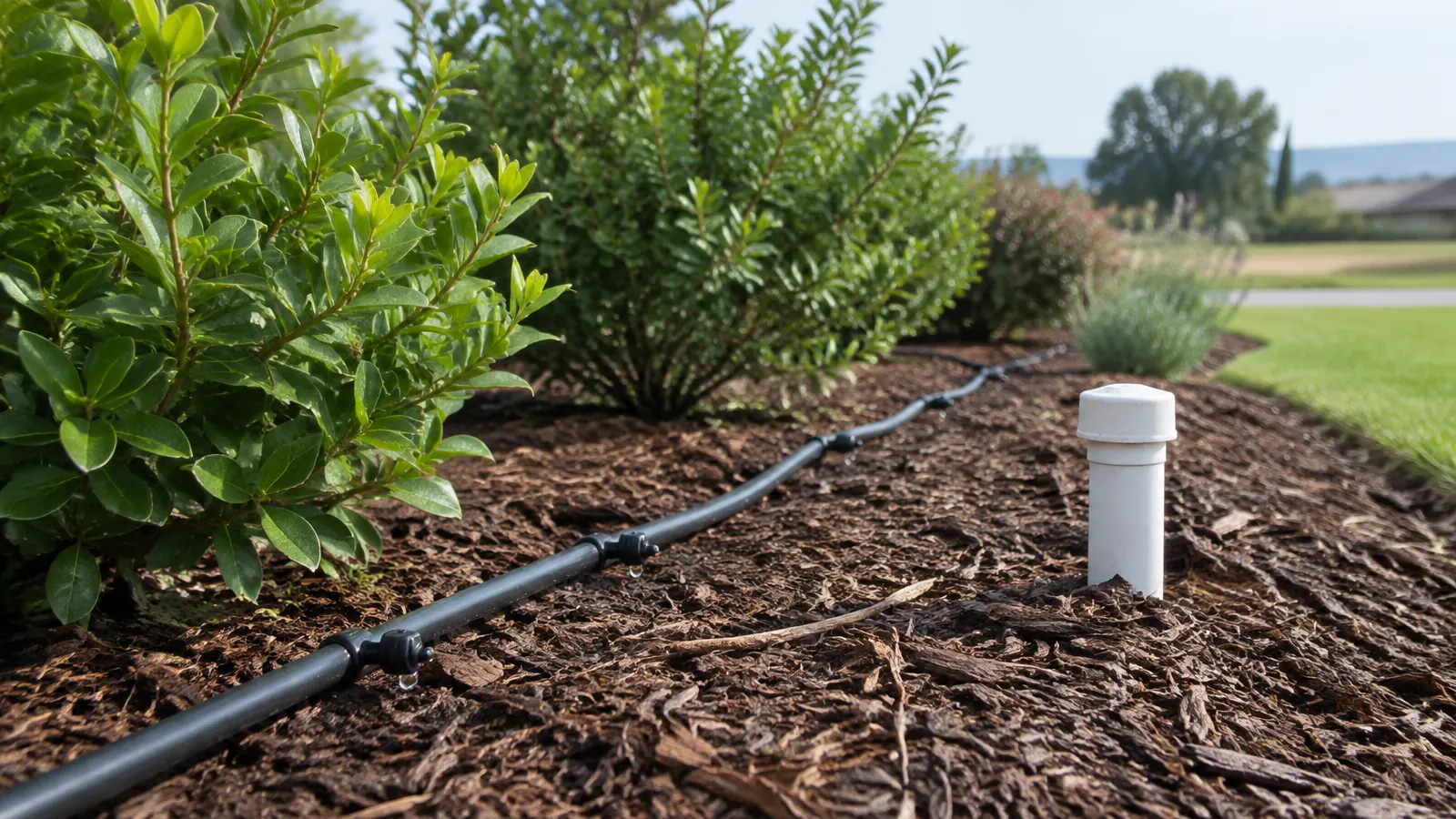
A spray head is built to cover an open area evenly, which works well for lawn but wastes water on a planting bed, where shrubs and mulch block half the spray pattern. Drip tubing instead puts water right at each plant's root zone, with no overspray onto pavement or fences.
We cover the full system, from the backflow device to the valves, on our page about irrigation and sprinkler systems in Folsom. This guide is about converting specific zones from spray to drip.
Spray Heads or Drip: What Fits Each Zone?
| Zone type | Spray heads | Drip irrigation |
|---|---|---|
| Open lawn | Best fit: even overhead coverage | Not practical for turf |
| Planting beds and shrubs | Water lost to overspray and wind | Best fit: water goes right to the root |
| Slopes | Water often runs off before soaking in | Best fit: slow, even soaking |
| Foundation strips | Can spray onto siding or windows | Best fit: keeps water off the house |
How We Convert a Zone From Spray to Drip
- Cap or remove the spray heads on that zone's valve line.
- Run drip tubing to each plant or planting group.
- Set an emitter sized to that plant, so a shrub and a small perennial do not get the same amount of water.
- Add a filter and pressure regulator sized for drip, since drip runs at lower pressure than spray.
- Reset that zone's run time on the controller, since drip zones run longer at a lower flow rate.
- Run the zone and check that every emitter is putting out water evenly.
For homeowners doing a zone themselves, Utah State University Extension's guide to backyard drip irrigation walks through the same basic parts and sizing. We follow the same fundamentals on every zone we convert.
Signs a Zone Is a Good Drip Candidate
- It is a planting bed, not open lawn.
- You see water spraying onto a fence, sidewalk, or the house.
- The zone is on a slope and water runs off instead of soaking in.
- Some plants in the zone look overwatered while others look dry.
- The zone is isolated shrubs or trees rather than a solid planting mass.
Questions to Bring to the Free Visit
- Which zones in my yard are good drip candidates?
- Will my current valves and backflow device work with drip?
- How will the controller's run times need to change?
- Can this be done zone by zone instead of all at once?
- How do I know the new drip zone is watering evenly?
Why Folsom Homeowners Trust McGuire Earth Works
- 4.9 star Google rating
- BBB A+ accredited
- CSLB licensed #412296
- In business since 1980
- One crew, start to finish
- Plan it right. Build it once. Stand behind it.
Questions About Converting Sprinklers to Drip Irrigation in Folsom, CA
Can I convert just part of my sprinkler system to drip?+
Yes. Most yards do this zone by zone rather than all at once. Planting beds, foundation strips, and slopes are usually converted first, while open lawn areas stay on spray heads, since lawn needs even overhead coverage that drip does not give.
Will drip irrigation lower my water use?+
Drip puts water at the root zone instead of spraying it through the air, so less is lost to wind and evaporation. How much you save depends on how many zones you convert and how the system is run afterward. We size and time each zone so it is not over-watering once it is on drip.
What plants do well with drip irrigation?+
Shrubs, perennials, foundation plantings, and anything in a mulched bed usually do very well on drip, since each plant gets its own emitter. Lawn and ground cover that needs even overhead coverage are not good drip candidates and are better left on spray heads.
Does my irrigation timer need to change for drip?+
Usually yes. Drip zones run longer at a lower flow rate than spray zones, so the controller's run times need to be reset for each converted zone. We set this when we do the conversion so the new zone is not under or over watered from day one.
What changes the cost of converting a zone to drip?+
The main factors are how many zones you convert, how many plants or emitters each zone needs, and whether the existing valve and backflow setup can support drip or needs added parts. A small bed costs less to convert than a whole side yard. We measure the zones and price after that.
Which Zones Are Wasting Water on Spray?
Tell us which beds or zones seem thirsty or oddly dry, and we will show you where drip makes the biggest difference first.
McGuire Earth Works Inc.
9314 Greenback Ln, Orangevale, CA 95662
(916) 404-0944