
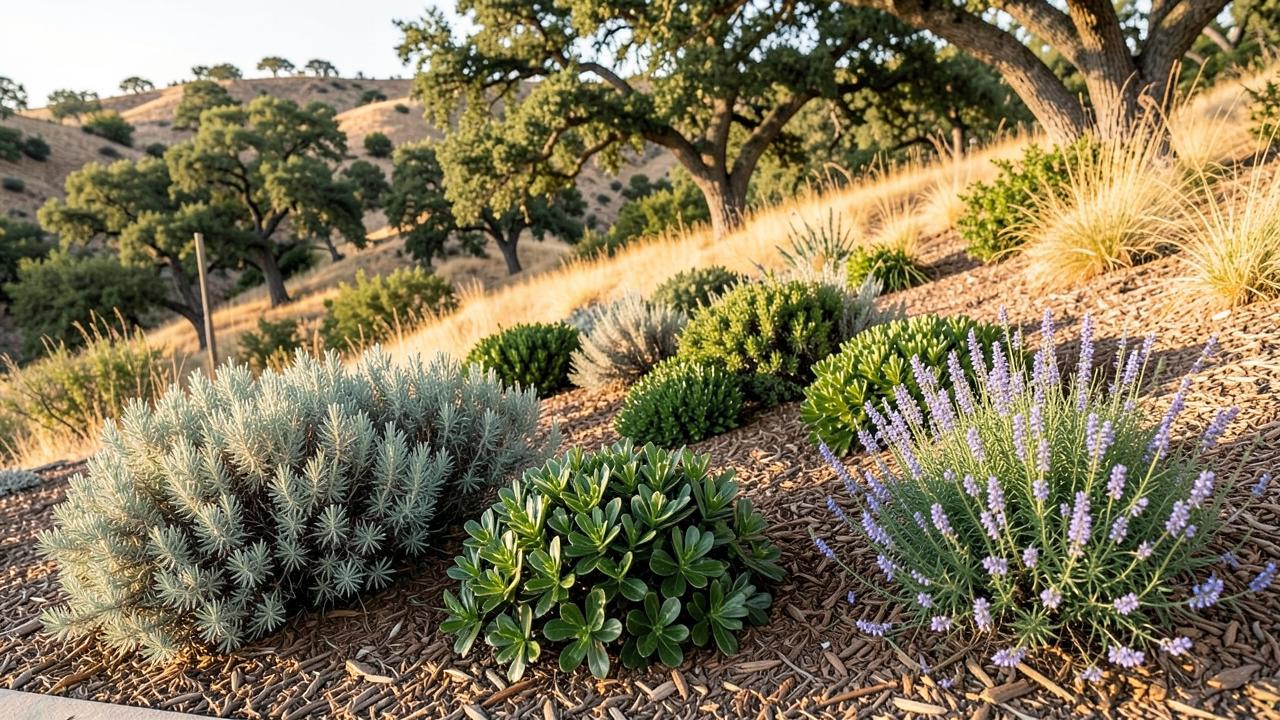
Drought-Tolerant Ground Cover in Orangevale, CA
Ground Cover That Holds the Slope and Skips the Water Bill
The right native plants cover bare soil, stop erosion on Orangevale slopes, and need almost no water once they take root.
No obligation. Licensed CA landscape contractor.
The best drought-tolerant ground cover for an Orangevale slope is a native plant with deep, spreading roots. Dwarf coyote brush, groundcover manzanita, and low California lilac all hold soil in place and need almost no water once they take root. These plants beat turf and shallow-rooted annuals on a slope because their roots reach deeper into Orangevale's clay soil and spread wider across the surface. That root network is what keeps soil from washing down the hill during a heavy winter storm. Once established, these plants also survive Orangevale's 100 degree summer days on very little water.
Why Native Ground Cover Holds a Slope Better Than Turf
Turf grass has shallow roots that barely reach a few inches into the soil. On flat ground that is fine, but on a slope, shallow roots cannot hold soil through a hard rain. Water runs downhill fast during an Orangevale winter storm, and thin turf roots let soil wash away with it.
Native ground cover plants send roots much deeper and wider. Dwarf coyote brush and groundcover manzanita both spread thick root systems that grip clay soil and stay in place through winter rain. The plant canopy also slows rain before it hits the ground, which cuts down on erosion even more.
Switching from turf to native ground cover on a slope also helps meet Sacramento County's MWELO water budget rules, since these plants use a small fraction of the water a lawn does once they are established.
The Best Drought-Tolerant Ground Cover Plants for Orangevale
Not every drought-tolerant plant works well as ground cover on a slope. These four hold up best in Orangevale yards:
- Dwarf coyote brush ('Pigeon Point' or 'Twin Peaks'). Spreads two feet tall and eight to ten feet wide. Evergreen, deer resistant, and needs almost no water once established.
- Groundcover manzanita ('Emerald Carpet' or 'Point Reyes'). Stays ten to sixteen inches tall with small, glossy leaves. 'Point Reyes' is the most drought tolerant of the two.
- California lilac ('Point Reyes' or 'Yankee Point'). Grows under a foot tall and spreads wide, with blue flowers in spring that draw bees. Handles full sun once roots are established.
- Poverty weed. A low, spreading native built for slopes. Handles both wet winters and dry summers and keeps its green color year round.
Where These Plants Work Best in an Orangevale Yard
Full sun slopes facing south or west get the hottest, driest exposure in Orangevale, and that is where dwarf coyote brush and California lilac perform best. Groundcover manzanita and poverty weed handle a wider range of light, including slopes that get afternoon shade from a fence line or a neighboring roof.
Spacing depends on how fast each plant spreads. Dwarf coyote brush and California lilac need more room between plants since they spread eight feet or wider at maturity. Groundcover manzanita and poverty weed can go in tighter and still fill in within a couple of seasons.
A slope steeper than a two to one grade often needs erosion fabric or straw wattles laid down before planting, so new roots have something to hold onto while they establish. Gentler slopes usually just need mulch.
Getting Ground Cover Through Its First Year in Orangevale Clay
Even the most drought tolerant plant needs regular water for its first year. Roots have to grow out into the clay before a plant can survive on rain alone. We water new ground cover through the first summer, then cut back once roots are established.
Orangevale clay compacts hard in summer heat and holds too much water in winter if it is not amended. Working compost into the top layer of soil before planting gives new roots a much easier path to spread. This step matters even more on a slope, where compacted clay sheds water instead of soaking it in.
For a deeper list of native groundcover options and how each one performs in different soil and light conditions, the UC Master Gardener guide to native groundcovers is a solid resource to check against your own yard.
Ground Cover Installation Handles the Heavy Lifting
Picking the right plant is half the job. Getting it into Orangevale clay correctly, at the right spacing, with drip irrigation set up to match its water needs, is the other half. Our ground cover installation in Orangevale service covers both, from soil prep through the first watering.
Back to Ground cover installation.
Get Your Fall Planting on the Calendar
Fall is the best time to plant ground cover in Orangevale, since cooler weather and winter rain help new roots settle in before next summer's heat. Call (916) 404-0944 for a free estimate on ground cover for your slope or bare yard, and get your fall planting scheduled before the season books up.
Mon–Fri, 7am–5pm. Licensed CA landscape contractor.