Commercial Landscape Renovation in Orangevale, CA
Make Your Property Look Worth Visiting Again
Our crews renovate tired commercial landscapes into clean, professional spaces customers notice.
No obligation. Licensed CA landscape contractor.
Your Property Shows Clear Signs It Needs Renovation
Patchy brown turf near the entrance. Shrubs blocking your business sign. A mulch bed that washed out in the last storm. These are signals that your landscape has aged past what regular mowing and trimming can fix.
- Dead or patchy turf points to irrigation failure or compacted soil that blocks water and air from roots
- Overgrown shrubs and trees create safety hazards, hide your signage, and reduce visibility for drivers
- Cracked hardscape edges, broken borders, and eroded mulch beds show the property has moved past routine upkeep
- High water bills on older irrigation systems usually mean hidden leaks, broken heads, or wasteful zones
- A dated plant palette makes the building look neglected and pushes customers toward your competitors
Orangevale soil is mostly heavy clay. Clay holds water at the surface, drains poorly, and suffocates roots. Turf installed without proper grading and soil amendment will fail within a few seasons.
Choosing the Right Contractor Matters More Than Price
The lowest bid often costs you more in the long run. A cheap contractor can skip steps, use poor materials, or leave the job unfinished.
- Verify the contractor holds a valid California C-27 Landscaping Contractor license
- Ask for a portfolio of completed commercial projects similar in size and scope
- Confirm the crew carries general liability and workers compensation insurance
- Request a written scope of work that lists every task, material, and timeline milestone
- Check online reviews and ask for local references from commercial clients
Local knowledge makes a real difference. For broader contractor guidance, see this CSLB contractor disaster help reference.
Getting to Permit-Ready
If the renovation changes impervious surfaces or drainage, we check with Sacramento County Planning first, and confirm with Sacramento Suburban Water District that new irrigation meets current rules. Underground utilities get marked through California 811 at least two business days before digging, and we notify tenants and neighboring businesses about work hours and staging. Every permit gets pulled in our name, not yours, so liability stays where it belongs. Properties near the American River Parkway corridor sometimes face extra environmental review for runoff or tree protection.
How the Renovation Actually Runs
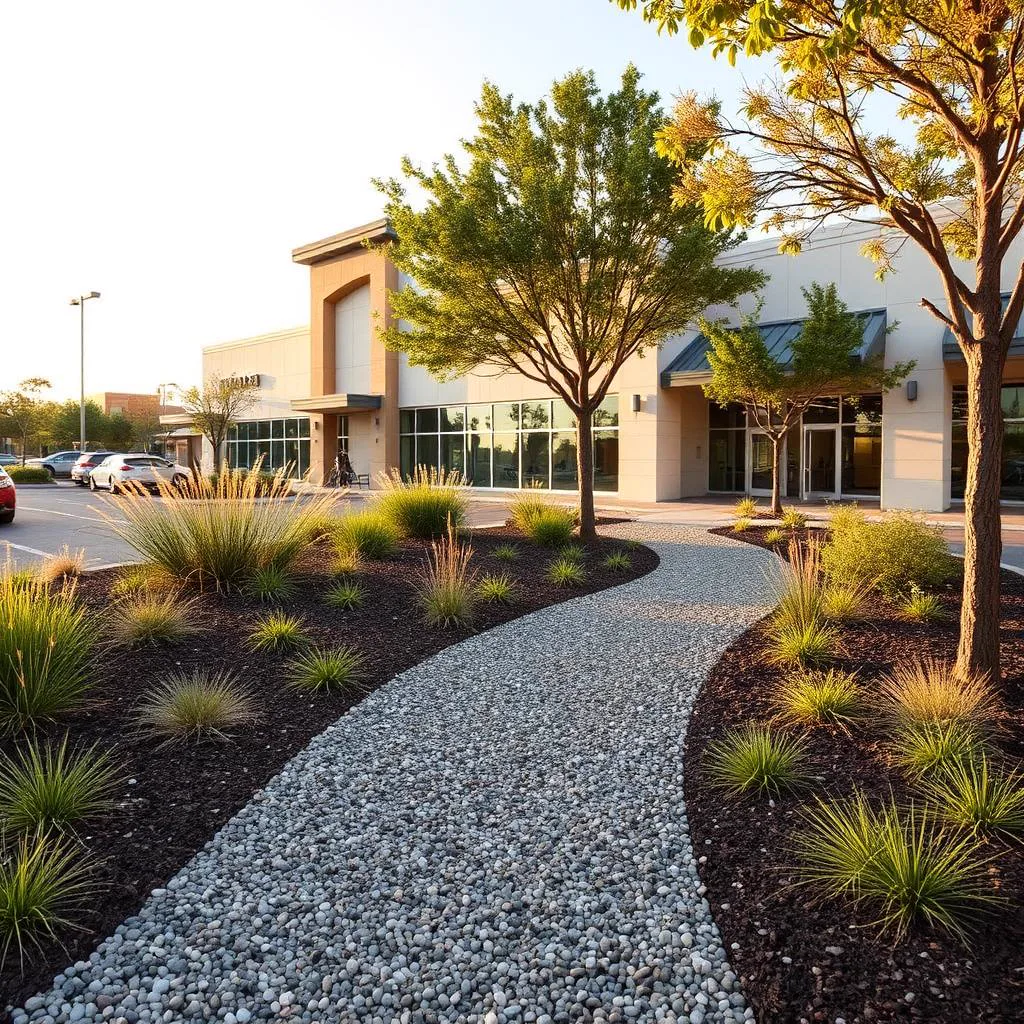
We clear dead plants, broken hardscape, and failed irrigation first, then regrade and amend the soil to fix drainage and break through hardpan clay. New irrigation goes in and gets pressure-tested zone by zone before any planting starts. Hardscape, borders, pathways, parking lot islands, seat walls, gets built or rebuilt next, followed by trees, shrubs, groundcover, and turf. A final walkthrough runs every irrigation zone and checks plant counts against the contract before we call it done.
Confirming the Renovation Meets Your Scope
- Run each irrigation zone manually and watch for full coverage, steady pressure, and no broken heads
- Verify plant species, sizes, and counts against the approved plant list
- Inspect every hardscape edge for level surfaces, clean cuts, and tight joints
- Measure mulch depth in several spots across each bed to confirm it matches the spec
- Test the irrigation controller and confirm run times, start times, and zone labels are correct
Orangevale summers push new plants hard. July and August temperatures often climb past 100 degrees. Confirm your contractor includes a plant establishment warranty that covers the full first summer season.
What's Covered After the Renovation
Plant material, irrigation parts, and hardscape workmanship are covered for periods spelled out in your contract, with plant establishment coverage running through the first full summer season. July and August routinely climb past 100 degrees here, so that first-summer coverage is what actually protects your investment.
Frequently Asked Questions
All Commercial Landscaping Services in Orangevale
Give Your Property the Curb Appeal It Deserves
We handle design, permits, and installation so your landscape works year-round.
Mon–Fri, 7am–5pm. Licensed CA landscape contractor.