
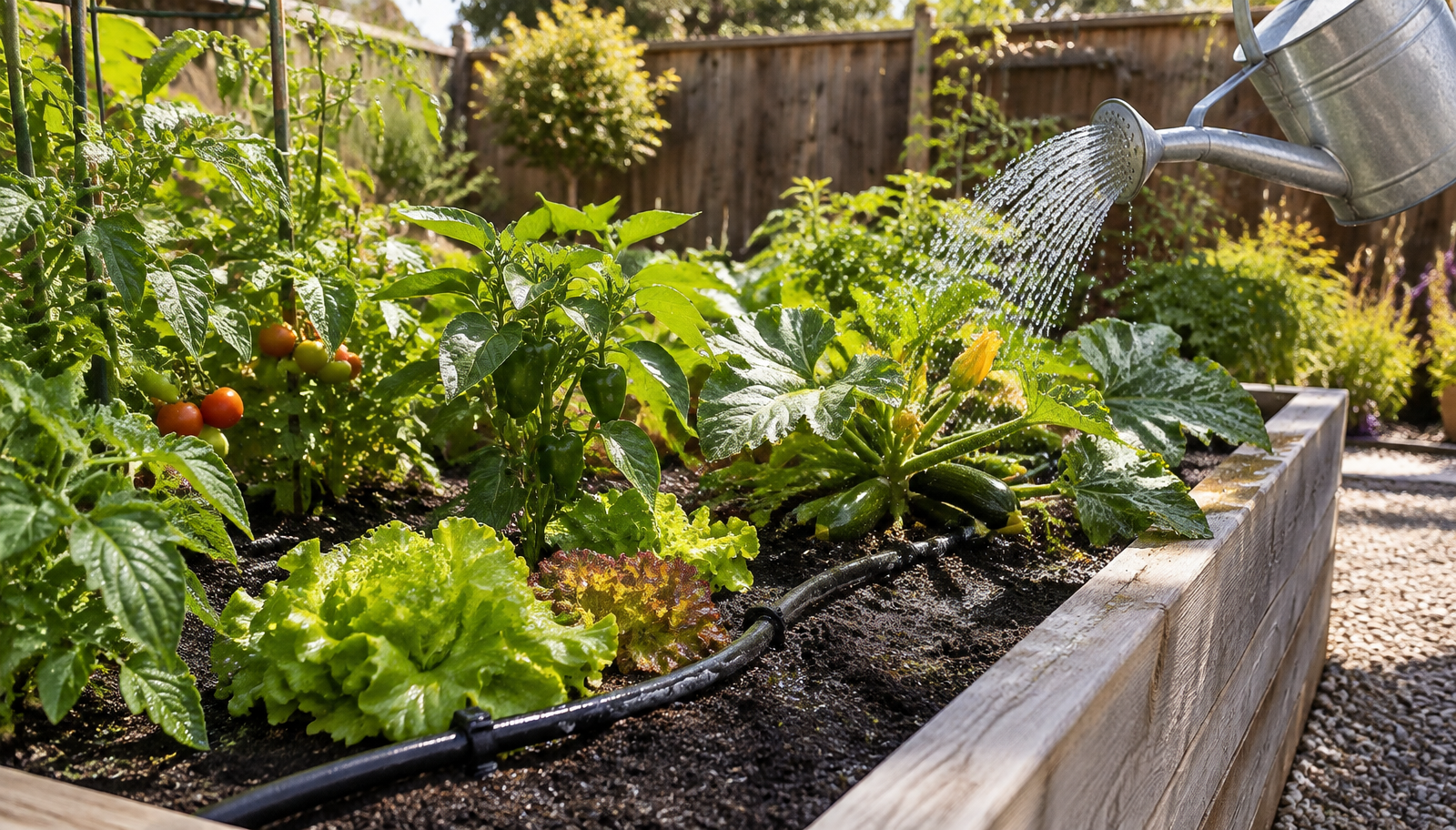
garden bed watering schedule in Orangevale, CA
Keep New Garden Beds From Drying Out
A raised bed dries out faster than ground soil. Use this guide to water yours through an Orangevale summer.
No obligation. Licensed CA landscape contractor.
How Often Should You Water a Raised Garden Bed?
Most raised beds need moist soil 6 to 8 inches deep. In mild weather, this often means one or two deep waterings each week. Hot, sunny, or windy days change that. Beds in full sun dry out faster. So do beds in open, windy spots. Check the soil instead of giving every bed the same schedule.
Why a Raised Bed Dries Out Faster Than the Ground
A raised bed sits above the ground. Its soil is open to sun and wind on the top and sides. An in-ground plot gets less of this exposure. Water leaves raised bed soil faster as a result. This can happen even when both gardens get the same sun.
A Kansas State University Research and Extension watering guide gives a clear target. Keep the soil moist 6 to 8 inches down. Water more often in hot weather. Also water more often when the bed sits in full sun and wind. The right amount changes with the organic matter in the soil mix. It also changes with the depth of the bed.
If you are still choosing a bed depth, read our guide to raised garden bed depth. It explains how depth changes what you can plant. It also shows how depth affects the water a bed can hold.
Check the Soil Before You Water, Not the Calendar
- Push a finger 2 to 3 inches into the soil near the center of the bed
- Dry soil at that depth means it is time to water
- Damp soil means you can usually wait one more day
- Lift a corner of the mulch. Dark soil under it often means moisture is still there
- Drooping leaves in the cool early morning can be an early sign of dry soil
A finger check takes just a few seconds. It tells you more than a fixed schedule can. Two beds in one yard can dry at different rates. Sun, wind, and plant types all change how fast the soil dries.
Watch for Signs of Too Much or Too Little Water
Plants can show you when the water schedule is off. Too much water often turns the lower leaves yellow. Stems may feel soft or mushy near the soil. The bed may stay wet for days. These signs mean you should pause and check below the surface before you water again.
Too little water looks different. Leaf edges may turn brown and crisp. Plants may wilt and stay limp into the evening. Soil can also pull away from the sides of the bed when it gets very dry. Water slowly and deeply if the soil is dry 2 to 3 inches down.
Do not judge a bed by one hot afternoon. Many plants droop for a short time in strong sun, even when the soil has enough water. Check them again in the evening or early morning. Then use the soil check to decide what to do next. This helps you avoid adding water to a bed that is already wet.
Adjusting for Orangevale Heat
Orangevale has 100-degree days from June through September. A bed in full sun can dry much faster on those days than it did in April. Dry wind from the foothills makes this worse. It can pull water from the top inch of soil in just a few hours.
On the hottest days, check beds in the morning and again in the evening. A bed that was fine at 8 a.m. can be bone dry by 4 p.m. This is more likely in full afternoon sun. Beds near a south-facing fence or driveway get even hotter. Those hard surfaces send heat back toward the soil.
A Simple Weekly Starting Point
- Early in the week. Water deeply so the soil is wet 6 to 8 inches down. Use a finger or small trowel to check.
- Midweek. Check the soil before you water again. Do not water just because it is on the schedule.
- On 90-degree-plus days. Add a short extra watering in the early morning or early evening.
- During a cool stretch. Wait longer between waterings. Check the soil before you add more.
- After a rare summer rain. Skip one watering. Check the bed the next day before you start the schedule again.
Use this as a starting point, not a strict rule. Watch the bed for a week or two. Then change the timing based on what you see. Young seedlings need light water more often. Plants with deep roots can go longer between deep waterings.
A well-built bed is easier to water all season. McGuire Earth Works Inc. builds raised beds that fit the sun and wind in your yard. This helps your watering schedule work with the bed. Call (916) 404-0944 for a free estimate.
Frequently Asked Questions
How do I know if my garden bed needs water today?
Should I water in the morning or evening?
Does mulch change how often I need to water?
All Garden Bed Installation Services in Orangevale
Back to Garden Bed Installation in Orangevale, CAGet Your Beds Built and Set Up to Water Right
McGuire Earth Works Inc. builds raised garden beds across Orangevale. Call (916) 404-0944 for a free estimate.
Mon–Fri, 7am–5pm. Licensed CA landscape contractor.