
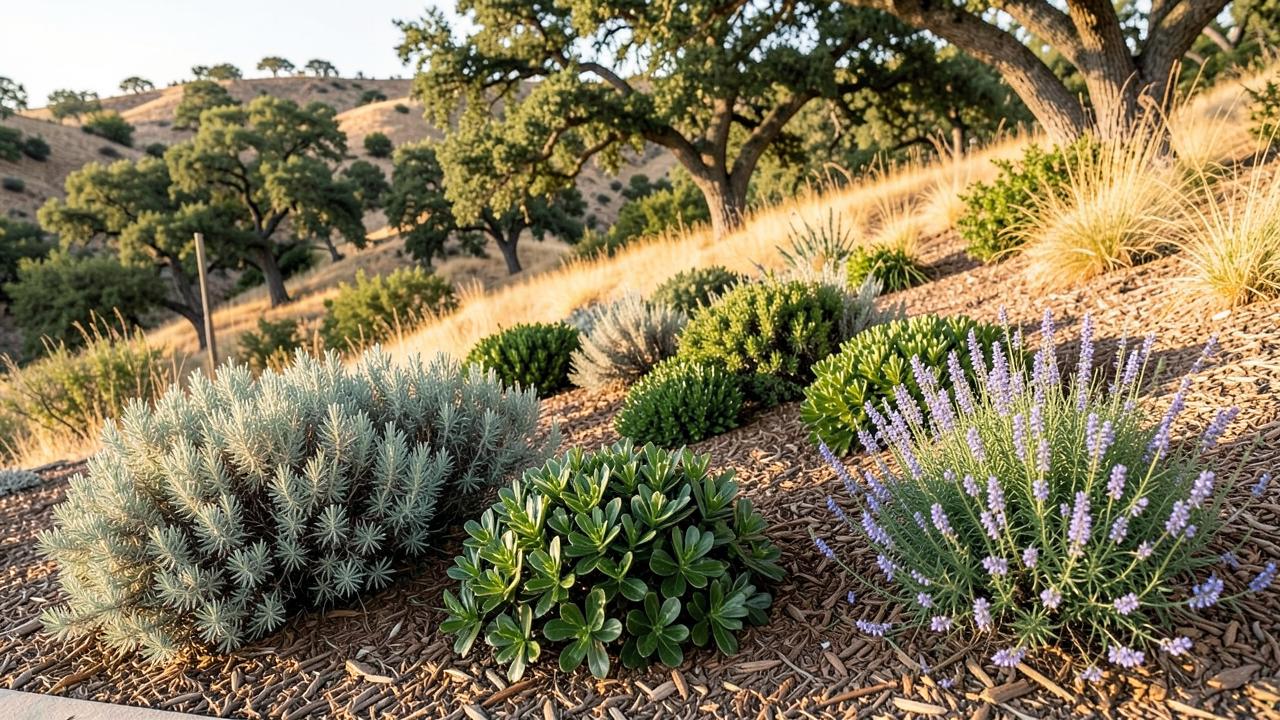
ground cover spacing in Orangevale, CA
Get the Spacing Right and the Bed Fills In on Schedule
Plant ground cover too close and it crowds itself out. Plant it too far apart and weeds move in first. Here is how to get Orangevale spacing right.
No obligation. Licensed CA landscape contractor.
Why Ground Cover Spacing Matters in Orangevale
A new ground cover bed can look sparse the day it goes in, which tempts a lot of homeowners to plant closer together than the tag recommends so the bed looks full right away. That shortcut almost always backfires within a year or two. Plants spaced too close fight each other for water and room to spread, and plants spaced too far apart leave bare clay exposed to Orangevale's summer sun and winter rain for months longer than they should.
Getting the spacing right the first time means fewer plants die, fewer gaps need refilling later, and the bed actually looks full once the plants mature instead of patchy and overgrown at the same time.
Spacing decisions also depend on more than just the plant itself. The same ground cover can fill in at different rates depending on sun exposure, slope, and how much the soil was improved before planting, so a spacing number on a nursery tag is a starting point rather than a rule that fits every yard the same way.
Signs Your Orangevale Ground Cover Was Spaced Wrong
- Plants crowding each other with no visible soil or mulch between them within the first year
- Large bare patches of exposed clay between plants that never seem to close up
- Weeds filling the gaps faster than the ground cover can spread into them
- Plants in the middle of a cluster dying out while the ones on the edge thrive
- A bed that looked full at planting but opened up into gaps within a season
Any one of these is a sign the original spacing plan did not match how that particular plant actually grows in that spot.
Typical Spacing for Common Orangevale Ground Covers
Spacing is usually given as a range because soil, sun, and water all affect how fast a plant fills in. A plant in full sun on amended soil will spread faster than the same plant in part shade on untouched clay, which is why the same species can show up with different spacing numbers from different sources.
A north-facing bed under partial shade often needs tighter spacing than the same plant on a sun-baked slope, since shaded plants spread more slowly and take longer to meet their neighbors. Soil that has been amended with compost also helps roots establish faster, which can let an Orangevale planting use the tighter end of a spacing range with more confidence.
| Plant | Typical Spacing |
|---|---|
| Creeping thyme | 12 to 18 inches |
| Dymondia | 10 to 12 inches |
| Ice plant | 18 to 24 inches |
| Lantana | 3 to 4 feet |
| Creeping rosemary | 3 to 4 feet |
| Deer grass and clumping sedge | 2 to 3 feet |
How to Calculate the Right Number of Plants
- Measure the square footage of the bed by multiplying length by width
- Find the recommended spacing for your chosen plant from a reliable source
- Divide the spacing in inches by twelve to get the spacing in feet
- Square that number to get the coverage area per plant in square feet
- Divide your total bed square footage by the coverage area per plant to get your plant count
- Round up slightly rather than down, since a few extra plants fill in faster than a few too few
For example, a 100-square-foot bed planted with dymondia at a 12-inch spacing works out to one plant per square foot, so that bed needs roughly 100 plants. The same 100-square-foot bed planted with lantana at a 3-foot spacing needs roughly one plant per nine square feet, which comes out to around 11 plants. The spacing choice, not just the bed size, drives how many plants to order.
This math takes a few minutes but prevents the two most common ordering mistakes, which are buying too few plants and leaving gaps, or buying too many and crowding the bed from day one.
What Happens When Ground Cover Is Planted Too Close
Crowded ground cover looks great for one season and then starts to struggle. Plants competing for the same root space pull water and nutrients away from each other, which slows growth across the whole bed rather than helping it fill in faster. Dense, crowded growth also holds moisture against the soil longer after watering, which is exactly the kind of damp, still air that fungal problems need to take hold. Thinning an overcrowded bed later costs far more time and effort than planting it at the right spacing in the first place.
What Happens When Ground Cover Is Planted Too Far Apart in Orangevale
Wide gaps between plants leave Orangevale's clay exposed to direct sun for months at a time. Exposed clay bakes hard in summer heat and then cracks, which makes it harder for roots to spread into that soil later even after the plants eventually reach it. Those same gaps fill with weeds long before the ground cover gets there, and once weeds take hold in a gap they usually outcompete the slower-growing ground cover trying to close that same space.
Checking a Reliable Spacing Guide
A land-grant university spacing guide for landscape plants gives recommended distances by plant type and mature size, which is a more reliable starting point than a spacing number printed on a small nursery tag. Washington State University Extension publishes a detailed guide to spacing of landscape plants that covers how mature size, growth habit, and site conditions should all factor into a spacing decision, not just the plant's name.
Mixing More Than One Ground Cover Species
Some Orangevale beds use more than one ground cover species together, often to add bloom color or texture variation across the seasons. When mixing species, each one still needs its own spacing based on its own mature size, not a single spacing number applied across the whole bed. A faster-spreading species planted too close to a slower one will often crowd it out before the slower plant gets a chance to establish, so the planting plan should account for how fast each species fills in relative to its neighbors.
Pairing Spacing With the Right Plant Choice in Orangevale
Spacing only works as a plan if the plant itself is a good match for the spot. Our guide to drought-tolerant ground cover for Orangevale slopes covers which plants hold soil best on a slope and how slope angle changes spacing decisions, since plants on an incline often need tighter spacing than the same plant on flat ground to keep soil from washing out between them.
Planning Ground Cover Installation in Orangevale
Getting spacing right from the first day is one of the easiest ways to avoid a bed that needs rework within a year or two. Our ground cover installation service in Orangevale plans plant choice, soil prep, and spacing together, so the bed fills in on schedule instead of needing gaps patched or crowded plants thinned later.
All Ground Cover Installation Services in Orangevale
Back to Ground Cover Installation in Orangevale, CAPlan Your Ground Cover Spacing
We pick the right plants and space them correctly the first time. Call McGuire Earth Works Inc. at (916) 404-0944 for a free estimate.
Mon–Fri, 7am–5pm. Licensed CA landscape contractor.