
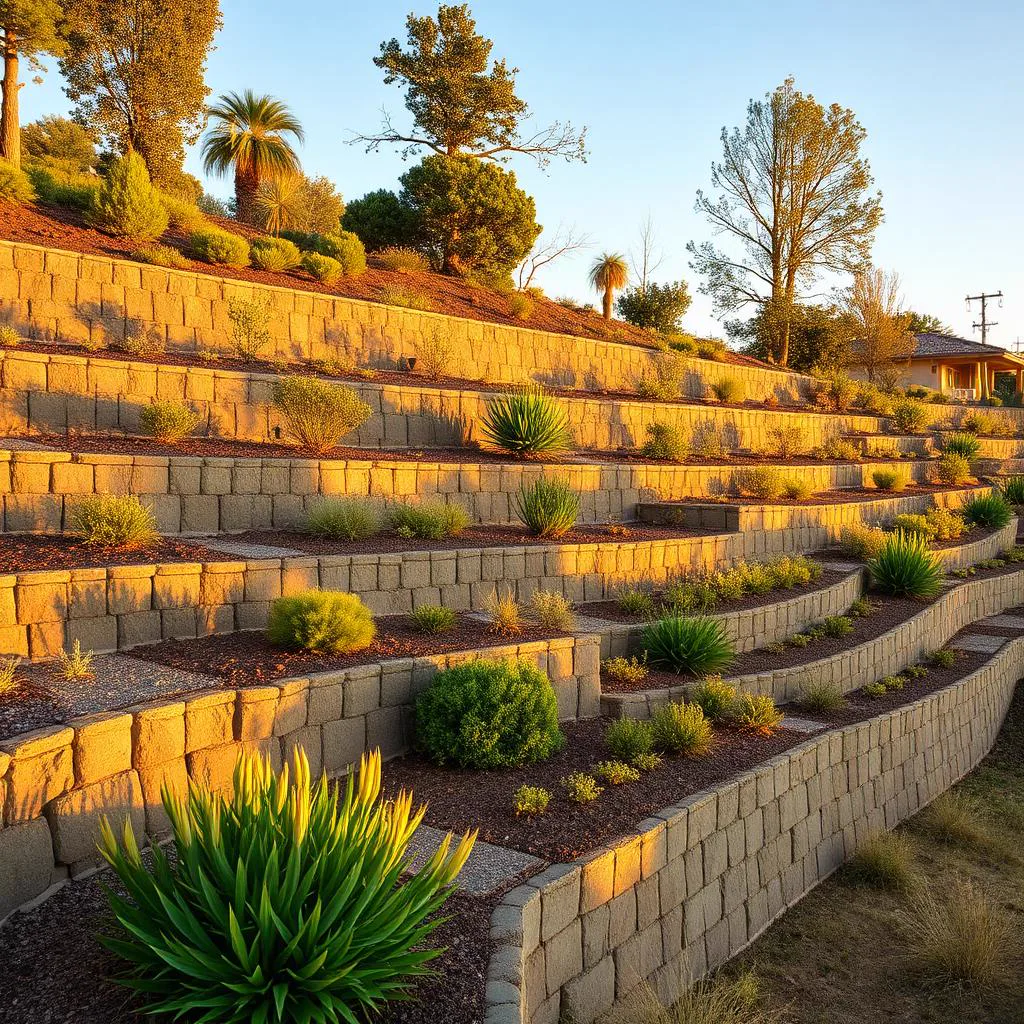
Watering a Sloped Yard in Orangevale, CA
Keep Water at the Roots, Not Down the Hill
Your slope needs water that soaks in before it runs away. Short watering cycles and a layout built for your hillside help make that happen.
No obligation. Licensed CA landscape contractor.
Can You Water an Orangevale Slope Without Runoff?
Yes, a sloped yard can be watered well without runoff. It needs a different approach than flat ground. Use shorter watering cycles that give water time to soak in. Pair those cycles with a layout that fits the slope. Watering a sloped yard in Orangevale means watching where the water goes, not just how long the system runs.
A long cycle can leave the top of a hill dry while water gathers at the bottom. Adding more time may make that problem worse. The goal is to get water into the soil near the roots. That starts with checking the slope, the soil, and the way each watering zone works. A timer change may help, but it cannot fix every layout problem.
Why Water Runs Down Orangevale Hillsides
Gravity pulls water downhill. When water arrives faster than soil can take it in, it moves across the surface instead. A slope gives that water less time to settle into one spot. Orangevale's clay-loam soil can make slow soaking a concern. Water moving past a plant is not the same as water reaching its roots.
Look for small streams, muddy patches, or water leaving the planted area while a zone runs. These are reasons to review the watering plan. Our approach to hillside landscaping in Orangevale brings the slope, plants, and water layout into the same plan. Each part affects the others. A hillside should not have to lose soil each time its plants get watered.
Split Watering into Short Cycles
Rain Bird's guide to irrigating slopes explains how to find the point when runoff begins. Watch how long a zone can run before water starts flowing away. Then divide the total watering time into several shorter cycles with separate start times. This is often called cycle and soak. The breaks give water time to soak into the ground before the next cycle begins.
Do not copy one timer setting onto every part of the hill. One area may start shedding water sooner than another. Review each zone on its own. There is no single runtime that fits every Orangevale slope. Ask McGuire to explain the starting settings and what to watch for. If runoff still starts during a short cycle, the plan needs another look rather than more total running time.
Before changing the timer, note where runoff first appears. Share that spot with the crew and ask them to watch a full cycle. Seeing the water move helps separate a timing issue from a coverage or layout issue.
Run Lines Across an Orangevale Slope
The watering lines that serve the heads are called laterals. Rain Bird recommends running them across a slope rather than straight down it. Think of rows crossing the hill, not a line going from the top to the bottom. That is a layout choice to discuss before new lines go into the ground. It is not just a timer setting.
The guide also calls for tighter spacing toward the bottom of the slope. A flat-yard spacing pattern should not simply be copied onto a hill. Have the crew explain how the spacing fits your ground and how coverage will be checked. You do not need to pick a nozzle brand or a part number to ask whether the plan follows the shape of your yard.
Make Smaller Zones with Similar Conditions
A zone is a group of watering heads that run together. Smaller zones help keep a hillside plan easier to control. Group areas with similar sun or wind exposure rather than making one large zone cover very different conditions. A sunny, exposed patch and a sheltered patch may not suit the same settings. Separate groups let the watering plan account for those differences.
Rain Bird also notes that smaller zones limit damage if something breaks. That matters on a slope where escaping water can move soil downhill. Ask which areas share a zone and why. If the answer is only that they are close together, ask how their sun and wind conditions were considered. A clear zone plan gives you something useful to review at the final walkthrough.
Check What Happens After the Water Shuts Off
Watch the slope after a cycle ends, too. Water left in the lines can drain out through lower sprinkler heads. That flow can erode soil even though the timer has shut the system off. Check valves help keep this water from draining out after each cycle. Rain Bird points to them as a way to reduce that erosion risk.
A wet patch below a head after shutdown is worth showing the crew. Ask whether drainage from the line is part of the problem. Shorter cycles address runoff while watering is on. Check valves address a different issue after it turns off. A useful hillside plan checks both instead of assuming the timer controls every drop that reaches the ground.
Match Orangevale Plants and Slope Steepness
Plants chosen to hold soil still need water to reach their roots. A stream running past them does not do that job. Our guide to erosion control plants for Orangevale hillsides connects plant choice with soil cover. Plan that planting alongside the watering layout, not after the lines are already placed.
The degree of slope also shapes the work. Read our guide to how steep a slope can be landscaped when weighing your options. A watering change is not a fix for unstable ground. With a sound slope plan, short cycles, and a layout that fits the hill, your yard can receive water where plants need it instead of sending it downhill.
All Hillside Landscaping Services in Orangevale
Back to Hillside Landscaping in Orangevale, CAGive Your Hillside a Better Watering Plan
McGuire Earth Works Inc. plans hillside planting and watering together. Call (916) 404-0944 for a free estimate in Orangevale. Let us check your slope before you choose a new watering layout.
Mon–Fri, 7am–5pm. Licensed CA landscape contractor.