
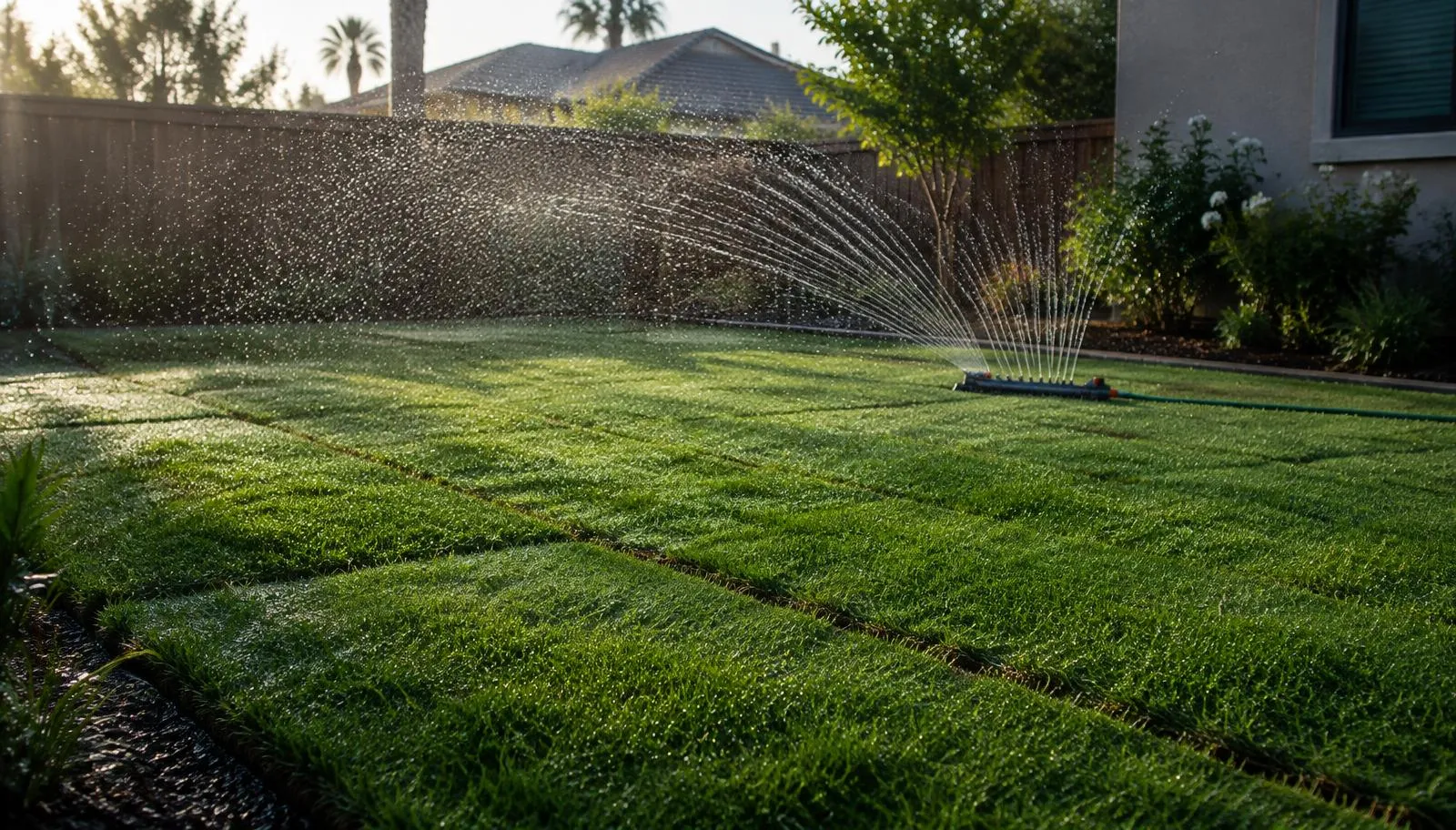
watering new sod in Orangevale, CA
The First Two Weeks Decide If New Sod Takes Root
New sod can die fast if it dries out even once before the roots take hold. Here is the watering schedule that gets it through the first two weeks in Orangevale.
No obligation. Licensed CA landscape contractor.
Why the First Two Weeks Matter Most
New sod looks like a finished lawn the day it goes down. But it is not one yet. When sod is laid, it has no roots gripping the soil. It is a thin living mat sitting on top of the dirt. All the water it gets has to come from above until roots grow down.
That makes the first days risky. If the sod dries out even once, the grass can die before roots ever form. A thin mat has very little water stored in it. On a warm, windy day, it can go from green to crispy in an afternoon.
Timing helps a lot. Sod laid in mild weather has an easier start than sod laid in a heat wave. If you are still planning, read our guide on the best time to lay sod. Picking a milder stretch makes these two weeks much easier to get through.
Day One: Water It In Right Away
The first watering should happen as soon as the sod is down. Do not wait until the whole lawn is finished if it is a big job. Water each section as it is laid.
A water utility's new sod watering guide says to water the sod well right after it is installed. It says the soil under the sod should be moist but not soggy. That is the target for day one.
This first soak does more than wet the grass. It presses the sod down against the soil. It starts to close the tiny gap between the sod's roots and the ground. Roots can only grow into soil they are touching. A good first soak helps every piece settle in.
To check, lift one corner of a piece after watering. The soil under it should be damp. If it is dry, water more. If water pools on top, you went too far.
Week One: Several Light Waterings a Day
The first week is when sod needs the most attention. The same guide says to water 2 to 3 times a day during week one. The goal is to keep the sod moist the whole time while the roots start to grow.
These should be short waterings spread through the day. They should not be one long soak. Think of it this way. You are not trying to flood the yard. You are trying to keep a thin layer of sod from ever drying out. Short waterings do that best.
A common plan is early morning, around midday, and late afternoon. A sprinkler timer makes this easier. Skip watering late at night. Sod that stays wet all night can grow fungus.
Run a test the first morning. Watch where the water lands. Make sure every corner and edge gets wet, since sprinklers often miss the outer strip of a new lawn. Move a hose sprinkler or adjust the heads if any spots stay dry.
Week Two: Cutting Back to Once a Day
In week two, the guide says to cut back to watering once a day. The sod should stay moist but not waterlogged.
By now, roots are starting to reach down into the soil. The sod can pull some water from below. So it does not need babying as often. But it is still young. It is not ready for a normal lawn schedule yet.
Make the change slowly during the week. Drop from three waterings to two, then to one. Watch the lawn as you go. If it starts to look stressed, add a watering back for a day or two.
Orangevale Heat Changes the Schedule
This schedule is built for average weather. Orangevale summers are not average. A 100-degree afternoon dries out new sod much faster than a mild spring day. Dry wind makes it worse.
On the hottest days, watch the edges and corners of each piece. They dry out first because air reaches them from more sides. If the edges start to curl up or turn gray, add a short extra watering. Do this even if it is not a normal watering time.
Spots near driveways, sidewalks, and south-facing walls also dry faster. Those surfaces soak up heat and throw it back onto the grass. Give these areas a little extra water.
Signs You Are Watering Too Much or Too Little
Your lawn will tell you how it is doing. Look for these signs:
- Spongy ground or standing water usually means too much water
- Sod that looks gray, feels crunchy, or has curling edges usually means too little
- A seam you can lift easily after a week or two often means roots have not grabbed yet, so water needs to be more steady, not always more
- Footprints that spring back in a few seconds usually mean the lawn has enough water
- Footprints that stay pressed in usually mean it needs more
Check the lawn once or twice a day during these two weeks. It only takes a minute. Catching a problem early is much easier than fixing a dead patch later.
After the First Two Weeks
After two weeks, the sod can start moving toward a normal lawn schedule. That means watering less often but for longer each time. Longer waterings push water deeper, which helps roots grow deeper too.
Make this switch slowly. Do not jump from daily watering to twice a week overnight. Space the waterings out a little more each week. Keep watching for the signs above.
Sod also skips the fragile early weeks that grass seed needs just to sprout. That is one reason many Orangevale homeowners choose it. Our guide on sod vs. seed compares the two.
To get new sod installed and watered in right, call McGuire Earth Works Inc. at (916) 404-0944 for a free estimate. Getting the watering right in the first two weeks protects your new lawn for years.
Frequently Asked Questions
What happens if new sod dries out even once?
Can I walk on new sod during the first two weeks?
Should I water at a different time if it is extremely hot?
All Sod Installation Services in Orangevale
Back to Sod Installation in Orangevale, CAGet Sod Installed and Watered In Right
McGuire Earth Works Inc. installs sod across Orangevale. Call (916) 404-0944 for a free estimate.
Mon–Fri, 7am–5pm. Licensed CA landscape contractor.