
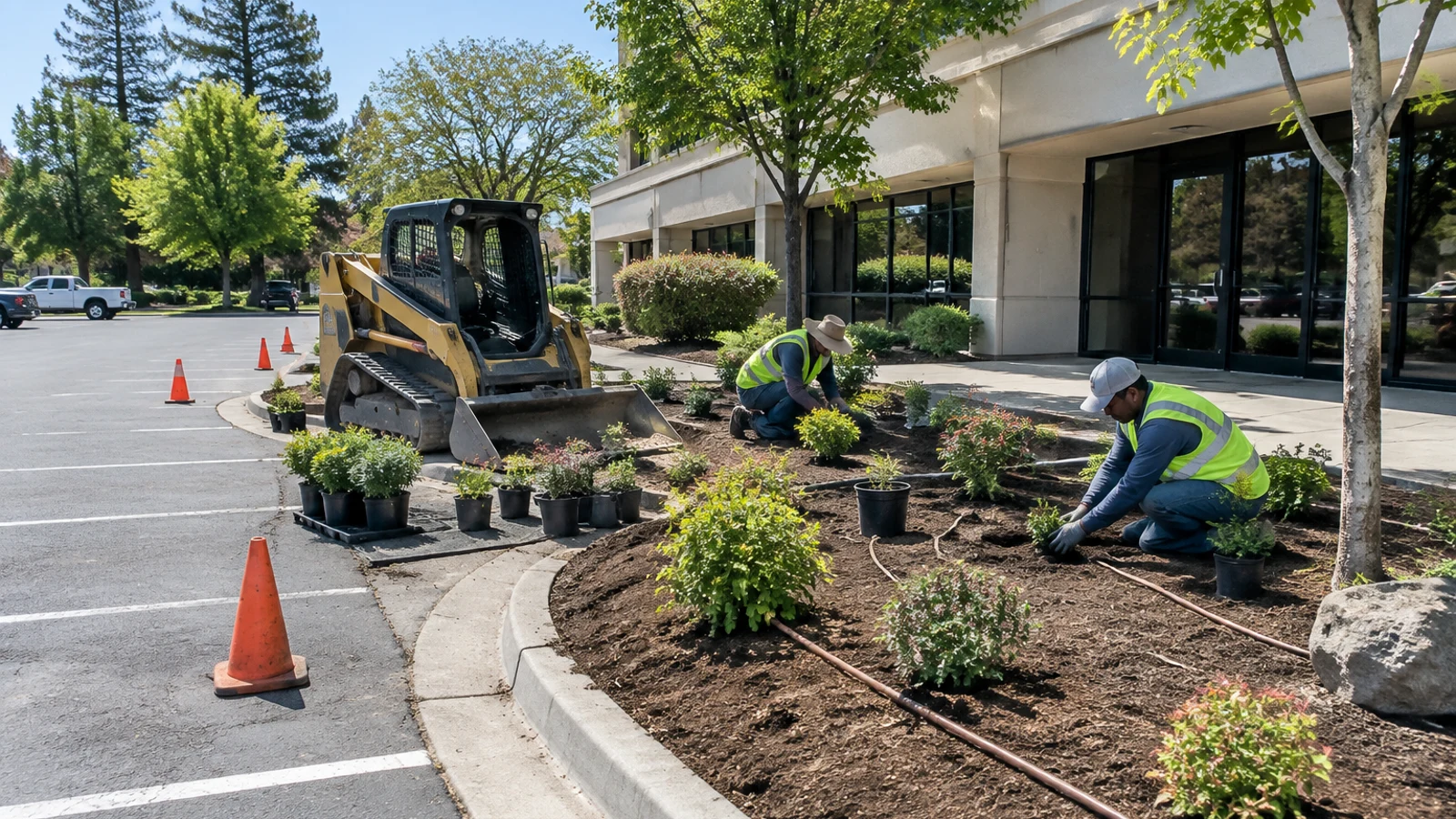
commercial landscape project timelines in Orangevale, CA
Know What to Expect Before Work Starts
A clear written timeline keeps your landscape project on track, from the first phase to the final walkthrough.
No obligation. Licensed CA landscape contractor.
Why Commercial Timelines Slip
A commercial landscape job has more steps than a home yard. A board may need to vote. A property manager must sign off. Parts must arrive, and the weather must allow work. A loose plan can let any one of these push the whole job back. A written schedule makes it clear which step must finish before the next can start.
Orangevale sites have their own timing issues. Winter rain can delay grading and planting for days. Summer heat can cut the hours a crew can safely work outside. A sound plan allows for both. It also sets time for tasks before digging starts. The first day on site is not always the first day of the project.
What a Written Timeline Should Cover
A useful timeline splits the job into clear phases. Site prep and grading come first. Irrigation lines go in before plants. Planting and hardscape work follow the site plan. Some paving may need to be done before nearby beds are planted. A list of small items left to fix, called a punch list, and a final walkthrough close out the job.
CSLB's Construction Project Checklist offers general contract guidance. Its home project tips also help owners plan a commercial job. It says to schedule and record each phase. The payment schedule should match that progress. Payments should not get ahead of the work. It also says contract changes, called change orders, should be written and signed by both sides. Agree on a change before work on it starts.
Each phase should name the work, who handles it, and its planned dates. Note what must be ready first. For example, a crew may need a water shutoff agreed with tenants before tying in new lines. Keep a copy of the schedule with the contract. When a date shifts, record the reason and share the revised plan with both sides.
Questions to Ask Before You Sign
- Ask for dates for each phase, not just one start and end date
- Ask how changes are handled, and confirm they will be in writing
- Ask how long irrigation parts, pavers, or special plants take to arrive
- Ask who your main contact is on the crew's side
- Ask how the schedule changes if weather delays the work
Ask which dates are firm and which are estimates. A planned start may depend on a permit or a shipment. You should know that before you tell tenants when work begins. For an Orangevale office site, also ask which doors and parking spaces will stay open. A schedule should help people use the property, not just list the crew's tasks.
How Approvals Affect HOA and Property Manager Projects
- Board or owner approval. Work on HOA property usually needs sign-off before a contract is signed.
- Design review. A property manager or board checks the plan and plant list before work starts.
- Permit or plan check. Larger jobs may need city or county review before digging begins.
- Work around tenants. Retail and office sites may need work timed around business hours or deliveries.
- Final walkthrough. The property manager or board reviews and signs off on the punch list before the job is done.
Plan around board meeting dates early. If a choice misses this month's meeting, it may wait until the next one. Give the board the plan and plant list in time to read them. Name who can make small choices on site. Bigger changes may still need a vote. A crew should not have to guess which person can approve work.
Realistic Timeframes for Common Project Types
- Entry or parking island refresh: often one to two weeks
- Full site redo with new grading and planting: often four to eight weeks
- An irrigation system retrofit alone: often one to three weeks, based on site size
- New construction landscape build out: tied to the full site's construction schedule
These are general ranges, not a promise for every site. Soil, access, and approval speed can make work take more or less time. A written plan gives everyone dates to work toward. For Orangevale sites with wet clay soil, time to dry out may be part of that plan. The crew should not rush grading just to meet an old date.
Keep order time separate from build time. A two-week phase does not mean special pavers will arrive in two weeks. Ask what is in stock and what must be ordered. If a part is late, discuss which other tasks can still go ahead. Do not swap a plant or paving choice without a written change that both sides agree to.
One Crew, One Schedule
A commercial job runs best when one crew sees it through. There are fewer handoffs than when separate crews each take one part. McGuire Earth Works Inc. has planned and built commercial landscapes across Orangevale for more than 45 years. We give property managers and HOA boards a written schedule for each phase before work starts.
The final walkthrough is part of that schedule, not an afterthought. Walk the site together and note any work still to finish. Set a date for those items and keep the list in the project file. One crew and one main contact help keep the plan clear from the first meeting to that last check. Call (916) 404-0944 for a free estimate.
Frequently Asked Questions
How long does a typical commercial landscape renovation take?
What causes the most delays on commercial landscape jobs?
Who should be the point of contact during the project?
All Commercial Landscaping Services in Orangevale
Get a Written Timeline for Your Property
McGuire Earth Works Inc. plans commercial landscape work across Orangevale with one crew start to finish. Call (916) 404-0944 for a free estimate.
Mon–Fri, 7am–5pm. Licensed CA landscape contractor.