
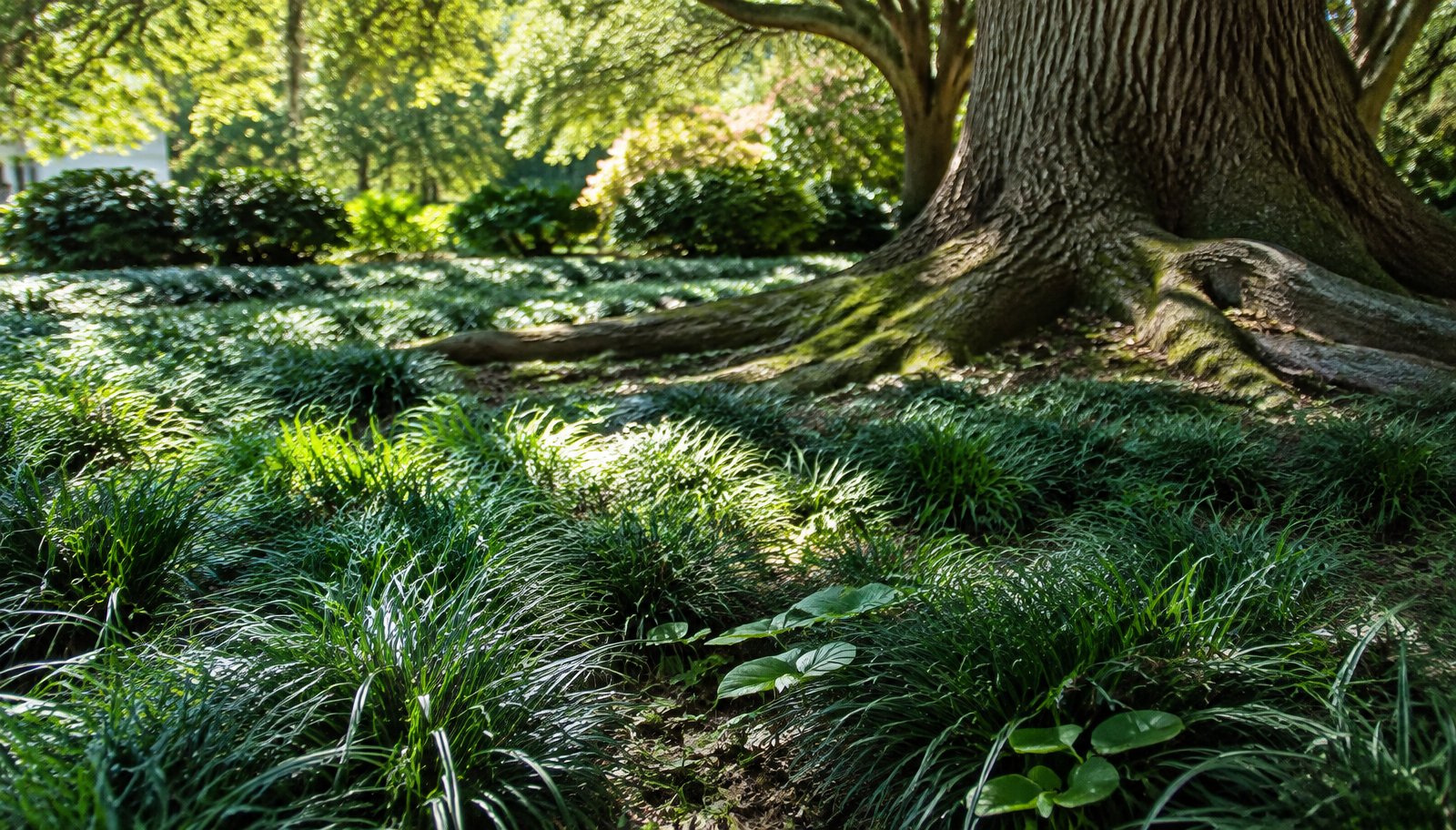
ground cover for shade under trees in Orangevale, CA
Fill in the Bare Dirt Under Your Trees
Grass gives up under a shady tree, but the right ground cover fills in and stays green year after year.
No obligation. Licensed CA landscape contractor.
Why Grass Struggles Under Trees
A tree's roots spread wide and sit close to the top of the soil. Those roots pull out water and nutrients before grass roots can reach them. The tree's canopy also blocks much of the sun grass needs. Grass can handle a little shade or a little root competition. It usually cannot handle both at the same time.
By late summer, the spot under a big tree often turns to bare, dusty dirt. Foot traffic packs the soil down even more. Rain then runs off instead of soaking in, and the bare patch gets worse each year.
Picking Plants That Actually Work in Shade
Shade ground cover is not the same as sun ground cover. A Iowa State University Extension guide to groundcovers for shade notes that shade plantings fill in slower than sunny ones, since there is less light to fuel growth. But once a shade bed is established, it out-competes weeds and holds the soil just as well as a sunny one does.
In Orangevale yards, deer grass and clumping sedge are two picks that handle the dry shade under an oak or other large shade tree. Both stay low, need little water once established, and do not fight the tree for root space the way grass does.
Signs Your Yard Needs Shade Ground Cover
- Bare, dusty dirt under the tree canopy with no grass left
- Exposed roots that make the spot hard to mow or walk on
- Muddy or eroding soil under the tree after winter rain
- Moss patches that show the ground stays damp and shaded
- Kids or pets tracking dirt from that spot into the house
How Much Shade Does Your Spot Really Get
Not all shady spots are the same. Some get a few hours of direct sun. Some never see any. That difference decides what you can plant there.
A dappled spot gets sun that filters through the leaves for part of the day. Many plants do well there and fill in fast. A full shade spot sits under a dense canopy and stays dim from morning to night. Far fewer plants survive in that light.
A simple check tells you which one you have. Look at the spot every few hours on one clear day and write down what you see. A spot that stays dark all day is full shade. A spot with bright patches for two or three hours is workable shade.
This matters because a plant that fills in quickly in dappled shade can stall for years in full shade. It does not die. It just never closes in, and weeds move into the open gaps.
Under a dense oak that sees no direct sun, deer grass and clumping sedge are still good picks. They are built for that light. In a lighter spot with a few hours of sun, you have more choices and faster filling. The deeper the shade, the tighter the spacing we use at planting time.
Planting Carefully Around Tree Roots
Shade ground cover goes in differently than a sunny bed. The goal is to add plants without hurting the tree. We work in small sections instead of digging the whole area at once. Large roots stay in the ground. We plant around them, not through them.
- Clear leaf litter. Old leaves and debris come off the top so soil is visible.
- Loosen only the top layer. Two to three inches is enough. Deeper digging risks tree roots.
- Space plants for shade growth. Shade plants fill in slower, so spacing is tighter than a sunny bed.
- Mulch away from the trunk. A gap around the trunk keeps bark from staying wet.
- Water deeply once. The first watering settles the soil and wakes up the roots.
What to Expect as It Fills In
A shade bed takes patience. Most plantings need one to two growing seasons to close in completely. Growth looks slow at first, then picks up speed once roots take hold.
Care Once the Bed Is Filled In
A shade bed that has filled in asks for very little. The biggest change is water. Shade keeps the soil cooler and slows evaporation, so the bed holds moisture far longer than a sunny one does.
Once the plants are rooted in, most shade beds need a deep soak only once or twice a month through the hottest stretch. Many need none at all from late fall through winter. Check the soil with your hand before you water. If it is still damp two inches down, wait a few days.
The next job is keeping spread in check. A ground cover that behaves well in shade can still creep past the edge you planned. Once or twice a year, trim back the outer runners or lift out the outside clumps. This keeps the bed tidy and stops it from pushing into the lawn or a walkway.
One more check each year is worth the time. Look at the mulch near the trunk. Rain and foot traffic can push it up against the bark. Pull it back so the trunk stays dry. A thick ring of mulch against the bark holds water there and invites rot.
Once filled in, a shade ground cover needs little care. It holds the soil, blocks weeds, and stays green through the parts of your yard where grass never could. McGuire Earth Works Inc. plans the plant mix and spacing for your specific trees and shade pattern. Call (916) 404-0944 for a free estimate.
Frequently Asked Questions
Why will grass not grow under my trees?
Will ground cover hurt my tree's roots?
How long before shade ground cover fills in?
All Ground Cover Installation Services in Orangevale
Back to Ground Cover Installation in Orangevale, CALet Us Pick the Right Plants for Your Shady Spots
McGuire Earth Works Inc. installs shade ground cover across Orangevale. Call (916) 404-0944 for a free estimate.
Mon–Fri, 7am–5pm. Licensed CA landscape contractor.