
Lawn Removal in Orangevale, CA
Remove It Once, Not Twice
Picking the wrong removal method is the number one reason old grass pushes back through new plants a few months later.
No obligation. Licensed CA landscape contractor.
The best way to remove a lawn in Orangevale depends on the grass type. Cool-season lawns like fescue die fastest with solarization or sod cutting. Warm-season grasses like Bermuda need sheet mulching or herbicide instead, since they regrow from roots left behind by a shovel or sod cutter. Getting the method wrong is the most common reason a lawn removal project fails. Surviving roots push right back through new plants and mulch within a season. Here is how to pick the right method for an Orangevale yard and what happens once the grass is gone.
Know Your Grass Before You Pick a Method
Orangevale yards usually have one of three lawn types, and the type decides which removal method actually works:
- Cool-season grass like fescue or bluegrass stays green through Orangevale winters and dies easiest, with solarization or sod cutting both working well
- Warm-season grass like Bermuda or zoysia goes brown in winter and regrows from roots a shovel leaves behind, so it needs sheet mulching or herbicide instead
- Patchy lawns mixed with weeds like crabgrass or bindweed are hardest to kill and usually need sheet mulching or repeat herbicide treatment
Four Ways to Remove a Lawn
- Sheet mulching: layers of compost, cardboard, and mulch smother the grass with no chemicals or equipment. Works on every grass type, but takes one to eight months depending on the grass.
- Solarization: clear plastic traps summer heat to cook the lawn and the top few inches of soil. Needs six to eight hours of direct sun and works best on cool-season grass.
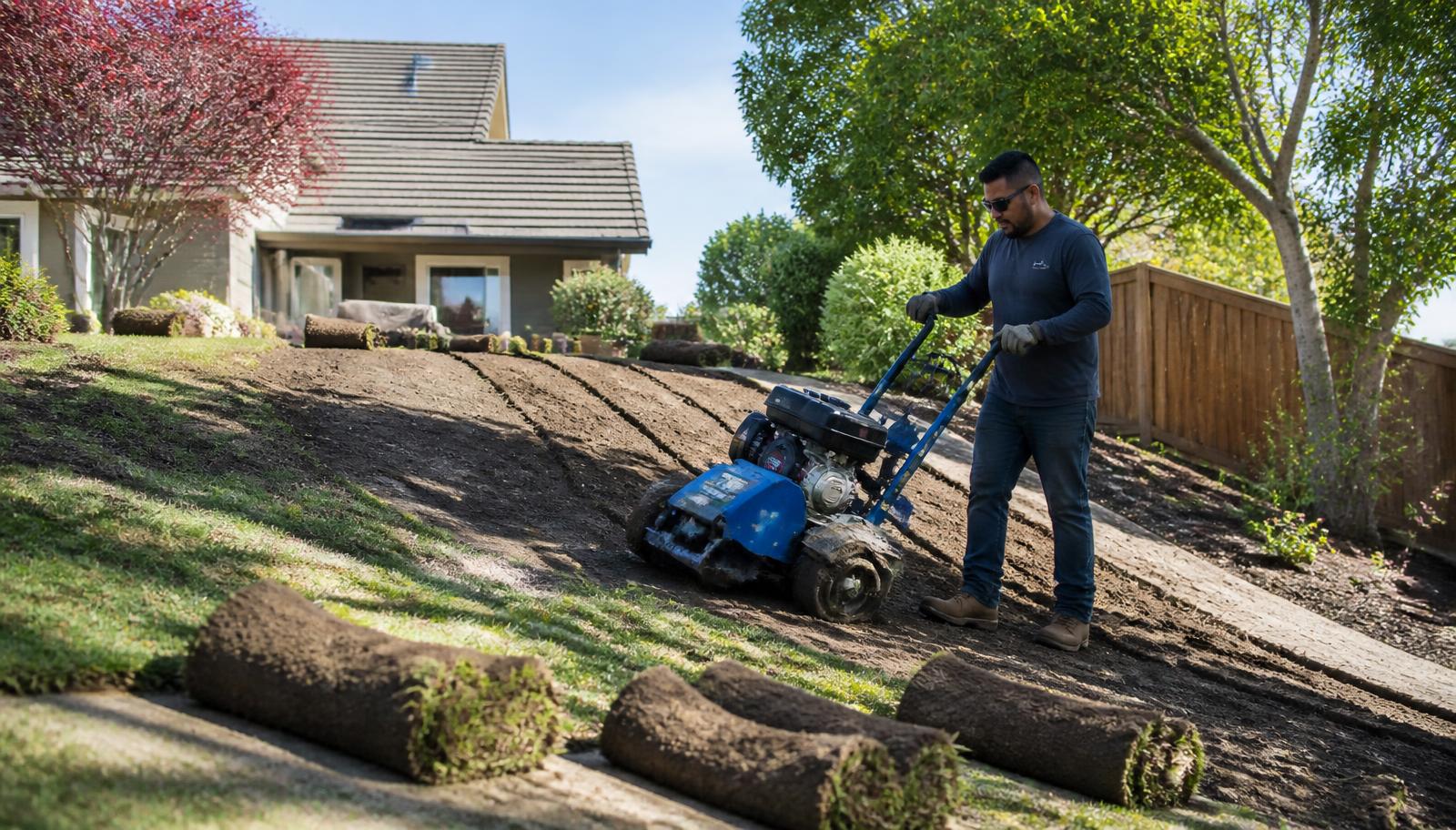
- Sod cutting: a machine or shovel slices out grass, roots, and soil in one pass. Fast, but only reliable on cool-season grass, since warm-season roots below the cut line grow right back.
- Herbicide: a non-selective product kills actively growing grass down to the root. Bermuda and other tough grasses often need more than one application.
For a full breakdown of each method with step-by-step details, the UC Master Gardener guide to lawn removal methods covers the site prep and timing for all four.
Timing Matters in Orangevale's Climate
Orangevale's summer heat is actually an advantage for solarization, since the method needs strong, direct sun to work. Start in June or July and the lawn is usually dead by fall, right when it is time to plant.
Sheet mulching can start any time of year, but a project started in late summer or early fall lines up well with the best planting window here. Whatever method you use, plan to plant in fall. Cooler air and winter rain help new roots settle in without the stress of summer heat.
What Happens After the Grass Is Gone
Once the old lawn is fully dead and cleared, the soil underneath usually needs work. Orangevale clay compacts hard under a lawn that has been mowed and watered for years, so amending with compost before planting gives new roots a real chance to spread.
From there, the process folds into a full drought-tolerant landscaping plan: drip irrigation goes in before plants, then planting happens by hydrozone so thirsty and low-water plants never share a valve. If your total project area is 2,500 square feet or more, it may also need to meet MWELO water budget rules before final sign off.
Back to Drought-tolerant landscaping.
All Drought-Tolerant Landscaping Services in Orangevale
Back to Drought-Tolerant Landscaping in Orangevale, CAGet Your Lawn Removal Estimate
Summer is the right time to start solarization, and fall is the right time to plant what comes after. Call (916) 404-0944 for a free estimate, and we will help you pick the removal method that actually works for your grass.
Mon–Fri, 7am–5pm. Licensed CA landscape contractor.