
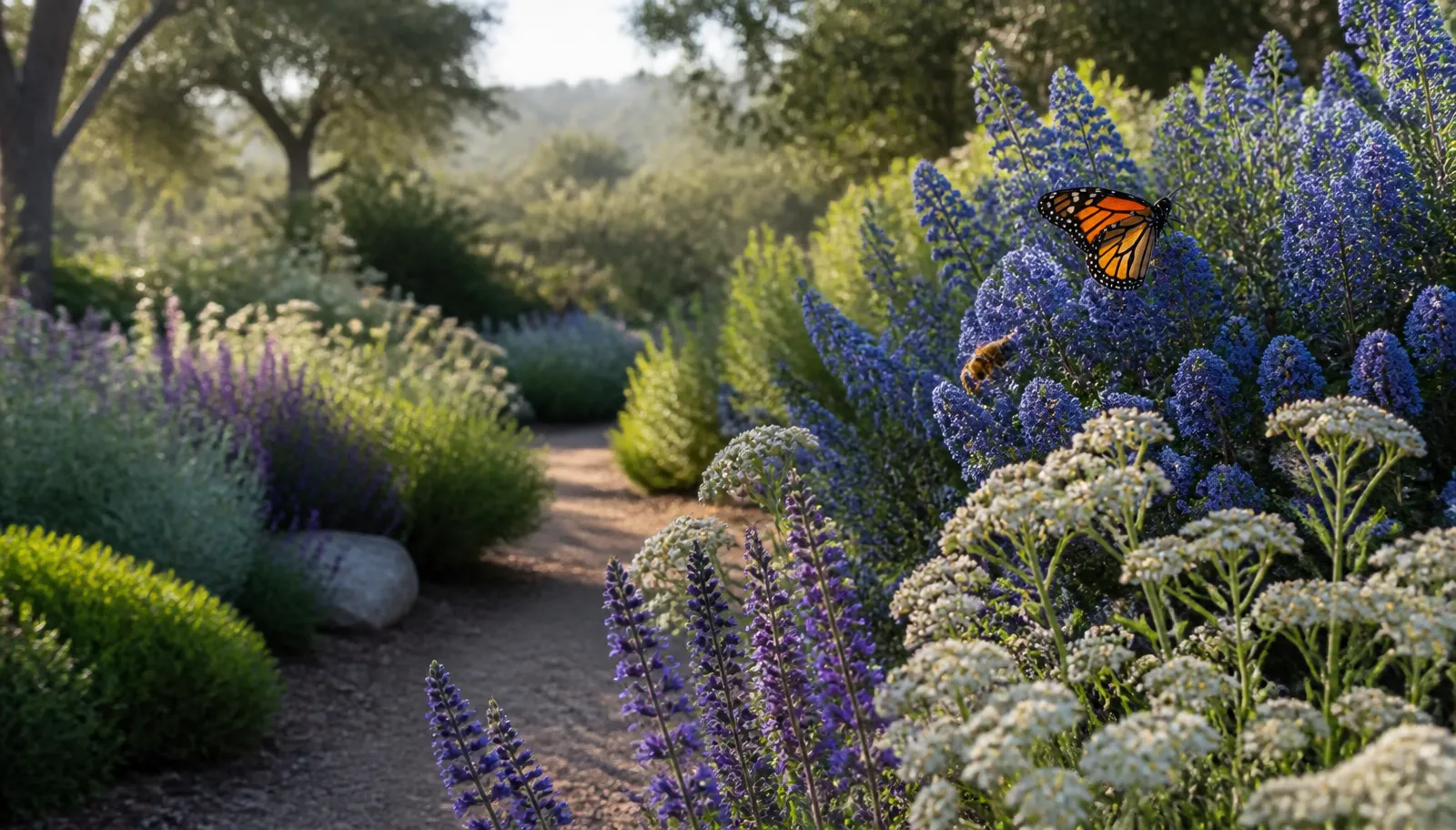
native plants for pollinators in Orangevale, CA
Native Plants That Feed Pollinators and Skip the Water Bill
Native plants that support pollinators do double duty in Orangevale. They use less water than a lawn and bring bees, butterflies, and hummingbirds into your yard.
No obligation. Licensed CA landscape contractor.
California native plants like California buckwheat, ceanothus, and salvia support pollinators while using far less water than turf grass. These species evolved alongside local bees and butterflies, so they offer the right bloom timing and flower shape that native pollinators are already built to use.
Why Pollinator-Friendly Natives Matter for Orangevale Yards
Native bees and butterflies evolved feeding on native plants long before turf lawns and imported ornamentals showed up. A yard built around Orangevale-appropriate native species gives those pollinators food sources they already recognize, instead of ornamental plants that may look similar but offer little real nectar or pollen value.
The payoff extends past the pollinator bed itself. Vegetable gardens, fruit trees, and many flowering ornamentals depend on the same bees moving through a yard, so a well placed native planting can quietly improve fruit set elsewhere in an Orangevale property too.
What Makes a Plant Good for Pollinators
Not every flowering plant pulls its weight for pollinators. A few traits separate a plant that truly supports bees and butterflies from one that just looks pretty.
- Open, accessible flower shapes that bees and butterflies can actually land on and feed from
- Bloom timing that fills gaps across the season, rather than one short burst in spring
- Native origin, since local pollinators evolved specifically around native bloom shapes and timing
- Untreated stock, since some nursery plants are pretreated with pesticides that can harm visiting pollinators
Double flowered ornamental varieties, bred for a fuller look, often trade away the open center that gives pollinators easy access to nectar and pollen. A plant can look impressive in a nursery display and still offer almost nothing useful to a foraging bee.
Top Native Plants for Bees and Butterflies
A handful of California natives consistently perform well for pollinators while also handling Orangevale's dry summers.
- California buckwheat blooms through summer and is a favorite nectar source for native bees and butterflies
- Ceanothus flowers heavily in spring and draws large numbers of bees on very little water
- Salvia species bloom over a long stretch and attract both bees and hummingbirds
- Narrowleaf milkweed supports monarch butterflies directly as a host plant, not just a nectar stop
Research from UC Davis entomologists on native plants and pollinators identified several of these same species as top performers for attracting wild bees and honey bees across a full growing season.
Best Picks for Orangevale's Clay Soil and Heat
Not every pollinator favorite handles Orangevale's clay-loam soil equally well. Some natives that thrive in sandy coastal soil can struggle here without the right prep, while others tolerate clay without much trouble at all.
- California buckwheat and toyon both tolerate clay soil without special amendment
- Ceanothus prefers better drainage, so it benefits from a raised bed or amended planting area in heavy clay
- Deer grass and yarrow handle clay well and add structure between flowering natives
- Deep-rooted natives generally outperform shallow-rooted ornamentals once Orangevale's dry season sets in
Keeping Blooms Going Through the Whole Season
A single species blooming for a few weeks in spring leaves pollinators without food the rest of the year. Mixing early bloomers, summer bloomers, and fall bloomers keeps a steady supply of nectar and pollen available across most of the growing season, rather than one short burst that leaves the yard quiet the rest of the year.
- Ceanothus and manzanita cover the late winter and early spring bloom window
- California buckwheat and salvia carry pollinator food through the peak of summer
- California fuchsia blooms late into fall, right when many other nectar sources have dried up
- Staggering bloom times this way keeps bees and butterflies visiting the yard for most of the year, not just a few weeks
Placing Pollinator Plants for the Best Results in Orangevale
Grouping several plants of the same species together, rather than scattering single plants around the yard, makes it easier for pollinators to find and use a food source efficiently. Placing pollinator plantings somewhere visible from a patio or window also means the payoff is something the homeowner actually gets to enjoy, not just the bees.
This kind of planning is part of a broader native plant landscaping plan in Orangevale, where plant choice, placement, and soil prep all work together instead of being decided one plant at a time.
Skipping pesticides and herbicides near a pollinator bed matters just as much as plant choice. Even a native planting full of the right species offers little benefit if routine yard chemicals are still reaching the flowers pollinators depend on.
All Native Plant Landscaping Services in Orangevale
Back to Native Plant Landscaping in Orangevale, CADesign a Yard That Draws Bees and Butterflies
McGuire Earth Works Inc. builds pollinator-ready native plantings suited to Orangevale's soil and heat. Call (916) 404-0944 for a free estimate.
Mon–Fri, 7am–5pm. Licensed CA landscape contractor.