
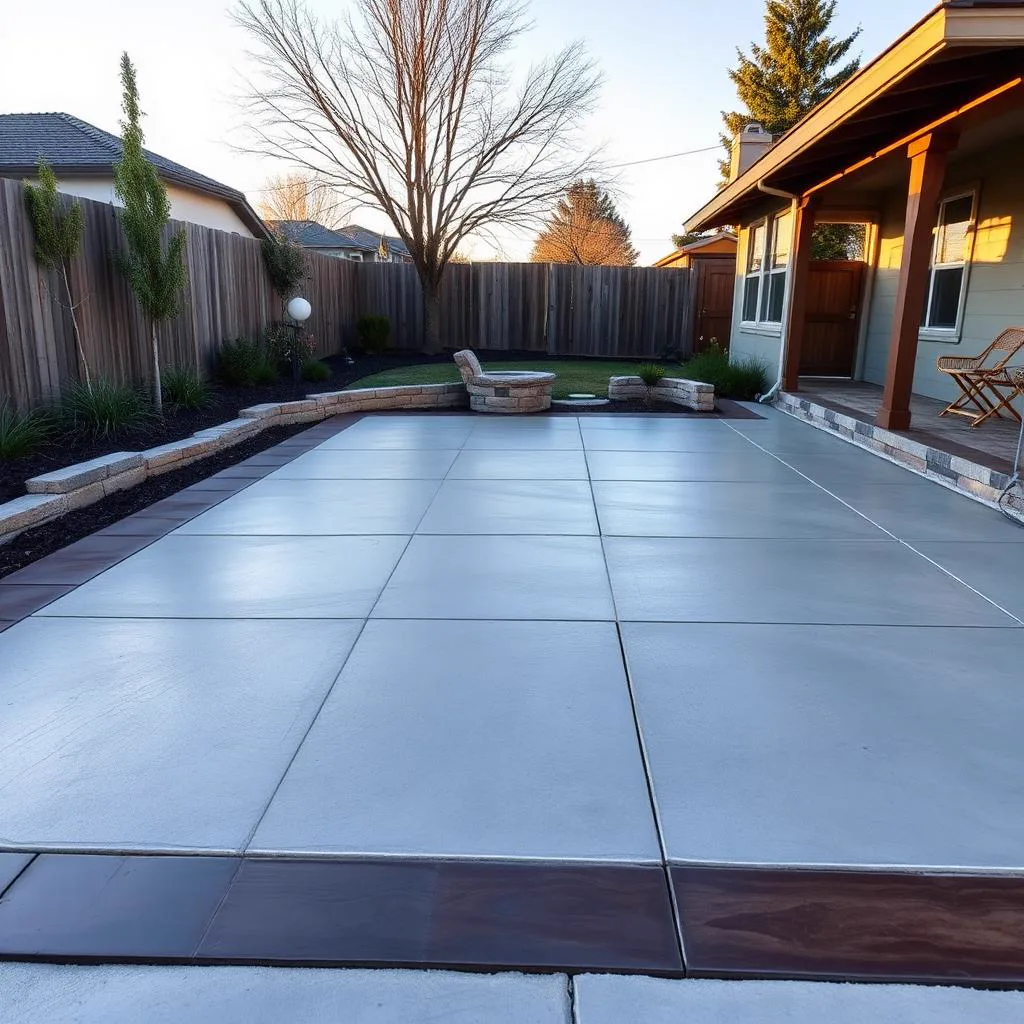
Concrete Work in Orangevale, CA
Concrete Poured to Last on Clay Soil
Poured concrete cracks early when the base is wrong. Done right, it lasts decades on our soil.
No obligation. Licensed CA landscape contractor.
Hot summers and wet winters are hard on concrete that was not built right. A driveway, patio, or walkway poured on a bad base cracks within a few years no matter how nice the finish looks on day one.
We pour slabs built for Orangevale's clay soil specifically, starting with the base and working up. Here is what actually goes into a slab that holds for decades.
How Long Does a Professionally Poured Concrete Slab Last in Orangevale, CA?
A professionally poured concrete slab in Orangevale can last 30 to 50 years with proper care. Good concrete work starts with solid soil prep, the right mix, and clean finishing. Local weather plays a role in how long your slab holds up too.
- Proper base compaction prevents cracking from shifting soil under the slab.
- Control joints let concrete expand and contract without random cracks.
- Sealing the surface blocks moisture and UV damage from hot summers.
- The right mix for local soil and temps improves long-term durability.
Routine cleaning and resealing every few years stretches that lifespan even further.
Concrete Work in Orangevale Covers More Than Just Driveways
Most people think concrete only means a driveway pour, but it shapes nearly every hard surface around a home: patios, walkways, garden curbs, pool decking. Each one needs a different thickness and finish, and matching the right slab to the right job is what saves you money down the road.
Cracked or sunken concrete almost always means the base was never built right. Orangevale's clay-heavy soil swells when wet and shrinks when dry, so a compacted gravel layer underneath is what keeps a slab flat for decades. We never skip it.
- Driveways and driveway extensions
- Backyard patios and pool decks
- Front and side walkways
- Garden and planter curbs
- RV and trailer parking pads
- Stoops, steps, and landings
For local pour rules and coverage limits near sidewalks, check this regional concrete coverage reference.
Hiring a Local Concrete Contractor in Orangevale Is Worth It
Pouring concrete looks simple until a bad mix or a missed grade costs you thousands in repairs. A local crew brings the right tools, plate compactors, power screeds, and a mix suited to our soil and heat, plus insurance that protects your home if something goes wrong. We pull permits, set the slope, and route water away from your house as part of the job, and we start pours early on hot mornings, misting the surface and using curing blankets when the thermometer climbs into triple digits.
Getting Your Property Ready
Sacramento County almost always requires a permit for driveways near public sidewalks, and we handle that paperwork. Before pour day, flag every sprinkler head and drip line in the work area, and we will schedule a free 811 utility locate so gas, water, and electric lines get marked first. Walk the access route with your contractor to make sure gates and equipment paths are clear, and plan to keep cars, pets, and kids off the new slab while it cures.
How a Concrete Slab Installation Works
A new slab takes shape in a clear order. Knowing each step helps you follow along and spot quality work as it happens.
- Step 1
Excavation and site clearing
We dig out the area and haul off old concrete, sod, or loose soil for a clean footprint.
- Step 2
Base prep and compaction
Gravel goes in and gets compacted in even layers so the slab does not sink or crack later.
- Step 3
Forming the shape
Wooden forms set along the edges hold the wet concrete and control the slab thickness.
- Step 4
Reinforcement placement
Rebar or wire mesh inside the forms adds strength and keeps small cracks from spreading.
- Step 5
Pouring and finishing
We pour, screed level, and float the surface. You choose a smooth broom finish or a textured look.
- Step 6
Curing and protection
We cover or mist the slab for several days. Slow curing builds strength and reduces surface cracks.
Keep foot traffic off the slab for at least 24 hours. Wait about a week before parking vehicles on a new driveway. We will give you exact timelines based on your mix and the weather that week.
How to Check That Your Concrete Work Was Done Right
Once the slab cures, walk the full surface slowly and look for hairline cracks, chips, or uneven spots underfoot. A few tight surface lines are normal, wide gaps are not. Then test drainage with a hose: water should clear the slab and flow away from the house within a minute or two, not pool.
- Permit closeout showing the project passed inspection
- Written warranty covering workmanship and material defects
- Receipts for the concrete mix and base materials used
- Photos of the base prep and rebar before the pour
Keeping It Looking Right
Reseal every two to three years to lock out water and stains, and skip metal shovels or sharp tools that scratch the finish. Cut back tree roots growing toward the slab before they cause damage, and fix hairline cracks early before water gets in and widens them. Aiming gutters and downspouts away from slab edges stops the erosion that undermines a slab over time. Checking the edges twice a year for pooling water or lifted corners catches most problems while they are still small.
Back to Hardscaping services.
Frequently Asked Questions
Get Concrete That Holds Up for Decades
We handle the base prep, pour, and finish from start to finish.
Mon–Fri, 7am–5pm. Licensed CA landscape contractor.