
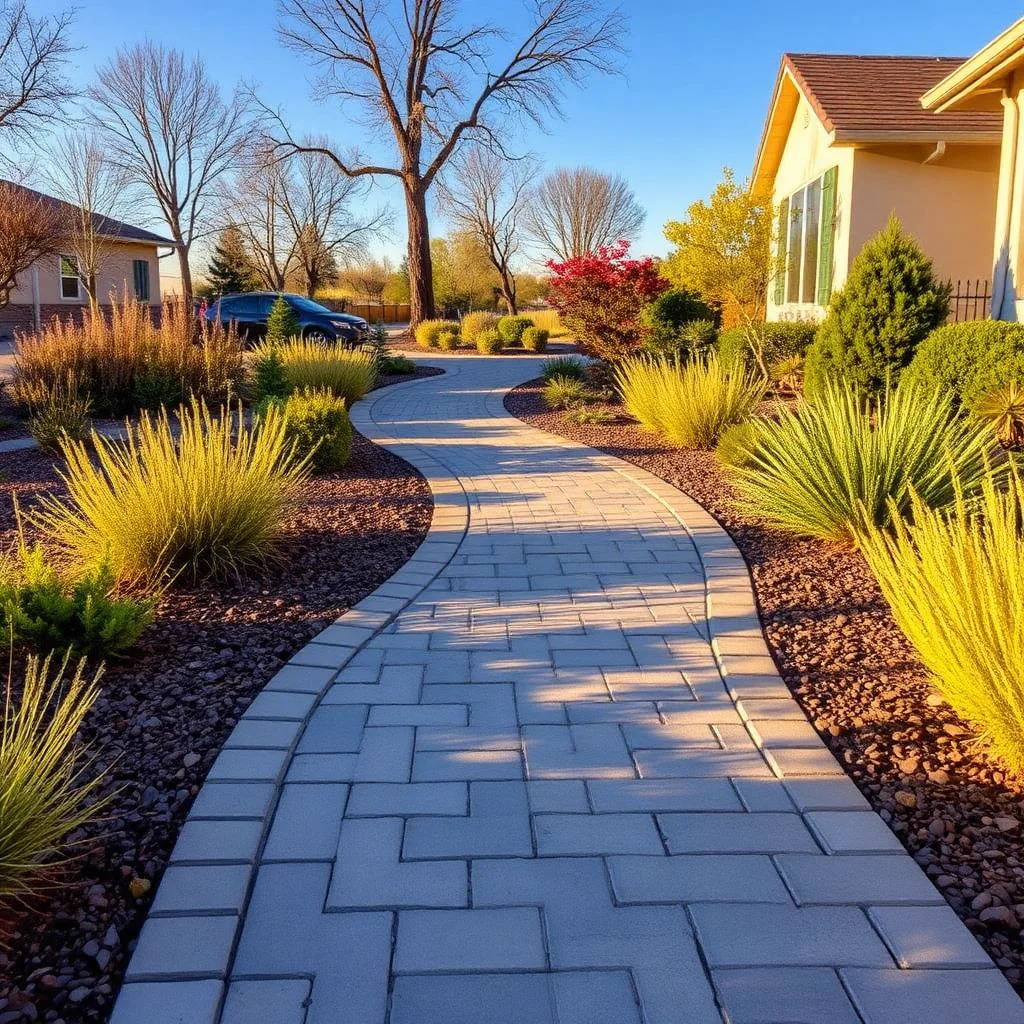
Paver Walkways in Orangevale, CA
Walkways That Flex Instead of Crack
Interlocking pavers move with our clay soil. They do not crack like poured concrete and they are easy to repair if anything settles.
No obligation. Licensed CA landscape contractor.
Orangevale homeowners want front paths that look sharp and hold up through hot summers. A cracked slab or muddy walkway drags down curb appeal and makes every visit feel rough.
Paver walkways give you that mix of style and strength. Pavers flex with the soil, resist cracking, and offer color and pattern choices plain concrete cannot match.
How Long Do Paver Walkways Last in Orangevale, CA?
Professionally installed paver walkways in Orangevale typically last 25 to 50 years. Quality base prep and proper drainage are the biggest factors in that lifespan.
- Concrete pavers resist cracking better than poured slabs in summer heat.
- Individual pavers can be replaced without redoing the whole walkway.
- A compacted gravel base prevents shifting and settling over time.
- Sealing pavers every two to three years protects color and surface strength.
Signs Your Orangevale Yard Needs a New Paver Walkway
- Cracks and bare dirt patches. Hairline cracks in old concrete grow wider each season.
- Trip hazards from uneven slabs. Raised edges and sunken sections catch toes and twist ankles.
- Muddy entry zones. Soil tracks straight into your house, ruining floors over time.
- Tired curb appeal. A cracked or patchy walkway pulls down the look of your whole home.
- Loose gravel that will not stay put. Pavers lock in place and stay where you put them.
Why Pavers Beat Concrete and Asphalt for Orangevale Walkways
| Feature | Pavers | Concrete and Asphalt |
|---|---|---|
| Movement | Flex with soil shifts | Crack into large pieces |
| Repairs | Replace one unit | Patch or repour the slab |
| Style choices | Many colors and patterns | Limited and plain |
| Summer surface | Stays cooler underfoot | Asphalt gets very hot |
| Resale impact | Adds measurable value | Looks standard |
Pavers flex slightly when the ground moves. That matters in our area where clay soil swells and shrinks. For walkway pattern ideas, see this Belgard walkway design gallery.
How to Prepare Your Property Before Installation
- Mark what is buried. Flag sprinkler lines, low-voltage wiring, and utility runs. Call 811 for a free locate.
- Lock in your design choices early. Decide on path width, shape, and paver style before the site visit.
- Clear the work area. Pull out small plants, move loose rocks, trim back overhanging shrubs.
- Park cars away from the delivery and staging area.
- Unlock side gates if crews need backyard access.
What Happens During a Professional Install
- Step 1
Excavation
We dig out the path area to the right depth, usually six to eight inches below the finished surface.
- Step 2
Base layer
Crushed gravel in lifts, compacted with a plate compactor.
- Step 3
Edge restraints
Sturdy edging along both sides holds pavers in place for the long haul.
- Step 4
Sand setting bed
A thin, even layer of bedding sand screeded across the compacted base.
- Step 5
Paver placement
Each paver set in your chosen pattern, with border pieces cut for clean edges.
- Step 6
Joint locking
Polymeric sand swept into every joint, compacted, and misted to set the bond.
Most residential walkways wrap up in one to three working days.
How to Check the Work Was Done Right
- Walk the full length. No paver should rock, wobble, or shift under your weight.
- Sight down the surface. The surface should flow evenly with no dips or raised edges.
- Inspect the edges. Edge restraints should sit flush with the pavers and spikes driven fully into the ground.
- Check the joints. Polymeric sand should fill each joint right up to the chamfer.
- Test the drainage. Run a hose. Water should sheet off and flow away from your home.
Simple Maintenance Keeps Walkways Looking Great
- Sweep or blow leaves and debris every week or two.
- Seal every two to three years to lock in color and strengthen joint sand.
- Refill joint sand when you see gaps and mist it lightly with water.
- Pull weeds early before roots loosen the sand bed.
- Swap out damaged pavers fast to stop the damage spreading.
Back to Hardscaping services.
Frequently Asked Questions
Get a Front Path Built to Last
We design, install, and finish your paver walkway start to finish.
Mon–Fri, 7am–5pm. Licensed CA landscape contractor.