
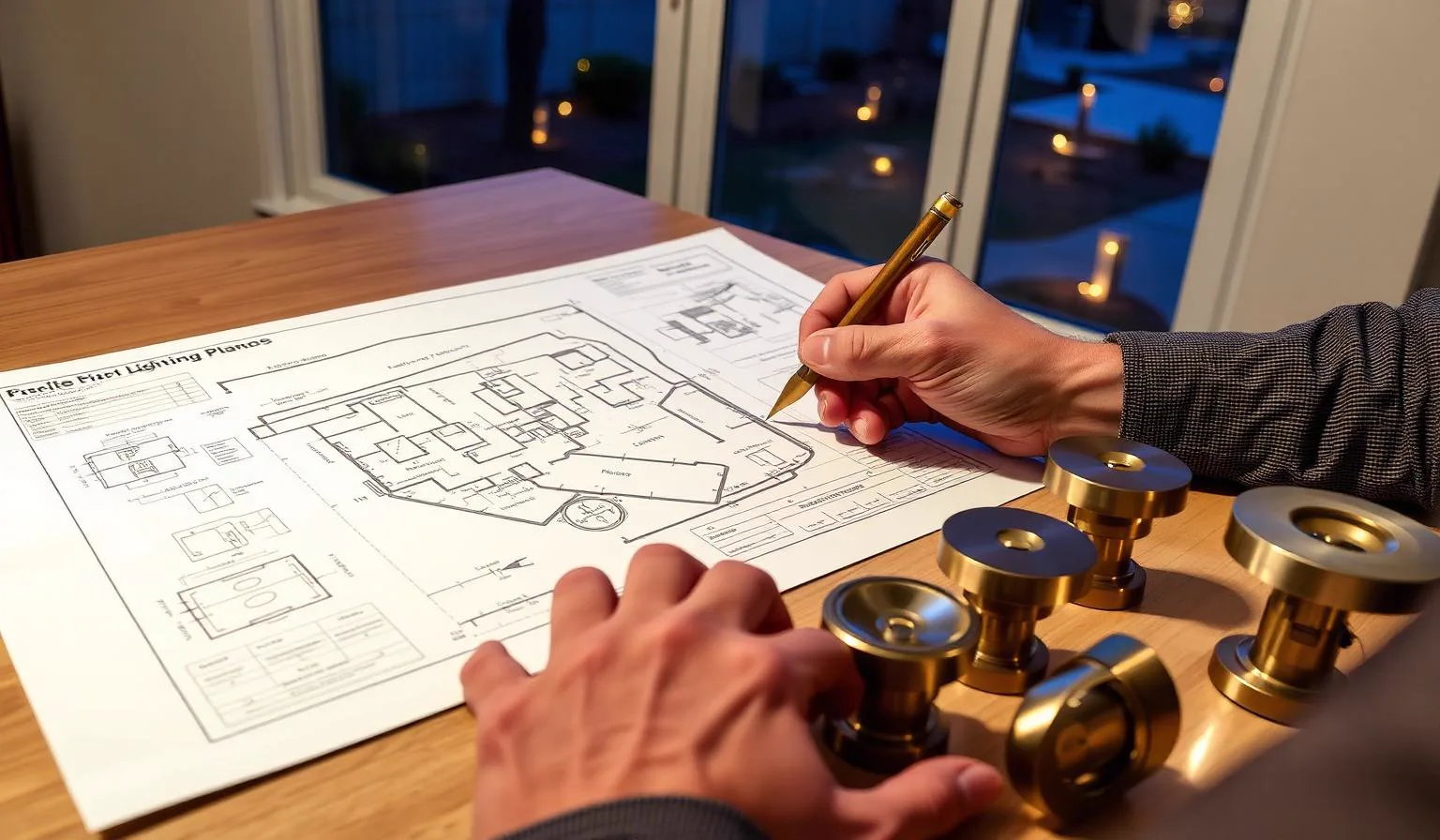
Custom Lighting Layout Design in Orangevale, CA
A Lighting Plan Before You Buy a Fixture
A custom layout sets the targets, the beams, and the scenes before anyone digs a wire trench.
No obligation. Licensed CA landscape contractor.
Dark walkways and unlit garden beds make your yard feel smaller and less safe at night. You want an outdoor space that looks beautiful and welcomes you home after sunset.
Our custom lighting layout design in Orangevale starts with your yard, your goals, and your budget. We map every fixture, cable run, and beam angle before a single light goes in the ground.
On this page, you will see how the full design process works from first walkthrough to final night-time walk. Your plan fits your yard, not a template.
Do I Need a Permit for Landscape Lighting Installation in Orangevale, CA?
Most low-voltage landscape lighting in Orangevale does not need a permit. Line-voltage systems that tie into your home's main electrical panel usually do require one. Always check with Sacramento County before any outdoor electrical work.
- Low-voltage systems run on 12 volts and carry fewer code requirements.
- Line-voltage systems run on 120 volts and often need a licensed electrician.
- Sacramento County building codes apply to every property in Orangevale.
- A landscaper or electrician can tell you what your project needs.
Your Yard Has Lighting Problems a Custom Plan Can Solve
Walk your yard after sunset and you will spot the trouble fast. Dark patches near the front door, a black hole under the oak tree, or a porch light that blinds anyone who walks up. These are the exact issues a custom layout is built to fix.
- Dark entry paths create trip hazards for guests, kids, and older family members.
- Poorly aimed fixtures leave huge sections pitch black while one spot stays bright.
- Too many lights clustered together create harsh glare that washes out detail.
- Unlit garden beds and trees waste the curb appeal you already paid for.
- No clear plan means you buy fixtures, install them, then realize the coverage is wrong.
Orangevale yards add their own twist. Large mature oaks throw deep shadow zones that swallow light from a single fixture. Wide front yards on streets like Hazel Avenue and Greenback Lane need more than two or three path lights to feel even.
A layout plan walks the whole property first and marks every problem spot before any fixture goes in. You see fixture counts, beam angles, and spacing on paper. The plan also flags what you do not need. Fewer lights in the right places almost always beat more lights in the wrong ones.
Picking Low-Voltage or Line-Voltage Shapes Your Whole System
Before any fixture goes in the ground, you need to pick the right system type. This choice shapes your daily costs, your safety, and how easy the lights are to adjust later.
| Low-Voltage Systems | Line-Voltage Systems |
|---|---|
| Run on 12 volts | Run on 120 volts |
| Safer to handle and adjust | Require a licensed electrician |
| Lower daily energy use | Stronger, brighter output |
| Easy to move or expand | Best for large estate yards |
| Great for paths, trees, beds | Suited to commercial-style lots |
Low-voltage is the right pick for most homes. Modern LED fixtures sip power compared to older halogen bulbs, which means lower utility bills month after month. For local rebate programs that may apply, see this SMUD rebate page.
A professional layout plan matches the right system to your yard size, your features, and your goals. We size the transformer, pick fixture wattages, and route cable so nothing gets overloaded.
The First Consultation Gets Your Yard Ready for Installation
We come out, walk every corner of your property, and listen to what you want your yard to feel like after dark. We look at the trees, paths, garden beds, patio areas, and entry points.
- Walk-through and feature notes. We mark every tree, path, step, and focal point worth lighting.
- Goal setting. You tell us if you want safety, ambiance, security, or a better space for entertaining.
- Fixture mapping. We plan exact spots for path lights, uplights, downlights, and wash fixtures.
- Cable and transformer routing. We chart where wire runs and where the transformer mounts on your home.
- Spacing review. Path lights usually sit six to eight feet apart for smooth, even coverage.
- Written layout plan. You see the full design on paper before any digging or wiring starts.
Changes on paper cost nothing. Changes after install cost real money and time. A clear plan also helps you compare quotes fairly if you talk to more than one landscaper.
The Install Day Follows a Set Order
Once your layout plan is approved, the install moves fast. A good crew works in a set order so nothing gets missed.
- Step 1
Stage the fixtures
The crew places each light on the ground where the plan shows it. You get one last walk to approve every spot.
- Step 2
Trench the cable runs
Installers cut shallow trenches along the planned paths. Cable is buried deep enough to stay safe from shovels and mowers.
- Step 3
Mount the transformer
The transformer goes on an exterior wall near a GFCI outlet. The crew wires it, labels each zone, and sets the timer.
- Step 4
Connect and seal every fixture
Each light is wired with waterproof connectors. Loose connections cause most early failures.
- Step 5
Aim and test at night
The crew returns at dusk to fine-tune every beam. Trees, paths, and house features all get checked from multiple angles.
After Install, Verify Every Light Performs as Planned
The job is not done when the last fixture goes in the ground. You need to see the system at work after dark. Plan to meet your installer at dusk for the best view.
- Check every fixture aim. Stand at different spots and confirm the light hits the right target.
- Test the timer or smart controller. Watch the lights turn on and off at set times to confirm the schedule works.
- Inspect path light coverage. Look for dark gaps between fixtures and confirm spacing feels even underfoot.
- Block window and street glare. No fixture should shine into your home or blind passing drivers.
- Request layout documentation. Ask for a written or digital map showing fixture spots, cable runs, and transformer location.
Save your layout map in a safe spot. You will need it years later for repairs, plant changes, or new additions.
Simple Care Keeps Your Lights Working Year Round
A lighting system lasts longer when you give it a little care each season. Orangevale's dry summer heat can crack fixture housings and shorten bulb life.
- Inspect fixtures every season. Look for water inside lenses, insect nests, or cracked housings.
- Replace bulbs early. Swap them before they fully burn out so dark zones never form.
- Clean lenses twice a year. Dirt and pollen cut light output fast in our dry climate.
- Trim nearby plants. Shrubs and ground cover grow over fixtures and block the beam.
- Book a yearly pro visit. A trained eye catches hidden wire damage before it spreads.
Back to Landscape Lighting services.
Frequently Asked Questions
All Landscape Lighting Services in Orangevale
See Your Yard Glow After Dark
We design a custom lighting plan that fits your yard and goals.
Mon–Fri, 7am–5pm. Licensed CA landscape contractor.