
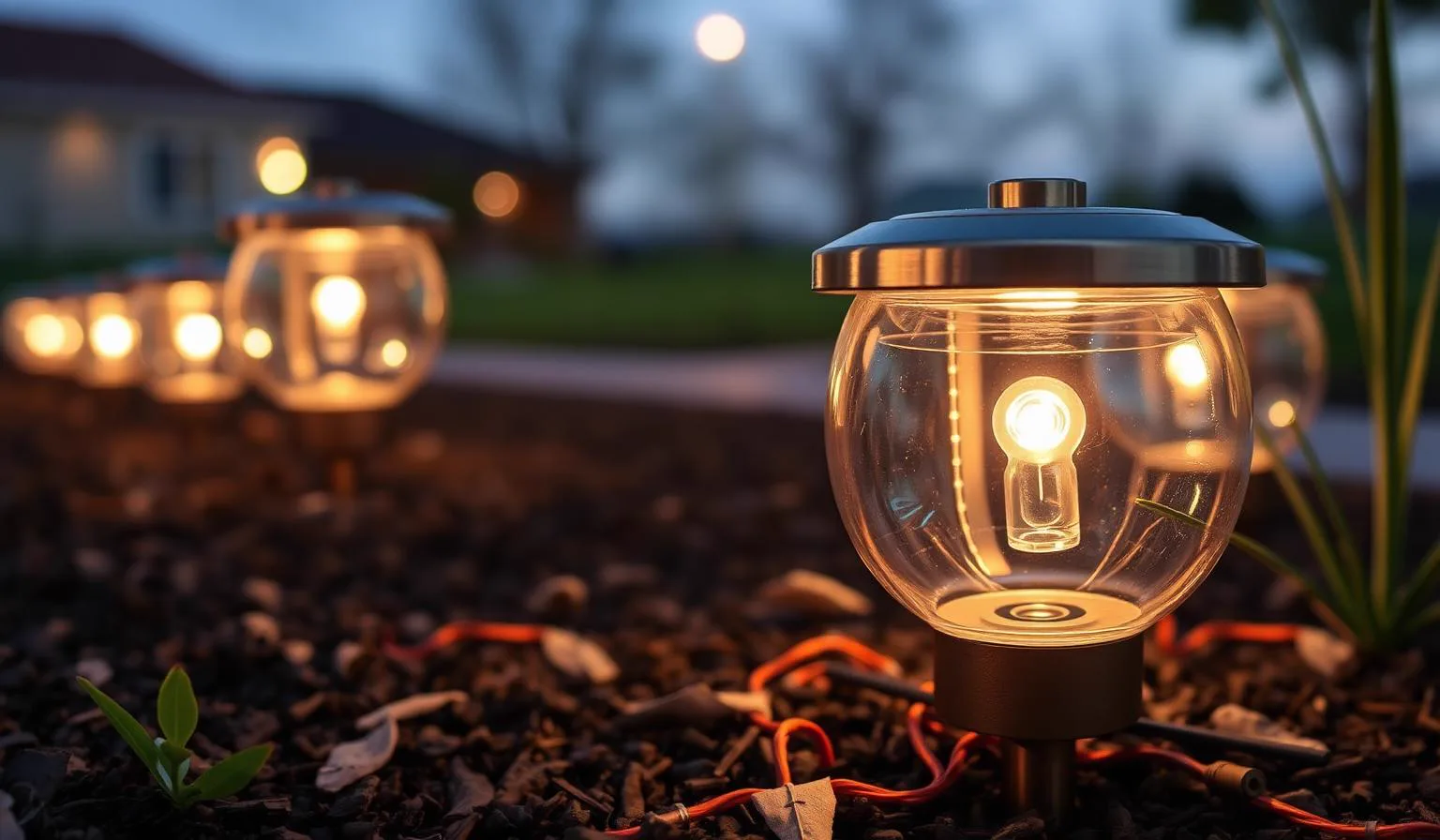
Low-Voltage Lighting Systems in Orangevale, CA
Safe, Quiet, Long-Lasting Yard Lighting
Low-voltage systems run on twelve volts. They are safer to work around, cheaper to run, and easier to expand.
No obligation. Licensed CA landscape contractor.
Dark walkways, hidden steps, and unlit trees make your yard feel unsafe once the sun goes down. Low-voltage lighting systems fix that without tearing up your landscaping or running up your power bill.
You will see how these systems work, which fixtures suit your yard, and what a professional install looks like start to finish.
Does Low-Voltage Lighting in Orangevale Need a Permit?
Most low-voltage landscape lighting in Orangevale does not need a permit. These systems run on 12 volts and stay below the threshold that triggers electrical permit rules.
- Low-voltage systems run at 12 volts, well below standard household current.
- Sacramento County rules generally exempt low-voltage outdoor lighting from permits.
- A licensed landscaper checks local codes before any work starts.
- Permit rules can change, so confirming with the city protects you from surprises.
Your Orangevale Yard Has Real Lighting Problems Worth Solving
- Trip hazards on dark paths and steps that put kids, parents, and visitors at risk.
- Unlit entryways that make your home look empty and draw the wrong kind of attention.
- Hidden landscaping where the plants, trees, and hardscape you paid for vanish after dusk.
- Harsh glare from cheap or oversized fixtures that makes the patio uncomfortable.
- Mismatched or broken fixtures that make the whole yard look tired.
Orangevale yards need a layout built for the property, not a generic kit from a big-box store. Deep lots, tall oaks, and wide driveways all need targeted fixture placement. For local energy-saving tips, see this SMUD home energy savings guide.
Choosing the Right Fixtures for Your Yard
| Fixture Type | Best Use |
|---|---|
| Path lights | Walkways, garden borders, and step edges |
| Spotlights and uplights | Trees, shrubs, and home facades |
| Well lights | Driveways, patios, and flush ground spots |
| Down lights | Mounted in trees for soft moonlight effect |
LED fixtures beat older halogen bulbs in every way that matters. They use about 80 percent less energy and last 10 to 15 years. The transformer is the heart of the system. A quality unit includes a built-in timer and photocell so the lights turn on at dusk and off at a set hour.
Preparing Your Property Before Install Day
- Mark buried lines. Flag any irrigation lines, low-voltage cables, or gas lines you know about.
- Clear the work zones. Pick up debris and trim low branches near planned fixture spots.
- Pick the transformer spot. Choose an outdoor outlet close to your main entry that stays dry.
- List your priorities. Write down the trees, paths, or stone features you want lit.
Drip irrigation deserves extra attention. Many local yards run drip lines just under the mulch, exactly where lighting wire wants to go. Mark every drip line you can find with small flags or spray paint.
A Professional Install Follows a Clear Process
- Step 1
Final walkthrough
We mark each fixture location with flags and confirm beam angles with you.
- Step 2
Transformer setup
Mounted in a protected spot near a weatherproof outlet, usually close to the main entry.
- Step 3
Wire routing
Main wire runs buried along bed edges or tucked under mulch so nothing shows.
- Step 4
Fixture connections
Each fixture ties into the wire with a waterproof connector that resists corrosion.
- Step 5
Programming and aiming
Timer set, photocell dialed in, every fixture aimed so light lands exactly where you want it.
Checking Your New System Confirms Everything Works
- Walk every path and driveway at night to confirm no dark gaps remain.
- Check that uplights aim at the right trees or walls without throwing glare into windows.
- Confirm the timer turns the system on and off at the times you picked.
- Look at wire runs in daylight to make sure nothing is exposed or pulled loose.
- Test the transformer load reading to confirm it stays inside the safe operating range.
Simple Habits Keep Your System Performing Long Term
- Seasonal cleaning of every lens and fixture housing.
- Quick bulb swaps to keep the transformer load steady.
- Spring re-aiming after new growth fills in.
- Post-storm wire checks near beds and pathways.
- A yearly check of connectors and transformer settings.
Back to Landscape Lighting services.
Frequently Asked Questions
All Landscape Lighting Services in Orangevale
Enjoy Your Yard Long After Sunset
We design and install a lighting system built for your property.
Mon–Fri, 7am–5pm. Licensed CA landscape contractor.