
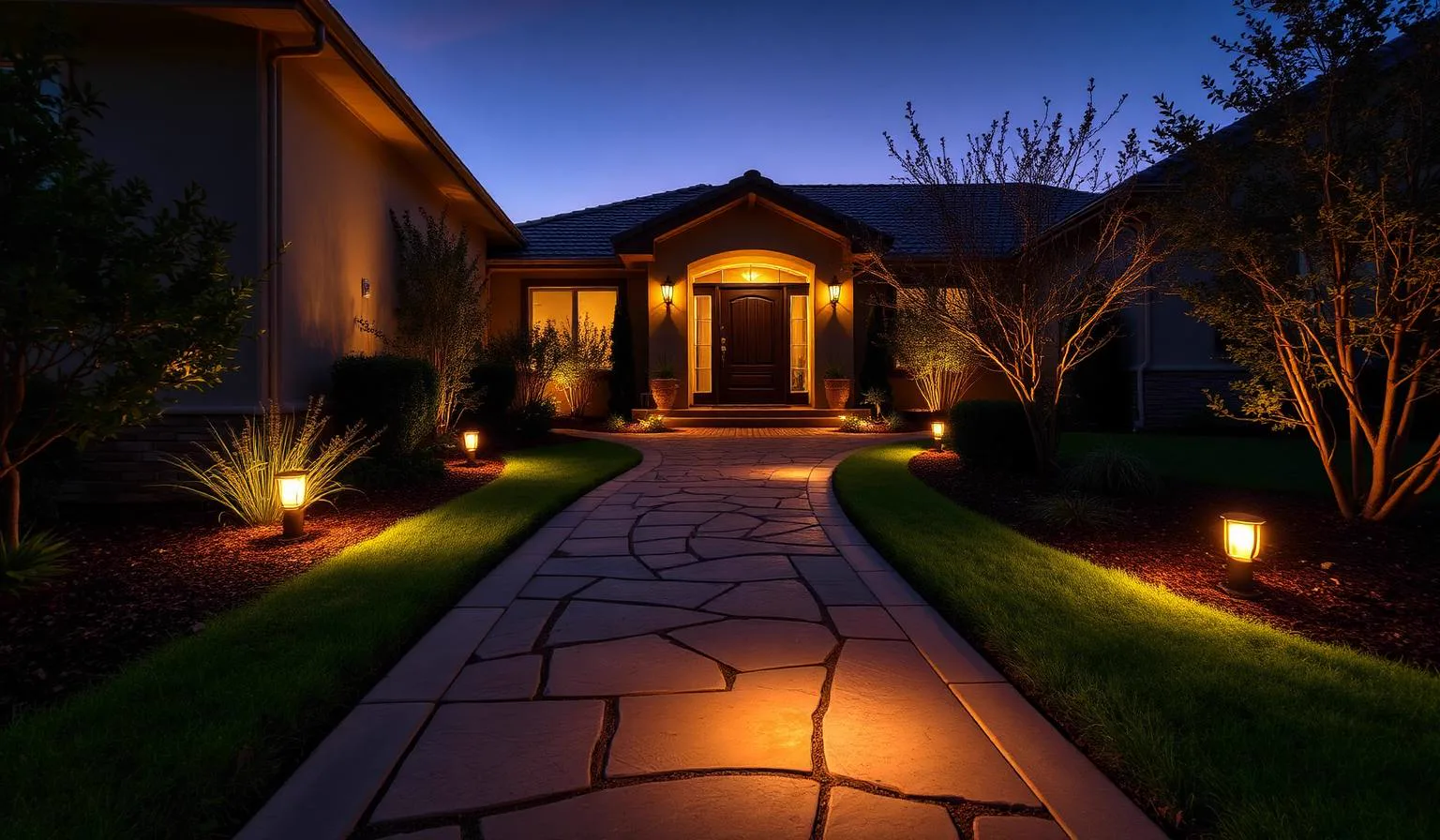
Walkway Lighting in Orangevale, CA
Walkway Lights That Make Sense After Dark
A walkway lit right adds safety, value, and the right kind of night view. Lit wrong, it looks like a runway.
No obligation. Licensed CA landscape contractor.
Most low-voltage walkway lighting in Orangevale does not need a permit. Line-voltage systems that tie into your main panel usually do. We confirm with Sacramento County before starting any project.
- Low-voltage systems run on 12 volts and rarely trigger permit rules
- Line-voltage systems use 120 volts and often need an electrical permit
- Solar path lights need no wiring and never require a permit
- Skipping a required permit can cause problems when you sell your home
Dark Walkways Signal a Safety and Curb Appeal Problem
Poor lighting is the top cause of slips and falls on home paths. Cracked pavers, raised edges, and small steps disappear once the sun drops. A dim front entry also hurts how your home looks from the street.
- Guests text you for directions to the front door after dark
- Shrubs and ground cover have grown over your old path lights
- You see uneven shadows or full black gaps between fixtures
- Existing solar lights stay dim or flicker by mid-evening
- Family members avoid the back path at night
Choosing the Right Style Saves Time and Money
| Style | Best For |
|---|---|
| Solar | Small budgets and sunny, open paths |
| Low-voltage LED | Most homes wanting steady, low-cost light |
| Line-voltage | Long paths or very bright output |
Low-voltage LED is the sweet spot for most homes here — steady, even light every night without a big power bill. Warm white LEDs in the 2700K to 3000K range flatter brick, stone, and plants best. SMUD offers rebates for qualifying energy-saving home upgrades — see SMUD rebates.
How to Prep Your Yard Before Install
- Mark irrigation lines and any buried cable with flags or spray paint
- Pick your fixture style — brass lasts longest, composite resists impact
- Trim back overgrown plants about 12 inches on each side of the path
- Plan your transformer location near a grounded outdoor outlet
- Take full path length measurements and share them when you book
Many Orangevale lots have mature oaks and citrus with wide, shallow root systems. Mapping utilities and root zones early keeps your project on schedule.
How a Pro Walkway Lighting Install Goes
- Fixture staking and approval — nothing goes in the ground until you sign off
- Cable burial two to four inches deep along the path edge
- No-splice connector fixture hookups — sealed, no exposed wires
- Transformer mounted near an outdoor outlet and timer programmed
- Full system test, soil raked back, mulch replaced, yard left tidy
In the Casa Roble High area, clay-heavy soil can slow cable burial. Our crews bring trenching blades built for tough ground so your install still finishes on time.
Check Your New Lights After Install
- Walk the full path after dark and look for dark gaps between fixtures
- Watch the transformer timer through a full dusk-to-off cycle
- Every fixture stands straight and aims down onto the path surface
- Press any exposed cable back into the soil with your shoe
- After the first storm, watch for foggy lenses, corrosion, or sunken soil
Simple Maintenance Keeps Lights Working for Years
- Wipe each lens monthly to clear dust, pollen, and webs
- Trim back plants that grow over fixtures and block light
- Replace LED bulbs every five to seven years or sooner if dim
- Check transformer connections each spring before heavy use
- Reset the timer twice a year when daylight saving changes
In the Pasteur Road area, valley oak leaves pile on fixtures each fall. A quick seasonal cleanup prevents overheating and keeps lenses from yellowing.
Frequently Asked Questions
All Landscape Lighting Services in Orangevale
Light Your Path and Welcome Guests Home
We design, install, and test your walkway lighting in one visit.
Mon–Fri, 7am–5pm. Licensed CA landscape contractor.