
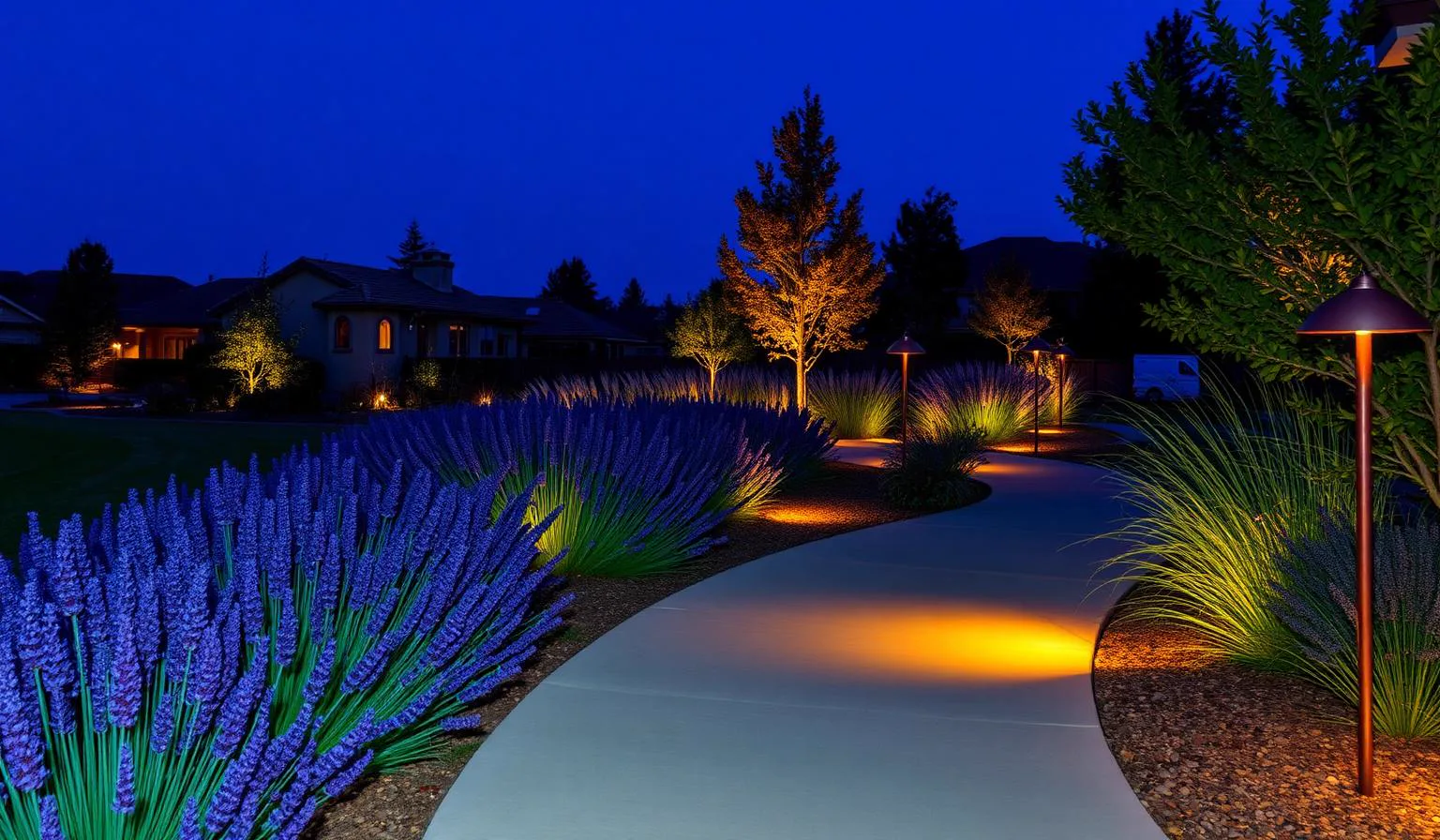
Pathway Lighting in Orangevale, CA
Light Where You Walk, Not Where You Don't
Path lights pulled out of a kit shine in your eyes and miss the path. We aim every fixture for the foot and the eye.
No obligation. Licensed CA landscape contractor.
A dark front walkway puts your family and guests at risk every night. Pathway lighting in Orangevale fixes that fast, and it adds real curb appeal. Your walkway should feel safe in July heat and January rain.
You will learn how to pick fixtures, plan smart spacing, and keep lights working long after the crew leaves. A licensed landscaper brings the right tools and skill to make your yard safe and beautiful for years.
Do Pathway Lights in Orangevale Need a Permit Before Installation?
Most low-voltage pathway lighting in Orangevale does not require a permit. High-voltage or hardwired systems may need an electrical permit from Sacramento County. Always ask your landscaper to confirm requirements before work begins.
- Low-voltage LED systems run on 12 volts and skip the permit process.
- Hardwired 120-volt systems usually require a licensed electrician and a county permit.
- Your landscaper can pull any needed permits on your behalf.
- Permit rules can change, so confirm with Sacramento County before work starts.
Orangevale Walkways Need the Right Lighting to Stay Safe After Dark
A dark front walkway is more than an eyesore. Uneven pavers shift over time. Tree roots push up under the concrete. When the path stays dim, no one sees these hazards until a foot catches and someone falls.
Poor lighting also hurts the way your home feels from the street. Delivery drivers slow down and squint. Guests pause at the curb, unsure which door belongs to you.
Solar lights often add to the problem instead of fixing it. They depend on direct sun all day to hold a charge. Orangevale winters bring cloudy stretches that drain those tiny batteries fast. Mature oak and pine trees make this worse. Falling leaves, needles, and pollen coat the solar panels and block the charge.
The fix is a planned layout with matched fixtures, steady power, and the right spacing for your walkway length.
Choosing the Best Pathway Lighting Style for Your Yard
Start with the power source. Low-voltage wired systems give you steady light no matter the weather. Solar lights cost less up front but Orangevale tree cover blocks the panels from charging.
- LED fixtures use far less energy than halogen and last many years longer.
- Warm white bulbs (around 2700K) feel soft and welcoming on a front path.
- Cool white bulbs (4000K and up) give a crisp, modern look near sleek homes.
- For tips on picking fixtures that light the path without glare, see these DarkSky lighting guides.
| Fixture Style | Best Fit |
|---|---|
| Bollard | Tall, formal paths and craftsman homes |
| Mushroom | Soft downward glow on garden walkways |
| Stake | Flexible spacing along curved or short paths |
Preparing Your Orangevale Yard Before the Installer Arrives
- Clear the walkway. Move pots, toys, hose reels, and yard tools at least three feet off the path edge.
- Locate your outdoor outlet. Know where the transformer will plug in, usually near the garage or front porch GFCI.
- Mark your drip lines. Use small flags or spray paint to show where irrigation tubing runs along the path.
- Plan your spacing. Decide how far apart you want fixtures so the crew can stake them quickly.
- Pick your bright zones. Note which sections need the most light, like steps, curves, or the front door area.
Many Orangevale lots have drip irrigation running right next to the front walkway, often only two or three inches under the mulch. Walk your yard the day before, run the system briefly, and flag any wet spots so the installer routes around them.
What Happens During a Professional Install
- Step 1
Walk and confirm
We meet you at the path, point out each fixture spot, and you approve the layout.
- Step 2
Trench the cable run
A shallow trench runs along the walkway edge for the low-voltage wire.
- Step 3
Set each fixture
Stakes press into the soil at measured spacing. Mounted fixtures get anchored on a firm base.
- Step 4
Mount the transformer
The transformer attaches to an exterior wall near an outdoor outlet.
- Step 5
Test every light
We power up, check each bulb, adjust angles, level stakes, and program the timer.
- Step 6
Clean and walk through
Soil tamped, debris hauled, and a final tour at dusk.
Most pathway lighting installs in Orangevale wrap up in four to six hours.
Verifying Your New Lights Work Correctly Protects Your Investment
Walk your path at night and look for even spacing of light. Dark gaps usually mean a bulb sits too low or points the wrong way. Bright hot spots can mean a fixture sits too high or too close to its neighbor.
- Lights turn on around dusk without a delay
- Lights shut off at the time you set
- All zones fire together, not in pieces
- Each bulb shines at the same brightness with no flickering
- Cable stays buried under soil or mulch the whole way
Maintenance Keeps Orangevale Pathway Lights Running Season After Season
- Clean every lens in spring once pollen season ends.
- Push stakes back down if winter weather shifted them.
- Trim shrubs and ground cover that crowd the fixtures.
- Swap bulbs in full sets so brightness stays even across the path.
- Book a yearly wiring and connection check with your landscaper.
Group bulb replacement matters. When one bulb dies, the others are usually close behind. Swapping them all at once keeps the path looking even and saves return trips.
Back to Landscape Lighting services.
Frequently Asked Questions
All Landscape Lighting Services in Orangevale
Light Every Step to Your Front Door
Our team designs, installs, and tests your pathway lighting system.
Mon–Fri, 7am–5pm. Licensed CA landscape contractor.