
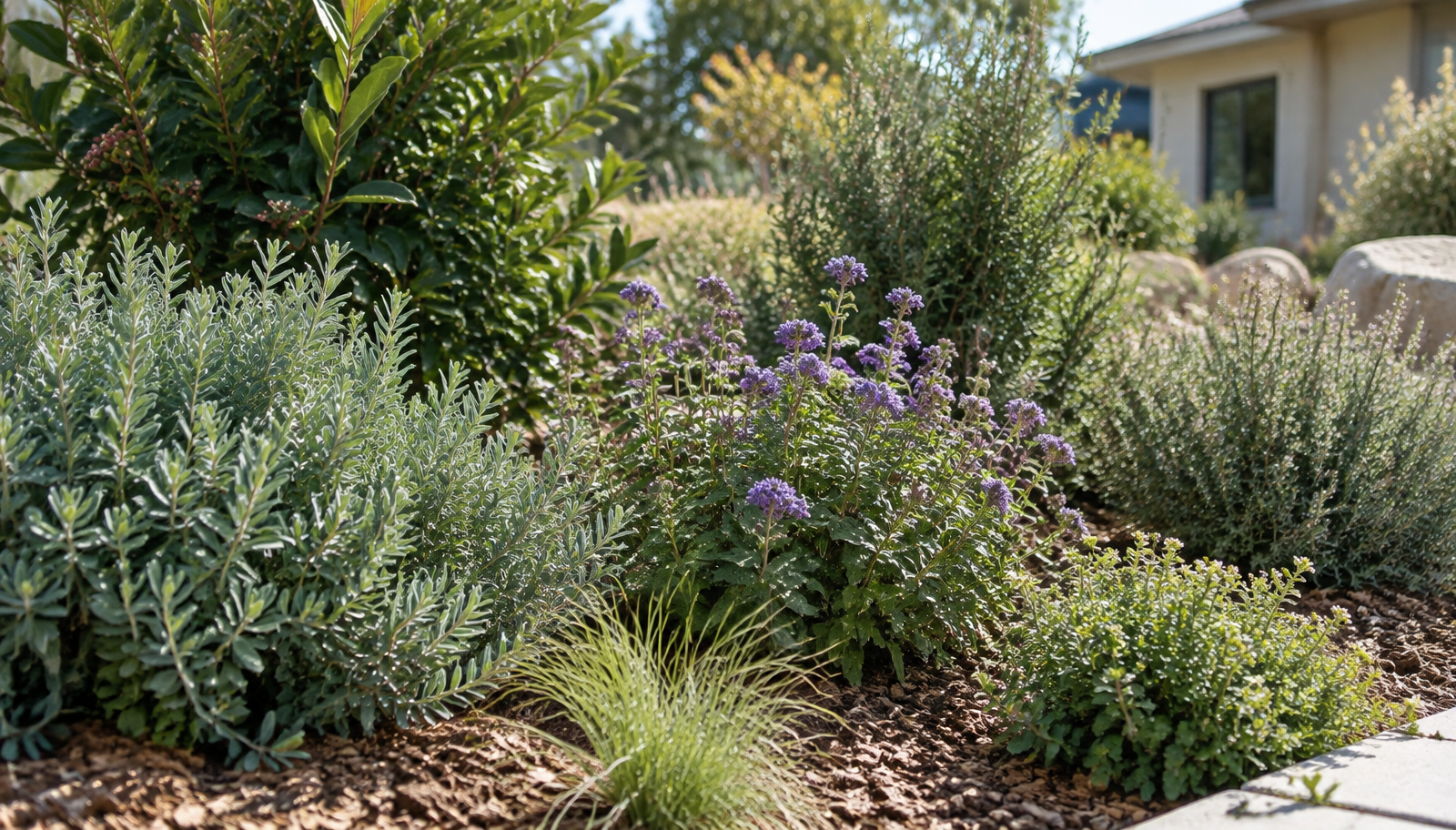
deer-resistant native plants in Orangevale, CA
Plant Choices Deer Are Less Likely to Bother
Deer will taste almost anything once, but the right native plants keep them from coming back for more.
No obligation. Licensed CA landscape contractor.
No Native Plant Is Fully Deer-Proof
Deer are adaptable eaters. A hungry deer will try almost anything once. That is especially true in a dry Orangevale summer, when food is hard to find. So the idea of a plant deer will never touch is a myth. What does exist is a real difference. Some plants deer leave alone. Others they come back to eat again and again. The first group is what most people mean by deer-resistant. It means a lower chance of damage. It does not mean a guarantee.
What Makes a Plant Less Appealing to Deer
A California Native Plant Society guide to gardening with deer explains what deer tend to avoid. They skip plants with a strong scent. They skip plants with fuzzy leaves. They skip plants with a prickly texture. What deer want most is soft, tender new growth. So a plant that stays tough and dry gets skipped more often. A plant kept lush with heavy watering gets eaten more often.
That same guide notes that less watering can make a whole yard less attractive to deer. Less water means less soft growth. Even so, young plants of any kind need some protection at first. And no single plant fixes a yard on its own.
Native Plants That Hold Up Well in Orangevale Yards
- Coffeeberry: a tough evergreen shrub with leathery leaves deer tend to pass over
- California fuchsia: bright red-orange fall flowers with a scent deer do not favor
- Coyote mint: strongly scented foliage that deer rarely bother with
- California sages: aromatic leaves that make them one of the more reliable choices
- Blue-eyed grass: a low, grass-like native that blends in rather than standing out
- Ceanothus 'Dark Star' and 'Julia Phelps': tougher-leaved ceanothus varieties that hold up better than many
- Bush anemone: a shade-tolerant shrub with leathery leaves deer tend to skip
How Much Deer Pressure Does Your Yard Have?
Deer pressure is not the same from one Orangevale yard to the next. It depends on where your yard sits. A yard next to a greenbelt or open space sees more deer than one on a busy street. A yard near the American River Parkway often sees more. Dogs, foot traffic, and bright porch light push deer off a property.
You can learn a lot from a short walk. Look at the plants near your back fence. Look at what is missing or chewed. Deer usually eat the closest plants first. They want to leave fast if they feel unsafe. A yard with chewed roses and untouched sage is telling you something. Write down what you see before you pick plants.
Protecting Young Plants While They Establish
- Fence or cage new plants. A simple ring of wire or a temporary fence protects soft new growth for the first season.
- Expect more interest early on. Even tough, mature-stage plants start out tender. They need more watching while young.
- Use repellent where deer pressure is high. A sprayed repellent adds another layer of protection on top of plant choice.
- Plant in groups. Losing one or two plants in a cluster matters far less than losing a single specimen plant.
- Match plants to your soil too. Our guide to native plants for clay soil helps round out a list that fits both deer pressure and your yard's soil.
What to Do After Deer Take a Bite
Deer damage happens even on a good list. Do not pull a plant out the first week. Most deer-resistant natives push new growth once their roots are in. Give it a season. Trim back only the broken stems. Leave the rest of the plant alone.
If the same plant gets eaten again and again, that is your answer for that spot. Swap it for something tougher. Keep the scent and texture idea in mind. A bed of aromatic plants holds up better than one soft, leafy plant sitting in the middle of a lawn.
Some yards need one more layer. A low fence, a cage over new plants, or a sprayed repellent can buy a plant time while it grows in. Plant choice does most of the work. These add a little more.
A Plant List Built for Your Specific Yard
Deer pressure varies a lot block to block in Orangevale. It depends on how close your yard sits to open space, greenbelts, or the American River Parkway. A plant list that works well in one yard may still take heavy damage in another. We walk your yard. We look at what is already growing nearby. Then we build a native plant list for your specific deer pressure, not a generic list from a catalog.
McGuire Earth Works Inc. has planted native yards across Orangevale for years, including plenty with regular deer visitors. Call (916) 404-0944 for a free estimate.
Frequently Asked Questions
Are there really deer-proof plants?
Will less watering make my yard less appealing to deer?
How do I protect new plants from deer while they get established?
All Native Plant Landscaping Services in Orangevale
Back to Native Plant Landscaping in Orangevale, CAGet a Plant List Built for Your Yard and Your Deer Pressure
McGuire Earth Works Inc. designs native plant beds across Orangevale, including yards with heavy deer traffic. Call (916) 404-0944 for a free estimate.
Mon–Fri, 7am–5pm. Licensed CA landscape contractor.