
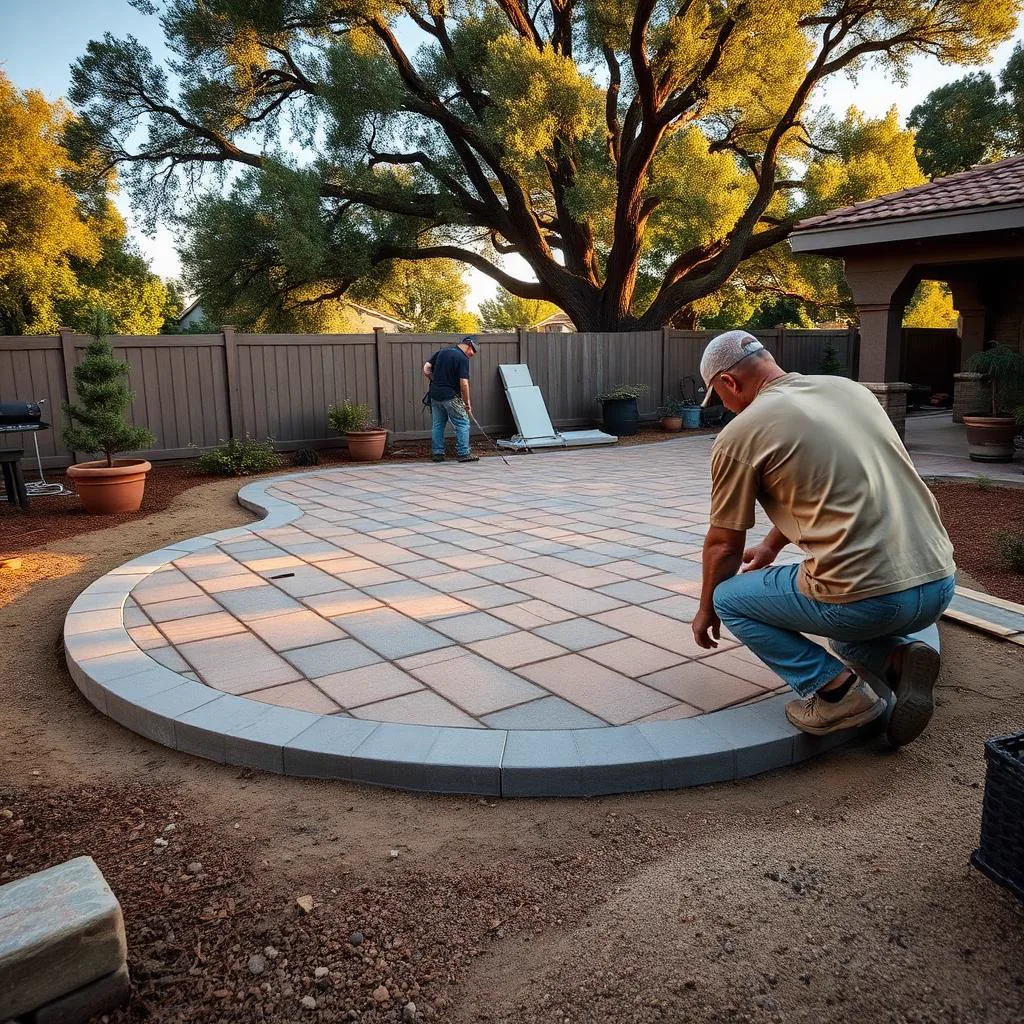
Landscape Installation Permits in Orangevale in Orangevale, CA
Does Your Landscape Project Need a Permit? Here's How to Tell
Most landscaping work in Orangevale does not need a permit on its own, but a few specific features do. Here is what Sacramento County actually says.
No obligation. Licensed CA landscape contractor.
Do You Need a Permit for Your Landscape Project in Orangevale?
Most landscape work does not need its own permit. Planting trees, laying sod, and adding flower beds are usually fine on their own. But some features can trigger a permit under Sacramento County rules. A patio cover is one example. A raised deck or patio more than 18 inches above the ground is another. Certain sheds and oversized accessory structures can need one too. Grading and retaining wall work follow separate rules of their own, and those are outside the scope of this page.
The tricky part is that the line between "needs a permit" and "does not" is not obvious from looking at a yard. Two patios that look almost the same can land on different sides of the rules. Height, cover, and placement all play a role, which is why the details below matter.
The county's own residential accessory structure guide states that most structures require building permits. It also tells residents to confirm with the Building Permits and Inspections Division whether a specific structure is exempt. So the safe move is to check before you build, not after.
What Counts as an Accessory Structure
Sacramento County sorts yard features into two groups. Some count as accessory structures. Some do not. The line often comes down to height and whether the feature is covered.
- A ground-level patio or deck 18 inches or less above grade is usually not an accessory structure.
- A detached deck or patio more than 18 inches above grade is an accessory structure.
- Any patio cover counts as an accessory structure, even at ground level, because it is covered.
- Raised planters or garden edging up to 18 inches tall are not accessory structures.
- A small storage shed up to 120 square feet and 9 feet in overall height may sit on the property line.
That last point surprises people. A patio cover at ground level still counts, no matter how low it sits. The cover itself is what matters, not the height.
Size and Setback Limits That Can Affect a Yard Project
When a feature does count as an accessory structure, the county guide sets limits on how big it can be and where it can sit. Height can go up to 16 feet at the roof peak and 14 feet at the plate line, and the structure can only be one story.
Total roofed or enclosed area has a cap too. On lots under 20,000 square feet, accessory structures can cover up to 50 percent of the primary home's habitable floor area. On lots of 20,000 square feet or more, the cap is 100 percent. Here is the part that catches homeowners off guard: all roofed space counts toward this total, enclosed or not. A simple patio cover with no walls still adds to the number.
There is also a coverage limit for the rear yard. Accessory structures can cover up to 30 percent of the required rear yard. And every structure has to respect setbacks: 20 feet from the front, 12.5 feet from a side street, and 3 feet from interior side and rear property lines. Eaves and overhangs count too. Every part of the structure must stay at least 3 feet from the property line.
These limits work together. A feature can pass the height test and still run into trouble on coverage or setbacks. That is why a project that seems small on paper can still need a closer look before it gets built.
Fences and Retaining Walls Follow Their Own Rules
Fences only count as accessory structures when they go past a height limit set elsewhere in the county zoning code. The guide points to that limit but does not state the number itself, so we will not guess at it here. If a fence is part of your project, that height question is worth a call to the county.
Retaining walls and pergolas are not addressed in this guide at all. That is a gap in the document, not a free pass. Retaining walls follow their own separate review process. If your Orangevale project includes a wall, treat it as its own question and confirm the rules that apply to it directly.
Why This Is Worth Checking Before You Start in Orangevale
Orangevale backyards often use exactly the kind of space these rules cover. Patio covers are popular because summer shade matters here. Raised decks show up on sloped lots. Sheds tend to go near the rear or side yard, right where setback rules apply.
Catching a permit requirement early is much cheaper than catching it late. Once materials are ordered and a crew is scheduled, a surprise permit issue can stall the whole job. In the worst case, work that was already built may need to be moved or changed. A quick check before the design is final keeps the project moving and keeps the budget pointed at the yard itself, not at fixing paperwork problems.
When to Confirm With the County
The guide itself says most structures need permits, and it tells residents to confirm exemption status directly. That means the reliable path is not a rule of thumb you found online. It is a question asked before the design is locked in.
You can send permit questions to Planning and Environmental Review at sacplan@saccounty.gov, or contact the Building Permits and Inspections Division. A short email or call early in planning can save weeks of delay later.
Planning a Landscape Installation in Orangevale
Permits are one piece of a bigger picture. A full landscape installation in Orangevale also has to account for soil, grading, and the order the work happens in. Our guides to clay soil landscaping and the landscape installation order of work walk through those pieces step by step.
Ready to talk about your yard? Call (916) 404-0944 for a free estimate. We plan every project with these county rules in mind from the start, so there are no surprises once work begins.
All Landscape Installation Services in Orangevale
Back to Landscape Installation in Orangevale, CAPlan Your Project the Right Way From Day One
Call (916) 404-0944 for a free estimate. We plan every project with county rules in mind from the start.
Mon–Fri, 7am–5pm. Licensed CA landscape contractor.