
Landscape Installation Order of Work in Orangevale, CA
Why the Order Matters as Much as the Work
Landscape installation is not a pile of separate tasks. Each step sets up the one after it, and doing them out of order is the most common reason a new yard fails early.
No obligation. Licensed CA landscape contractor.
Most homeowners judge a landscape installation by the finished look. Crews judge it by whether the steps happened in the right order. Skip or reorder one step and the yard can still look fine on handoff day, then start failing within a season. Here is what actually breaks when the order goes wrong, not just what the order should be.
Site Prep Comes Before Grading
Good work starts before the first shovel. Crews clear out old plants and weeds. They call 811 so underground lines get marked before any digging. They also mark the layout with paint or stakes, so everyone agrees where beds, paths, and edges will go. Skipping this step is how a crew hits a line or builds something in the wrong spot.
Take time to look over the marks before the crew starts. Walk the path where a new walkway will go. See if the bed edges leave enough room to move around the yard. A line on a plan can look right but feel too close to a door or gate on the ground. Marking things out gives you a chance to notice that early. It also lets the crew agree on the same plan. When everyone knows where the work goes, the next steps are easier to follow.
Grading Comes First in Every Orangevale Install
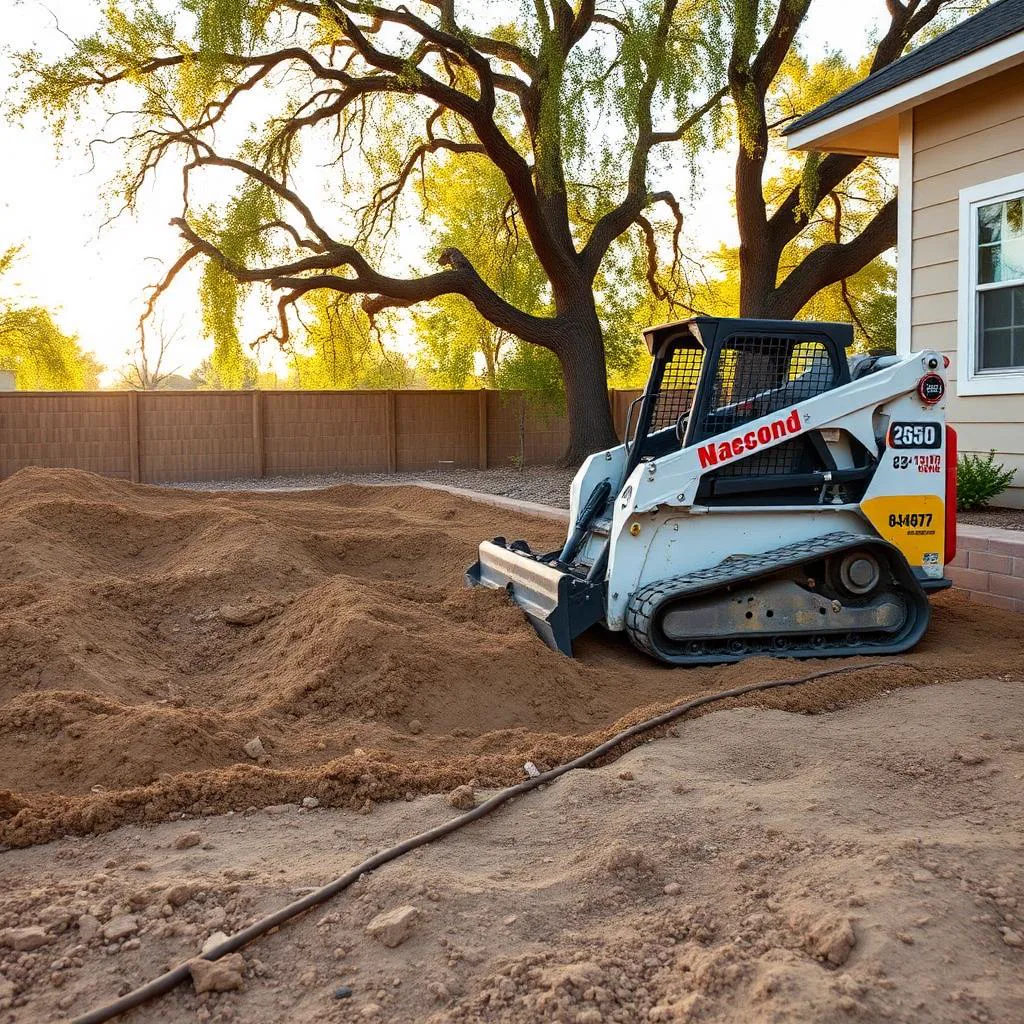
Grading sets the slope that every other step depends on. Skip it or rush it, and water starts pooling in low spots instead of draining away from the house. Orangevale's clay soil makes this worse than it would be on sandier ground, since clay barely lets water soak in on its own. A yard graded wrong on day one usually shows standing water within the first wet season, and by then the sod, plants, and hardscape are already in the way of fixing it.
Before new work covers the ground, look at where rain would move across the yard. Check the low spots, the path toward the house, and the edges of the planting beds. These are easier to see while the soil is still bare. If a change is needed, crews can shape the ground now rather than move a finished walkway or fresh plants later. The goal is to give every later step a clear place to go.
Hardscape Goes In Before the Plants
Patios, walkways, and walls usually go in after grading and before planting. Heavy equipment, base rock, and concrete work can wreck new plants fast. Putting the hard parts in first keeps the soft parts safe. It also lets the crew set the final grades, so plant beds drain the way they should.
Picture a crew carrying stone across a new planting bed. Even careful workers need space for tools and materials. Fresh plants leave less room to work. If the hard parts are built first, the crew can finish the heavy work without stepping around new roots. Then the bed edges can follow the finished paths and walls. This helps the planting plan match what is actually on the ground.
Irrigation Has to Go In Before Planting Begins
Irrigation pipes, valves, and sleeves need to be in the ground and pressure tested before any plant goes in the soil above them. Installing irrigation after planting means digging trenches through root balls that just got placed, which damages roots that have not had a chance to establish. It also means guessing at head placement instead of adjusting it while the bed is still open dirt.
Caltrans follows the same logic on its own landscape projects, running an irrigation functional test and getting it approved before planting work starts. You can see that sequencing in the state's own construction manual section on landscape work.
Once the pipes are in, the crew can see where the water reaches. They can check a bed before plants fill it. If something needs to move, they can still reach the open ground. This is simpler than pulling up a new plant to reach a line below it. It also gives each planting area a clear place in the water plan. The order saves work for both the crew and the homeowner.
Planting Order Matters Within the Planting Phase Too
Even once irrigation is in and it is time to plant, the order inside that phase still matters.
- Trees and large structural shrubs go in first, since they need the widest holes and the most room to maneuver a root ball.
- Mid-size shrubs go in next, once the big equipment and wide holes are out of the way.
- Groundcover and small perennials go in last among the plants, since they are easy to damage if crews are still moving around larger material.
- Planting a tree after smaller plants are already in the ground often means damaging those plants just to get equipment and root balls into place.
Sod Laid Too Early in an Orangevale Yard Gets Trampled Fast
Sod or seed goes down last for a simple reason. Every step after it, hardscape finishing, cleanup, even foot traffic from the crew, compacts and damages new turf. A lawn laid before the hardscape is finished almost always needs patch repair within weeks, since wheelbarrows and foot traffic crush young grass before its roots can grab the soil.
What Goes Wrong When a Step Gets Skipped or Reordered
| Step Moved or Skipped | What Usually Goes Wrong |
|---|---|
| Utility lines not marked first | Damaged lines, delays, and repairs in the middle of the job |
| Grading rushed or skipped | Standing water, soggy beds, soil washing out in storms |
| Irrigation installed after planting | Cut roots, guessed-at head placement, leaks from trenching near plants |
| Trees planted after small shrubs | Crushed shrubs and groundcover from equipment access |
| Sod laid before hardscape is finished | Trampled, compacted turf that needs early patch repair |
| Soil amendment skipped on clay | Shallow roots, slow growth, plants that never fully establish |
Clay soil is its own piece of this sequence. On clay, the soil work goes into the whole planting area, not just each hole, since one amended hole can hold water like a bucket. Our guide to clay soil landscaping in Orangevale covers how that amendment step works. For the full installation process from first site visit to final walkthrough, see our landscape installation work in Orangevale.
All Landscape Installation Services in Orangevale
Back to Landscape Installation in Orangevale, CAGet Your Install Done in the Right Order the First Time
Our crews follow the same build sequence on every Orangevale yard, so nothing has to be redone.
Mon–Fri, 7am–5pm. Licensed CA landscape contractor.