
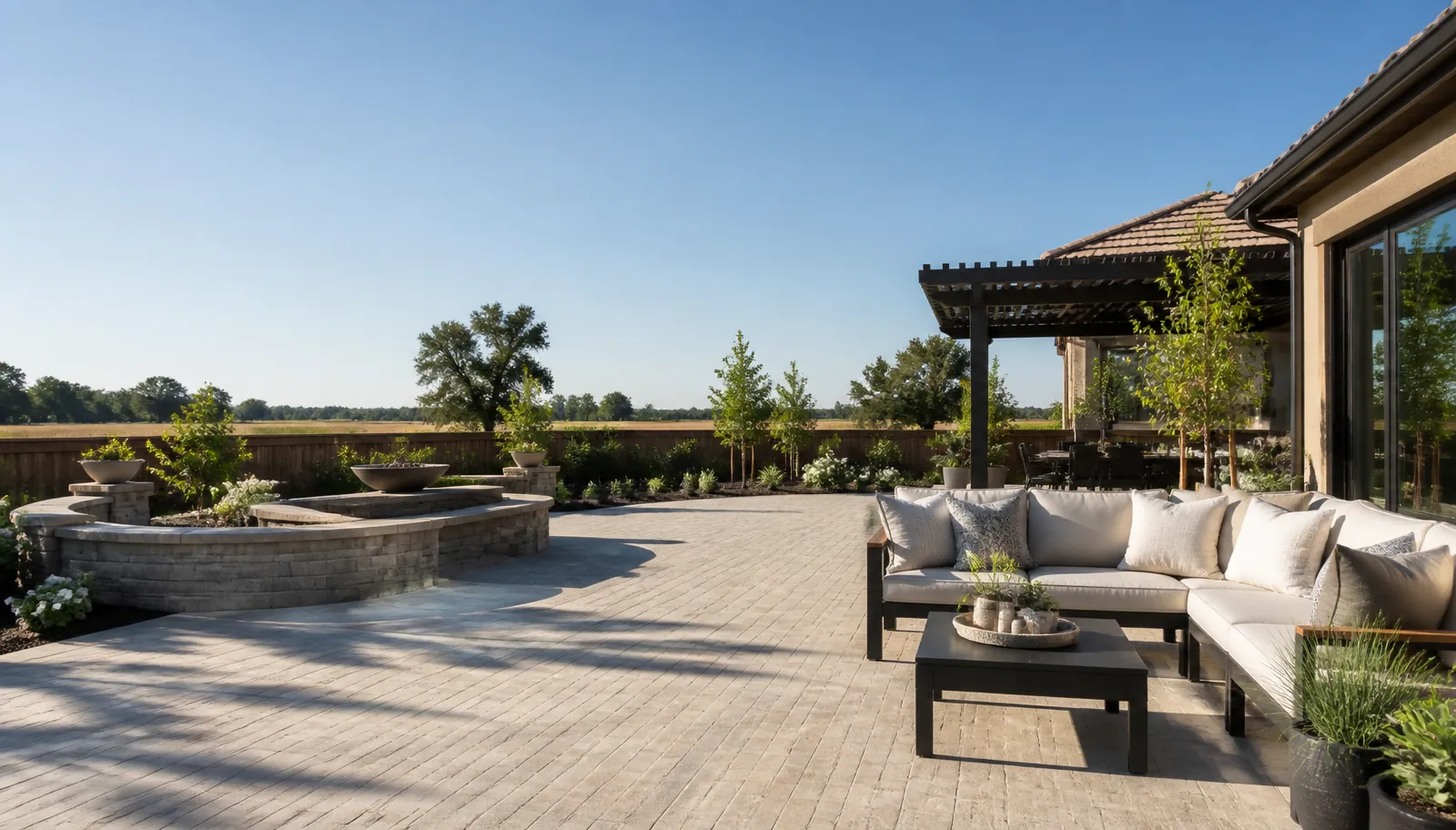
best pavers for hot summers in Orangevale, CA
Pavers That Stay Comfortable in Orangevale's Summer Heat
Not every paver handles Orangevale summer heat the same way. Some stay walkable barefoot at 2 PM in July. Others get hot enough to hurt.
No obligation. Licensed CA landscape contractor.
Light-colored, dense pavers like light gray concrete, travertine, and porcelain stay the coolest underfoot in Orangevale's summer heat. Dark pavers and poured dark concrete absorb far more heat and can become uncomfortable, even painful, to walk on barefoot during peak afternoon sun.
Why Paver Choice Matters More in Orangevale's Summer Heat
Orangevale regularly sees temperatures past 100 degrees from June through September. A dark patio surface sitting in direct sun during those months can climb well past the air temperature, turning an afternoon barbecue area into a surface nobody wants to cross without shoes.
How Color Changes Surface Temperature
Color is the single biggest factor in how hot a paver gets. Dark colors absorb more solar energy and convert it directly into surface heat. Light colors reflect more of that energy away instead of absorbing it.
- Charcoal and black pavers run noticeably hotter than light gray or tan pavers in the same sun
- Light gray, cream, and sand tones reflect more sunlight and stay cooler through the afternoon
- The same material in two different colors can have a meaningfully different surface temperature
- A matte finish reflects more light than a glossy sealed finish, which helps keep surfaces cooler
The difference is not subtle. On a hot Orangevale afternoon, a dark paver surface can run noticeably hotter to the touch than a light-colored paver sitting in the exact same spot, even though both receive the same amount of direct sun.
Best Paver Materials for Orangevale's Heat
Material matters alongside color. Some materials resist heat buildup better than others.
- Porcelain pavers are dense and non-porous, which helps them shed heat faster once the sun moves off them
- Travertine has a naturally porous structure that limits how much heat it holds onto through the day
- Light-colored concrete pavers offer a practical middle ground between heat performance and everyday durability
- Natural stone in lighter tones performs well, though darker natural stone can still run hot
Orangevale's own summer conditions make this choice matter more than it would in a milder climate. A material that stays comfortable through a mild June afternoon can still become uncomfortable once temperatures push past 100 degrees in July and August.
Placement Tricks That Help Beyond Material Choice
Material and color are not the only levers. Where a patio sits and how it is shaded through the day changes how hot the surface gets, regardless of what it is made from. A patio that gets full afternoon sun needs a cooler material more than a patio shaded by a tree or the house itself during the hottest hours.
The EPA's guidance on reducing heat islands points to the same combination Orangevale homeowners should consider: lighter, more reflective surfaces paired with shade wherever it is practical to add it.
- A pergola, shade sail, or mature tree over a patio cuts direct sun exposure during peak afternoon hours
- West-facing patios take the harshest late-day sun and benefit the most from a cooler material choice
- Covered walkways near a pool or entry stay usable even during the hottest part of a summer day
- Combining shade with a lighter paver color compounds the benefit rather than relying on either alone
How Repeated Heat Affects Pavers Over Time
Heat does more than make a surface uncomfortable in the moment. Repeated cycles of intense heat followed by rapid cooling, common during Orangevale's hot days and cooler nights, can stress joint sand, sealants, and the base beneath the pavers over years of use. Materials that run cooler to begin with go through less extreme temperature swings, which can mean less wear on those supporting layers over the life of a patio.
Why Cooler Pavers Also Help the Whole Yard
A cooler patio surface does more than protect bare feet. Surfaces that run hotter radiate that heat back into the surrounding air well after the sun goes down, which can keep a patio uncomfortable into the evening. A lighter, cooler surface loses that heat faster once the sun drops, making outdoor space usable earlier in the evening during the hottest stretch of summer.
Balancing Heat Performance With the Look Orangevale Homeowners Want
Heat performance does not mean giving up on style. Light gray, sand, and tan tones cover a wide range of design looks, from modern to natural stone, while still staying meaningfully cooler than dark charcoal or black options. A good hardscaping project in Orangevale starts by weighing heat performance alongside style, rather than picking a color first and discovering the tradeoff after the patio is already poured.
Samples viewed indoors rarely tell the full story. Setting a few paver samples in the actual spot they will go, then checking them in full afternoon sun a few days later, gives a far more honest read on comfort than a showroom display ever will.
Pick Pavers Built for Orangevale Heat
McGuire Earth Works Inc. helps you choose paver material and color before the first stone goes down. Call (916) 404-0944 for a free estimate.
Mon–Fri, 7am–5pm. Licensed CA landscape contractor.