
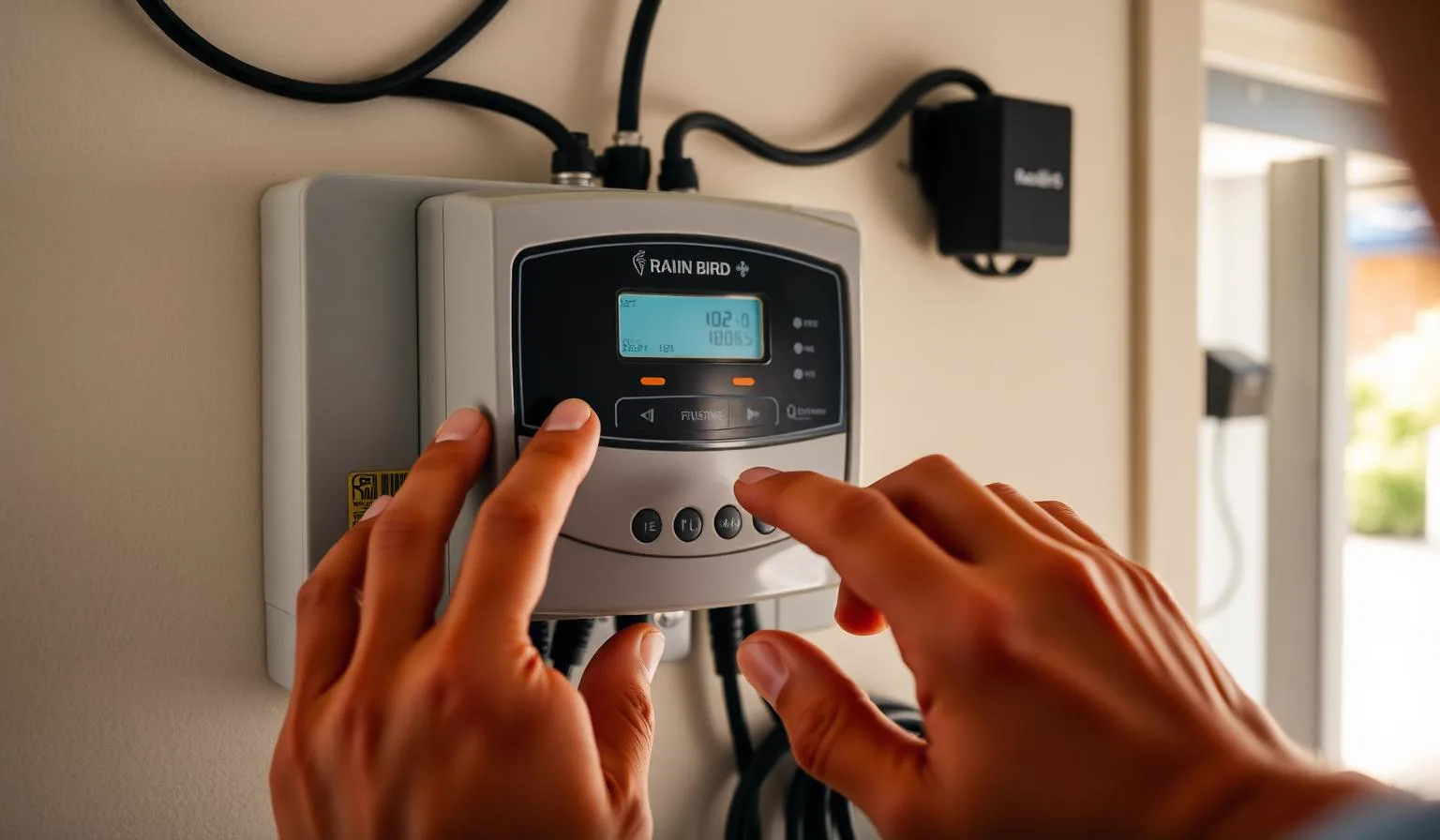
Irrigation Timer Programming in Orangevale, CA
Water Your Yard Right Every Season
Our techs program your timer for Orangevale weather and watering rules.
No obligation. Licensed CA landscape contractor.
Clear Signs Your Timer Needs Professional Programming
Your yard tells you when the timer is off. Walk your property in the morning and look for these red flags.
- Dry brown patches in the lawn mean certain zones are not running long enough to reach the roots
- Puddles or runoff at the curb mean run times are too long or cycles repeat too often
- Wilting plants in garden beds point to a drip zone skipping its cycle or running too short
- A blank or flashing controller screen means a power outage or dead backup battery wiped your settings
- Sprinklers running during rain means your timer has no rain sensor or the override is not working
Clay soil makes these problems worse here. Orangevale yards sit on heavy clay that holds water near the surface. Overwatering shows up fast as soggy patches, root rot, and dead grass rings. The same clay seals up when it dries out, so water runs off the top instead of soaking down to the roots.
Why Hiring a Pro Saves Time and Water
A trained tech knows local rules and your equipment. Orangevale falls under the Sacramento County Water Agency, which sets seasonal watering rules you must follow.
- Compliant schedules built around current Sacramento County watering days and hours
- Separate programs set in one visit for lawn spray zones and drip zones in your beds
- Fewer mistakes that can waste hundreds of gallons before you spot the problem on your bill
- Fast turnaround with most visits wrapping up in under two hours from start to finish
- A schedule you trust without ever opening the confusing controller manual
For more on smart watering schedules and seasonal adjustments, see this Rain Bird sprinkler design guide.
What to Have Ready Before Your Appointment
- Find your irrigation controller box. Confirm it has power and the screen lights up.
- Locate your main water shutoff valve so we can test each zone safely.
- Map your zones on paper. Note which water the lawn and which cover beds, trees, or pots.
- Mark trouble spots. Point out any patch that stays brown, soggy, or never seems to get water.
- Keep your water bill nearby. Some districts want a written watering schedule on file.
If your home sits near the Citrus Heights border, double-check your zone layout before the visit. Some properties in that area share irrigation lines across lot lines with a neighbor.
The Clear Process a Tech Follows on Site
- Zone inspection. We run each zone for one to two minutes and watch for coverage gaps, leaks, or clogged emitters.
- Program A setup. We build the lawn schedule using spray or rotor heads with longer run times to soak the root zone.
- Program B setup. We build the drip schedule with shorter, more frequent cycles so water reaches roots without pooling.
- 30/30 rule for drip. We set drip zones to run 30 minutes on, 30 minutes off, which stops runoff on clay soil.
- Start time tuning. We set start times to early morning so water soaks in before sun and wind take it away.
- Walk-through and review. We show you how to pause, resume, and adjust the timer before we leave.
Orangevale summers regularly push past 100 degrees in July and August. During those peak heat months, we often add a second early morning start time so your lawn gets a short top-off before the afternoon spike.
Simple Checks That Confirm Your Timer Is Set Right
Run a manual test cycle on each zone. Watch the spray heads pop up and look for full coverage. For drip zones, walk the bed and confirm each emitter drips steadily.
- Zone coverage: full spray pattern, no dry gaps
- Drip emitters: steady drip, no clogs or breaks
- Timer clock: correct day and time set
- Yard walk at 48 hours: no new dry or soggy spots
- Water meter reading: steady use, no sudden spikes
Homes in the Hazel Avenue corridor often have older valves that can leak after a cycle ends. Watch each valve box after the test and confirm every zone shuts off fully.
Seasonal Reprogramming Across the Year
- Spring reset. In March or April, raise your run times before summer heat hits.
- Mid-summer check. Bump run times up one step if a heat wave pushes past 105 degrees.
- Fall cutback. In October, dial watering back as days get shorter and cooler.
- Winter shutdown. Set your system to off or minimal from December through February when rain handles most of the work.
Keep a written log of each season's settings near your controller box. Write down zone run times, start times, and watering days for each program. This log makes future changes faster and helps you spot drift over the years.
Frequently Asked Questions
All Irrigation & Sprinkler Systems Services in Orangevale
Get a Watering Schedule That Just Works
We program your timer for every season so your yard thrives.
Mon–Fri, 7am–5pm. Licensed CA landscape contractor.