
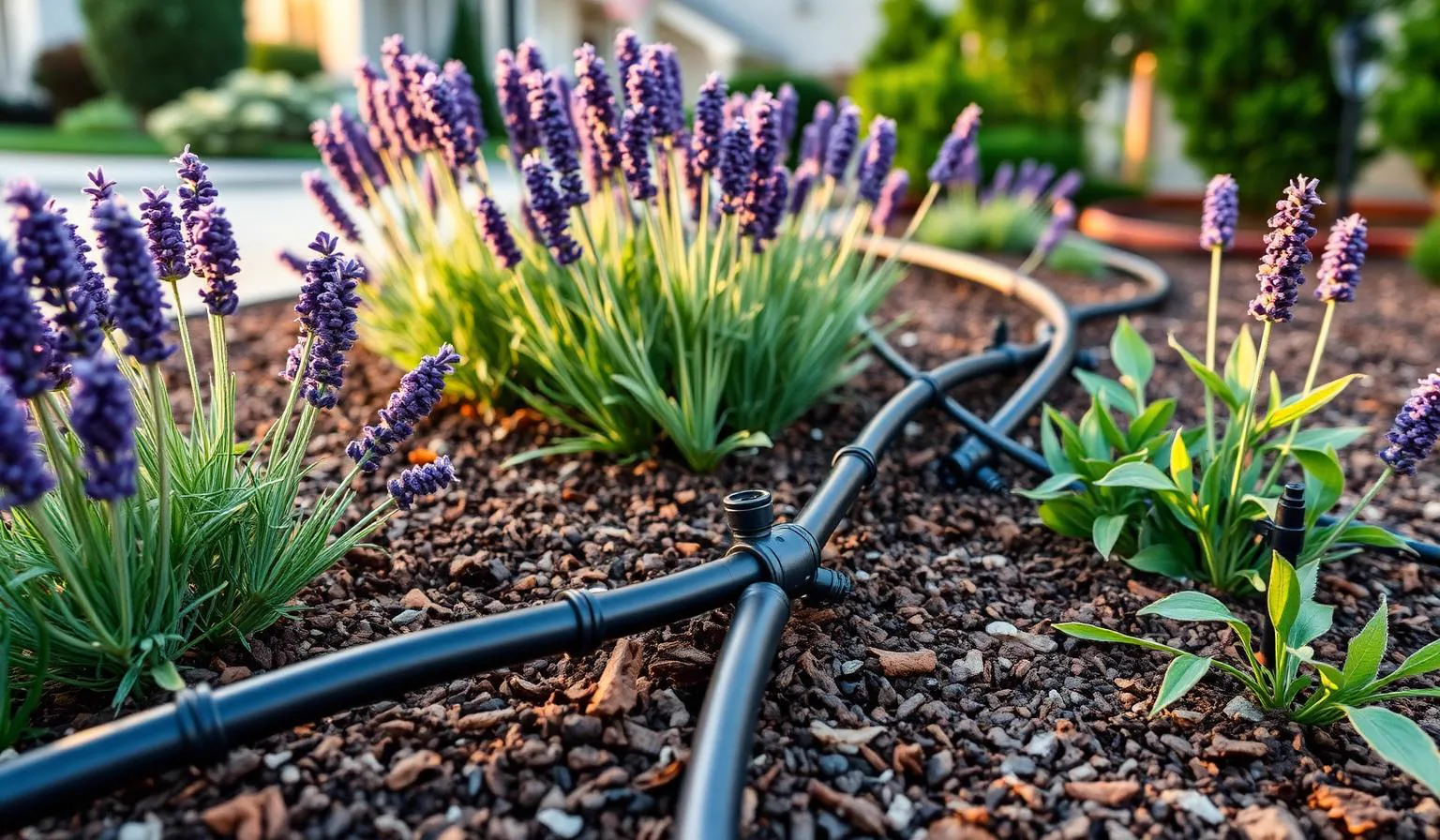
Drip Irrigation System Installation in Orangevale, CA
Water Straight to the Root Zone
Drip puts water where the plants need it and skips the air and the path. Less waste, healthier plants.
No obligation. Licensed CA landscape contractor.
Sacramento Valley summers hit garden beds hard. Sprinklers lose a lot of that water to evaporation and wind before it ever reaches a root. Drip puts water exactly where the plant needs it instead.
A well-planned system cuts water use and keeps every plant fed through the worst heat. Here is what actually goes into getting it right for Orangevale soil.
Does Soil Type in Orangevale Affect How a Drip System Should Be Set Up?
Yes. Orangevale has clay-heavy and loamy soils that absorb water at different speeds. A drip system here must match emitter flow rates to your soil type. Slow drip rates work best in clay soil to prevent pooling.
- Clay soil absorbs water slowly, so low-flow emitters reduce runoff.
- Sandy or loamy patches drain fast and need more frequent short watering cycles.
- A soil test helps a landscaper pick the right emitter size for each zone.
- Uneven soil types across one yard may need multiple irrigation zones.
- Proper setup prevents root rot, dry spots, and wasted water bills.
Signs Your Orangevale Yard Needs a Drip System Now
Your garden tells you when something is wrong. Orangevale summers push temperatures above 100 degrees, and that heat dries out garden beds fast.
- Dry spots in garden beds. Patches stay bone dry while other areas seem fine. Sprinklers miss key root zones.
- Wilting plants despite regular watering. Some roots get flooded while others stay parched.
- High water bills in July and August. Sprinklers lose water through evaporation and runoff.
- Hand watering every day. Dragging a hose around for 30 minutes each evening eats up your time.
- New trees and shrubs struggling. Young plants need consistent moisture to set strong roots.
If you see any of these signs, a drip system solves the root cause of the problem.
Why Drip Installation Is Worth Hiring a Professional
You can buy drip parts at any hardware store. So why hire a professional? Because a working system and a well-designed system are two very different things.
A landscaper maps your yard into zones based on what each plant needs. Tomatoes drink differently than lavender. Citrus trees need more water than rosemary. Grouping plants by water demand means every root zone gets the right amount without overwatering or starving anything nearby.
Professionals use commercial-grade fittings and tubing that resist UV damage. Big box store kits often include thin tubing that cracks after one summer. Correct pressure regulation matters too. Your home water pressure can blow out cheap emitters in days. A pro installs a pressure regulator sized for your system.
For a homeowner-friendly overview of drip basics, see this Rain Bird drip irrigation primer.
Getting Ready for Install Day
A little prep saves real time on the job. Find your main water shutoff and flag it, clear rocks and debris from the beds the system will reach, and pull back thick mulch so the crew can see the soil and plan tubing routes. Trim any branches blocking access, and flag sprinkler heads or shallow utility lines you know about. It also helps to write down where your roses, vegetables, fruit trees, and shrubs sit, since we use that list to design zones that match what each plant actually needs.
How Installation Goes
We measure your yard and group plants by water need first, marking tubing paths with paint or flags. From there we tap into your water line and set a backflow device, filter, and pressure regulator at the controller, then run half-inch poly mainlines through each zone, staked and tucked under mulch. Every plant gets an emitter sized to its flow needs. Once everything is in, we run each zone while walking the yard and program the controller for morning watering windows.
Check That Your New System Is Working Right
Run each zone one at a time and walk every inch of tubing. Watch each emitter closely. You want a steady, slow drip with no spraying or spitting.
- If the soil is still bone dry, the emitter flow rate is too low or the run time is too short.
- If the soil is soaking wet and muddy, the flow rate is too high or the cycle ran too long.
- If one zone feels perfect but another feels off, the timer settings for that zone need adjusting.
- If you find standing water around a plant base, the emitter needs to move a few inches away from the stem.
Morning watering between 5 AM and 8 AM works best in Orangevale because it cuts evaporation loss during the heat of the day.
Simple Care Keeps Your Drip System Running for Years
Drip systems need a little regular attention: flush the filter, check emitters, and adjust the timer with the seasons.
- Flush the main filter twice a year so silt and minerals do not block the line.
- Soak clogged emitters in white vinegar overnight to dissolve calcium buildup.
- Replace any emitter that does not clear after soaking.
- Check tubing connections at every tee, elbow, and end cap for drips or moisture.
- Add a thin layer of mulch over exposed tubing to block UV rays and extend tubing life.
Adjust your run times each season. Cut run times in half during fall and turn the system off during steady winter rain. By July and August, your system may need to run daily.
Back to Irrigation & Sprinkler Systems.
Frequently Asked Questions
All Irrigation & Sprinkler Systems Services in Orangevale
Keep Every Plant Thriving Through Orangevale Summers
We design and install a drip system matched to your yard.
Mon–Fri, 7am–5pm. Licensed CA landscape contractor.