
Drip vs. Sprinkler Irrigation in Orangevale, CA
Drip or Sprinkler? Most Orangevale Yards Actually Need Both
Lawns and garden beds don't drink the same way. Here's how drip and sprinkler irrigation each do their job, and where they fit in an Orangevale yard.
No obligation. Licensed CA landscape contractor.
Drip vs. Sprinkler in Orangevale: The Quick Answer
Sprinkler irrigation covers broad, even areas well. That makes it the right tool for lawns. Drip irrigation delivers water slowly and directly to individual plants. That makes it the right tool for shrubs, trees, and garden beds.
Most Orangevale yards use both at once. The turf runs on spray zones. Everything else runs on drip zones. Each zone is valved separately, so the lawn gets what a lawn needs and the beds get what the beds need. Neither one has to compromise for the other. That split is the heart of good irrigation design, and it is why the drip versus sprinkler question usually has a "both" answer.
How Sprinkler (Spray) Irrigation Works
Spray irrigation throws water over a wide area, which is exactly what a lawn wants. Modern spray systems work best with rotary nozzles. Rotary nozzles have a low precipitation rate, so water soaks in instead of running off. They also apply water at matched precipitation rates, which prevents wet spots in one corner and dry spots in another. The result is better distribution uniformity than older fixed spray heads.
Two small parts make a spray system work better. Pressure regulation heads keep each head running at the right pressure, so the spray pattern stays clean. Check valves keep water in the lines when the zone shuts off, so low heads do not drain out onto the sidewalk after every cycle.
How Drip Irrigation Works
Drip irrigation applies water slowly and precisely, right at the root zone. It works for turf, shrubs, trees, and garden beds. The tubing can sit on the surface or below it. Emitters release small drops, small streams, or mini sprays, depending on what the plant needs.
Emitter flow should match the plant's water needs. The WUCOLS classification gives a simple guide. Low-water or potted plants do well with about 0.5 gallons per hour. Medium-water plants take about 1.0 gallon per hour. High-water plants may need 2.0 to 4.0 gallons per hour. Emitters should be spaced evenly along the plant line and placed at least six inches from the base of the plant, so one spot does not get soaked.
Inline drip suits plants with similar water needs and similar sun exposure. Water spreads through the soil by capillary action, so the right design depends on your soil type and the emitter flow rate. The City of Roseville's guide to optimizing landscape irrigation covers these same design basics and is a good reference if you want to dig deeper.
Converting an Old Sprinkler System to Drip
You do not have to rip out an old spray system to get drip. Drip can be retrofitted onto an existing pop-up spray system, and converting is a supported approach. The work usually goes like this:
- Pick the zones that suit drip. Shrub beds and garden beds convert well. Open turf usually stays on spray, since lawns need broad, even coverage.
- Cap the old spray heads. In the zones being converted, heads that are no longer needed get capped off.
- Install emitters sized to each plant. Each emitter is matched to the plant's WUCOLS water-use category, from 0.5 gallons per hour up to 4.0 for thirsty plants.
- Upsize emitters as plants grow. A young shrub needs less water than a mature one. Emitters can be swapped for higher-flow versions later as plants mature.
Smart Controllers Tie Both Systems Together
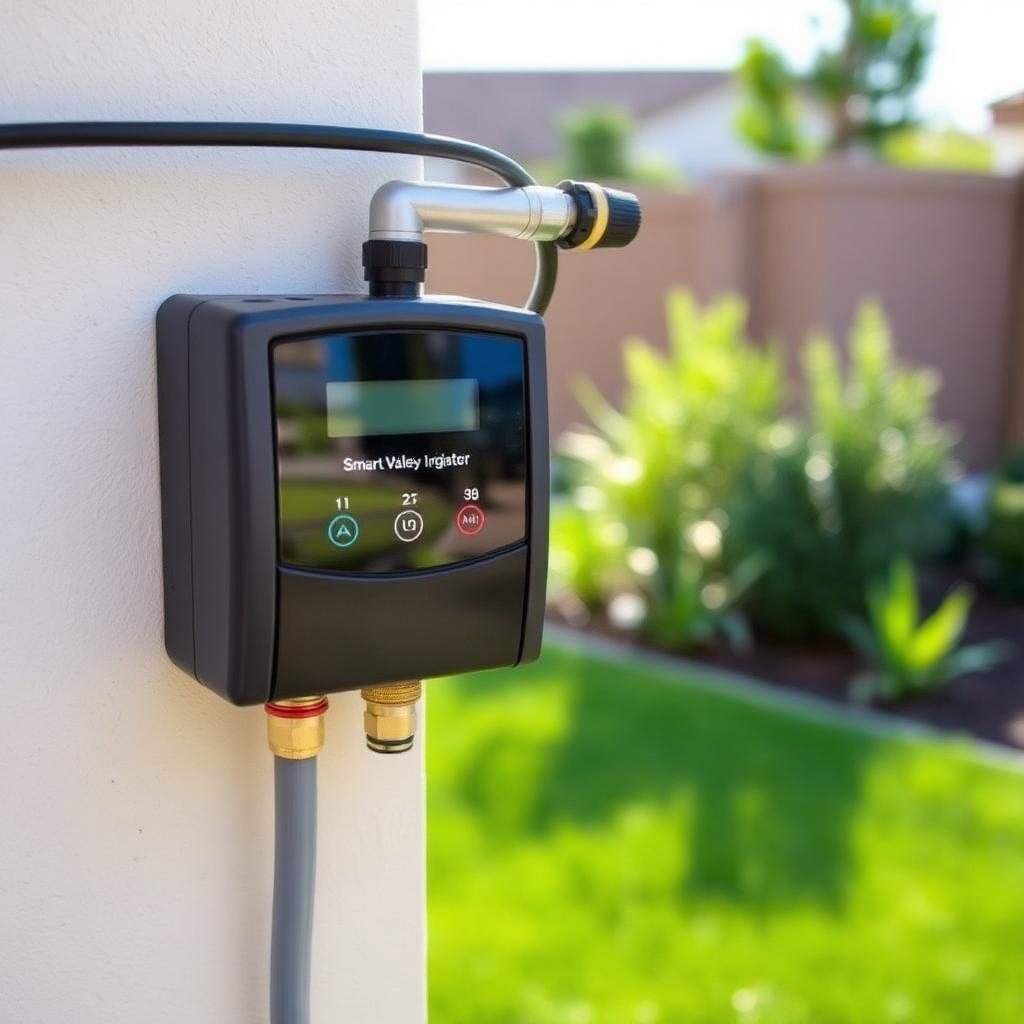
A smart controller sits at the center of a mixed system. It applies the right amount of water based on actual site conditions, not a fixed guess set once in spring. Sun, season, and plant type all factor in.
That matters most when a yard runs both spray and drip. The lawn zones and the bed zones need different run times, and those needs shift through the year. A smart controller handles that split automatically, so each part of the yard gets what it needs without overwatering the rest.
Which System Fits Your Orangevale Yard
The choice is rarely one or the other. Lawn areas do well on spray with rotary nozzles, because turf needs even coverage across the whole surface. Shrub beds, foundation plantings, trees, and vegetable or garden beds do better on drip, because each plant gets water at its own roots. When one zone tries to serve two very different plant types, one of them always loses. Separate zones solve that problem before it starts.
Most mixed Orangevale yards run both, zoned separately. A front yard might be one spray zone for the lawn and one drip zone for the beds along the walkway. A back yard might add drip zones for trees and a garden. The point is that each area gets the right delivery method and the right amount of water.
Getting Your Irrigation System Right the First Time in Orangevale
A good irrigation system in Orangevale starts with zoning, and zoning starts with knowing which areas need spray and which need drip. Once the zones are set, timing matters too. Our guides to cycle and soak watering and the best time to run sprinklers show how to schedule each zone so water soaks in instead of running off.
Ready to sort out your yard? Call (916) 404-0944 for a free estimate on a zoned irrigation design. We will walk the property, map the zones, and match each area to the delivery method that fits it best.
All Irrigation & Sprinkler Systems Services in Orangevale
Get a Zoned Irrigation Design That Fits Your Yard
Call (916) 404-0944 for a free estimate on an irrigation system built around your plants.
Mon–Fri, 7am–5pm. Licensed CA landscape contractor.