
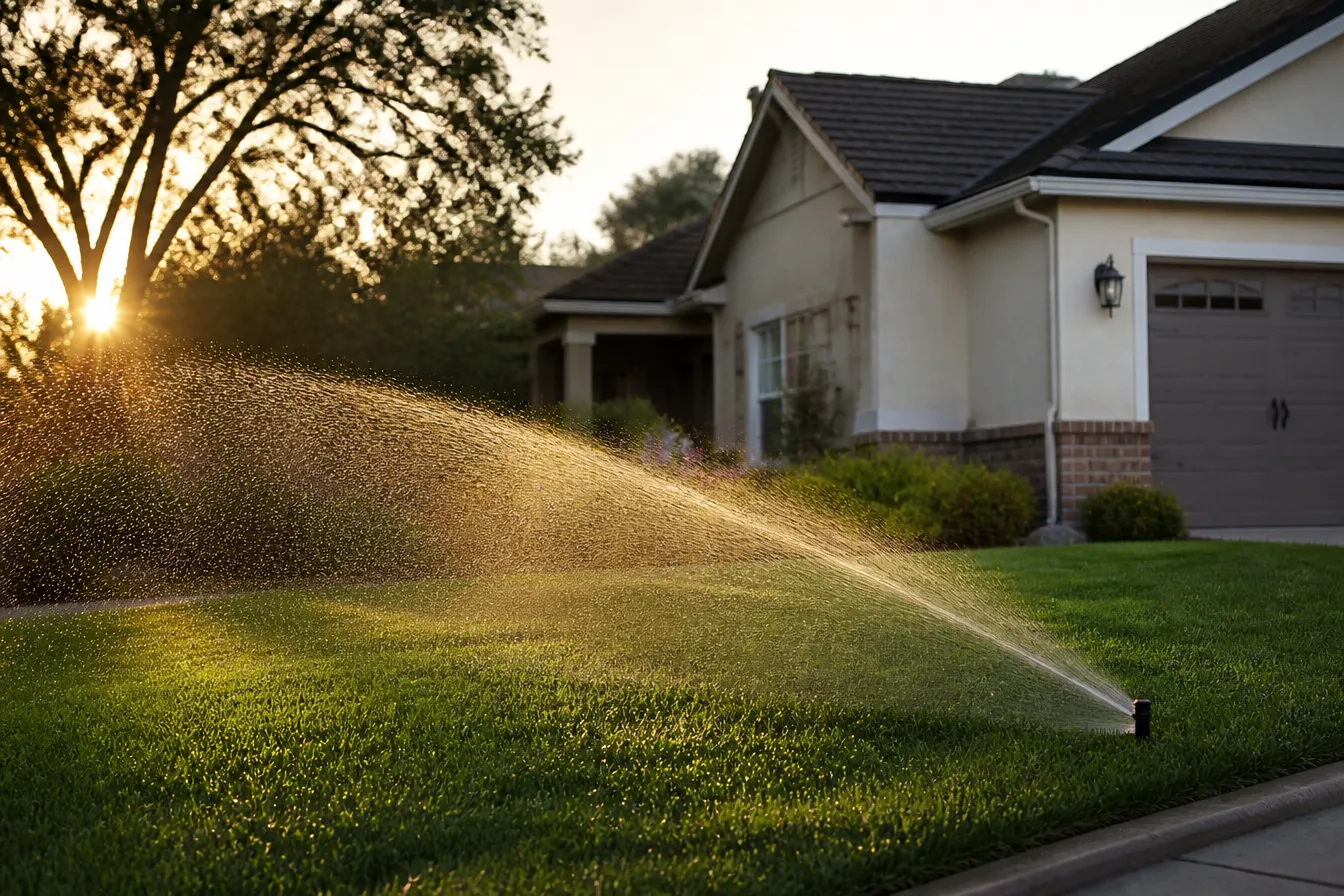
best time to run sprinklers in the heat in Orangevale, CA
Run Sprinklers at the Right Hour and Every Drop Counts
Run your sprinklers at the wrong hour in Orangevale, and a lot of that water never reaches the roots. Here is the window that actually works once summer heat sets in.
No obligation. Licensed CA landscape contractor.
The best time to run sprinklers in Orangevale is early morning, generally between 4 and 8 AM, before the sun and wind pick up. Water applied in that window has time to soak into the soil before heat pulls it back out as vapor. Water applied at midday or in strong afternoon heat loses a large share to evaporation before it ever reaches the roots.
Why Timing Matters More in Orangevale's Summer Heat
Orangevale regularly sees temperatures past 100 degrees from June through September. At that heat, water sitting on soil or grass blades starts evaporating fast, sometimes within minutes of the sprinkler shutting off. A schedule that works fine in April can waste a large share of its water by August if the run time never changes with the season.
The gap between a well timed schedule and a poorly timed one grows every week the heat stays past 100 degrees. A yard watered at 5 AM in July can use noticeably less total water than the same yard watered at noon, just to reach the same level of green.
The Best Window: Early Morning
Early morning offers three things the rest of the day does not: cooler air, calmer wind, and higher humidity. All three cut down how much water is lost before it reaches the ground.
- Cooler temperatures before sunrise mean less water is lost to evaporation
- Wind is usually calmest in the early morning, so spray patterns land where they are aimed
- Grass blades get several hours to dry out before the day's heat and humidity peak
- Roots get first access to water before the day's heat pulls moisture back out of the soil
Why Evening and Nighttime Watering Backfire
Watering in the evening feels like it should help since the heat has passed, but it creates a different problem. Grass that stays wet overnight gives fungus and lawn disease hours to take hold, since the blades never get a chance to dry before nightfall. Watering late at night makes this worse, not better. The evaporation savings from skipping the afternoon do not make up for the disease risk that comes with wet grass sitting overnight.
Adjusting the Schedule as the Seasons Change
The early morning window matters most once summer heat sets in, but the schedule underneath it should shift throughout the year. Spring and fall in Orangevale need less frequent watering since temperatures stay milder and evaporation slows down. Ramping the schedule up gradually as June approaches, instead of jumping straight to a summer run time in April, keeps roots from getting used to more water than they actually need during cooler months.
A controller left on the same setting all year almost always overwaters in spring and underwaters in the peak of summer. Checking and adjusting the schedule at least once a season catches both problems before they show up as a brown lawn or a spike in the water bill.
How Clay Soil Changes an Orangevale Watering Schedule
Clay-loam soil, common across Orangevale yards, drains slowly compared to sandy soil. Water applied too fast pools on the surface and runs off into the gutter instead of soaking down to the roots. Splitting one long watering session into two or three shorter cycles, with a short pause between each, gives clay soil time to absorb water instead of shedding it. This matters just as much as the time of day the system runs.
- Cycle and soak, running a zone for a few minutes, pausing, then running it again, lets clay soil absorb water in stages instead of shedding it
- A single long cycle on clay soil often pools and runs off before the full amount ever soaks in
- Zones with heavier clay usually need shorter, more frequent cycles than zones with looser or amended soil
- Mulch over exposed soil slows evaporation between cycles and helps hold the water that does soak in
A well designed irrigation and sprinkler system in Orangevale accounts for both timing and soil type from the start, rather than leaving a homeowner to guess at a factory default schedule.
Signs Your Orangevale Sprinkler Timing Is Off
A few signs point to a schedule that needs adjusting, not more water overall.
- Water pooling on the sidewalk or driveway during or right after a cycle
- Brown or yellow patches even though the system runs every day
- Fungus, mold, or a musty smell near the lawn after watering
- A rising water bill with no visible improvement in how the yard looks
Fitting Your Schedule Inside Orangevale's Water Budget
Landscapes across Orangevale fall under MWELO water budget rules, which set a cap on how much irrigation water a property can use. Running sprinklers during the least wasteful hours, and splitting cycles to match clay soil, both help a schedule stay inside that budget instead of running over it every summer. EPA WaterSense's guidance on watering during hot weather backs up the same early morning window, for the same evaporation reasons that apply right here in Orangevale.
Homeowners who dial in both pieces, the right hour and the right cycle length for clay soil, tend to see a lower summer water bill without the lawn looking any worse for it. The schedule costs nothing to change. It just takes knowing which hours are working against the water instead of with it.
All Irrigation & Sprinkler Systems Services in Orangevale
Get a Watering Schedule Built for Orangevale Heat
McGuire Earth Works Inc. programs every system around Orangevale's summer heat and clay soil. Call (916) 404-0944 for a free estimate.
Mon–Fri, 7am–5pm. Licensed CA landscape contractor.