
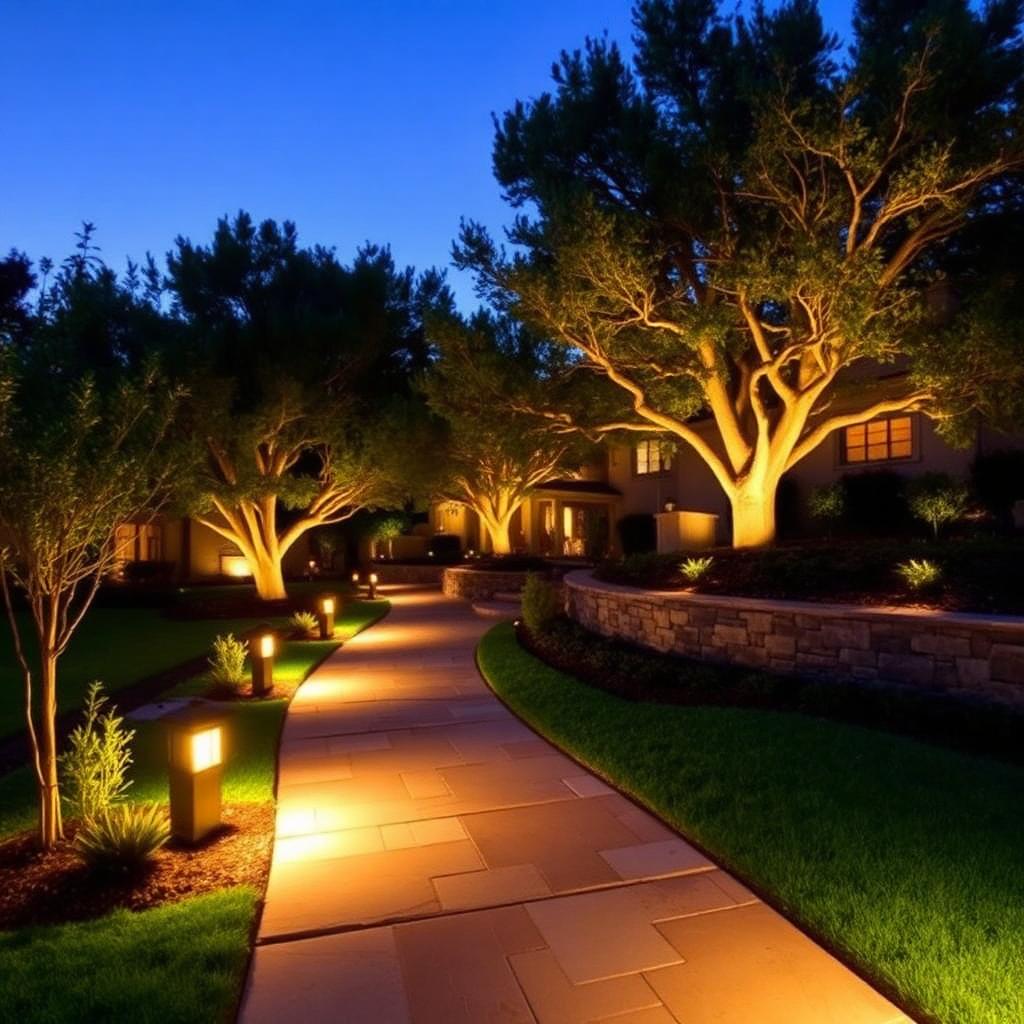
Landscape Lighting Lumens in Orangevale, CA
Lumens, Not Watts: What Actually Makes Landscape Lighting Bright
Watts tell you how much power a fixture uses. Lumens tell you how much light you actually get. Knowing the difference matters when you're picking landscape lighting for your Orangevale yard.
No obligation. Licensed CA landscape contractor.
Landscape Lighting Lumens in Orangevale: The Quick Answer
Watts measure how much electricity a fixture draws. Lumens measure how much light it actually puts out. Those are two different things, and mixing them up is the most common mistake people make when shopping for landscape lighting.
Here is why it matters. Two fixtures can draw the same low wattage and still produce very different amounts of light. If you shop by watts, you are shopping by power use, not brightness. Lumens are the number that tells you what you are actually getting.
This trips people up because the old habit made sense for a long time. With incandescent bulbs, watts and brightness moved together, so the shortcut worked. With modern fixtures, that shortcut is broken. The sections below show what each number really measures and how to use them when you compare fixtures.
Lumens vs. Watts: What Each One Actually Measures
For decades, people bought bulbs by watts because old incandescent bulbs turned watts into light in a predictable way. A higher wattage meant a brighter bulb, every time. That habit stuck around even after lighting technology changed.
For reference, here is how that worked with old incandescent bulbs. These numbers come from ENERGY STAR's guide to brightness, and they show the minimum lumens each old wattage produced:
- A 40 watt bulb gave at least 450 lumens.
- A 60 watt bulb gave at least 800 lumens.
- A 75 watt bulb gave at least 1,100 lumens.
- A 100 watt bulb gave at least 1,600 lumens.
- A 150 watt bulb gave at least 2,600 lumens.
Modern LED landscape fixtures do not map directly to these numbers, because LEDs make far more light per watt. But the reference points are still useful for one thing: they show that lumens are the real measure of brightness, and watts were only ever a rough stand-in.
Using the Same Logic for Landscape Fixtures
The same lumens-not-watts logic applies when you compare landscape fixtures. LED landscape lighting draws very little power across the board. When every fixture on the shelf sips electricity, wattage alone barely tells one fixture apart from another.
The lumens listed on a fixture's spec sheet is the number that actually tells you how bright it will be. Manufacturers list both lumens and the equivalent standard wattage on packaging, so the information is there if you know which number to read.
Think of it this way. Wattage is like the size of an engine. Lumens are like the speed the car actually goes. Two engines of the same size can move very different cars. Two fixtures at the same wattage can light a yard very differently. The output number is the one that matters.
Why This Matters When Shopping for LED Landscape Fixtures
Two LED fixtures at the same low wattage can still differ a lot in brightness. One might be built for a soft glow along a path. The other might throw a wide beam across a driveway. Same watts, very different results.
Shopping by watts alone can leave you with a yard that is dimmer or brighter than you expected. Checking the lumens on the spec sheet before you buy avoids that surprise. And when you want to save energy, the approach is simple: find the lumens you need first, then pick the option with the lowest wattage that delivers it.
That order matters. Start with brightness, because brightness is the point of the fixture. Then let wattage break the tie between options that give you the light you want. Doing it backwards is how yards end up with fixtures that are cheap to run but too dim to use.
Matching Light Output to the Job
Not every fixture in a yard needs the same brightness. A pathway light does not need to put out as much light as a security fixture covering a driveway. The goal is the right amount of light in each spot, not the most light everywhere.
More lumens is not automatically better, either. Landscape lighting also has to avoid glare, and it should not spill light onto a neighbor's yard. A fixture that is too bright for its spot can be just as much of a problem as one that is too dim. A well planned system balances brightness against comfort and courtesy. For the specifics on how wattage plays into that balance, see our guide to landscape lighting wattage. And for how brightness supports a safer property, see landscape lighting for home security.
Why Orangevale Homeowners Should Check Lumens Before Buying
The practical takeaway is simple. When you compare landscape fixtures for an Orangevale yard, ask for the lumens number, not just the watts. This matters most when you compare LED fixtures from different brands, because two fixtures with identical wattage can perform very differently.
A fixture that looks like a bargain can turn out to be half as bright as the one next to it. Thirty seconds spent reading the spec sheet beats finding that out after the fixtures are already in the ground. If a package or product page does not list lumens at all, treat that as a warning sign and keep looking.
Getting Lighting Brightness Right the First Time in Orangevale
Brightness is one piece of a bigger design. A full landscape lighting in Orangevale plan matches each fixture's light output to its job, so paths, trees, and gathering spots each get the light they need and nothing more.
Want help sorting out the right fixtures for your yard? Call (916) 404-0944 for a free lighting estimate. We will walk the property with you and spec every fixture by the light it actually produces.
All Landscape Lighting Services in Orangevale
Get the Right Brightness in Every Corner of Your Yard
Call (916) 404-0944 for a free lighting estimate. We spec every fixture by light output, not guesswork.
Mon–Fri, 7am–5pm. Licensed CA landscape contractor.