
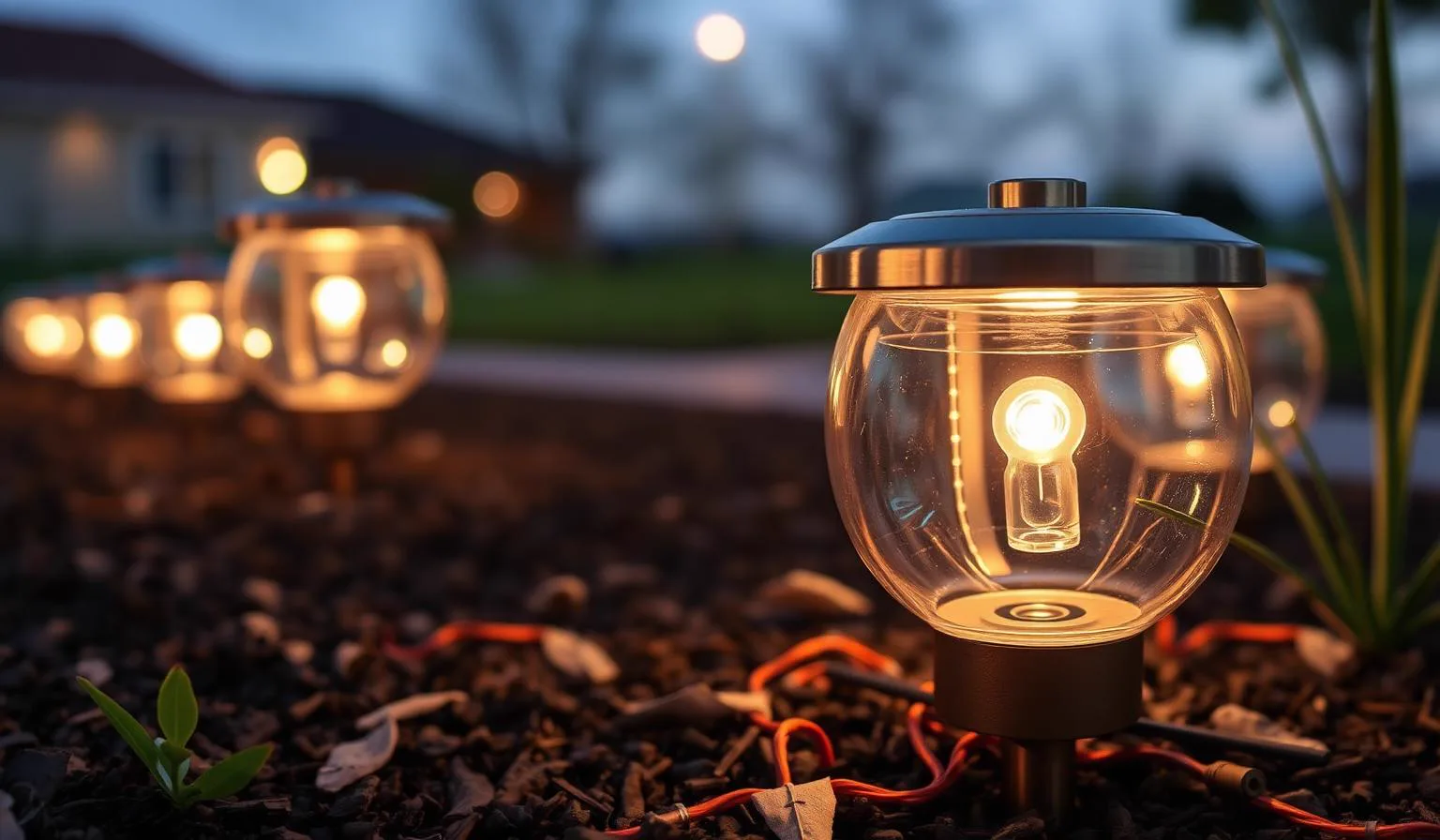
landscape lighting wire depth in Orangevale, CA
Bury It Once, at the Right Depth
Low-voltage lighting wire is easy to lay and easy to get wrong. Here is how deep it should go in an Orangevale yard, and what to check before the shovel goes in.
No obligation. Licensed CA landscape contractor.
How Deep Landscape Lighting Wire Should Go
Landscape lighting runs on low voltage, usually 12 volts, stepped down from household power by a transformer. Because the voltage is low, the electrical code allows this cable to sit much shallower than a standard power line. For direct-burial low-voltage lighting cable, about 6 inches is the usual target. That is deep enough to stay out of the way and shallow enough that a trench is a morning of work, not a machine job.
Call 811 Before You Dig in Orangevale
Six inches sounds too shallow to hit anything. It is not. Irrigation lines, gas service lines, and cable runs all live in that first foot of soil, and older Orangevale yards have had decades of work done in them.
811 is the free national before-you-dig service. You contact them a few business days before you dig, and the utilities come out and mark their buried lines with paint or flags. It costs nothing. It applies even to small jobs like setting a fence post or planting a tree. We call before every lighting job, and you should before any digging of your own.
Why Shallow Wire Causes Problems Later
Wire laid on top of the soil, or barely under it, does not stay put. Here is what tends to happen:
- A shovel or edger cuts it during the next project
- Sun and heat break down the jacket where it is exposed
- Animals chew on it
- It works its way to the surface and becomes a trip hazard
- Foot traffic and mowers press on it until a connection fails
None of these show up the first month. They show up in year two or three, when finding the break means digging up the run. That is especially frustrating when the run powers the lighting you count on for home security.
Trenching in Orangevale Clay Soil
Orangevale clay-loam gets very hard when it dries out. In late summer a 6 inch trench can be real work with a hand tool. The same soil cuts easily when it is damp, which is why we often trench a day or two after a watering cycle. Clay also swells and shrinks with the seasons, and that movement will slowly push a shallow wire upward over the years. Going a little deeper in clay is cheap insurance.
Protecting the Wire You Bury
- Use cable rated for direct burial, not indoor wire
- Run wire under a sleeve where it crosses a driveway, walkway, or planting bed you will dig in later
- Keep connections above grade at the fixture, or use waterproof connectors rated for burial
- Leave a small loop of slack at each fixture so a light can be moved without splicing
- Photograph the trench runs before backfilling, so you know where the wire is
That last one takes two minutes and saves a lot of guessing later. The parts above the ground matter just as much, which is why we build with brass landscape lighting fixtures that outlast the wire they are wired to.
Orangevale Lighting Wired to Last
A lighting system is only as good as the parts nobody sees. We set the depth, sleeve the crossings, and use connectors built to sit in wet ground. Call McGuire Earth Works for a free estimate and we will lay out a system that still works in ten years.
Frequently Asked Questions
All Landscape Lighting Services in Orangevale
Lighting Wired to Last
McGuire Earth Works Inc. installs low-voltage lighting across Orangevale. Call (916) 404-0944 for a free estimate.
Mon–Fri, 7am–5pm. Licensed CA landscape contractor.