
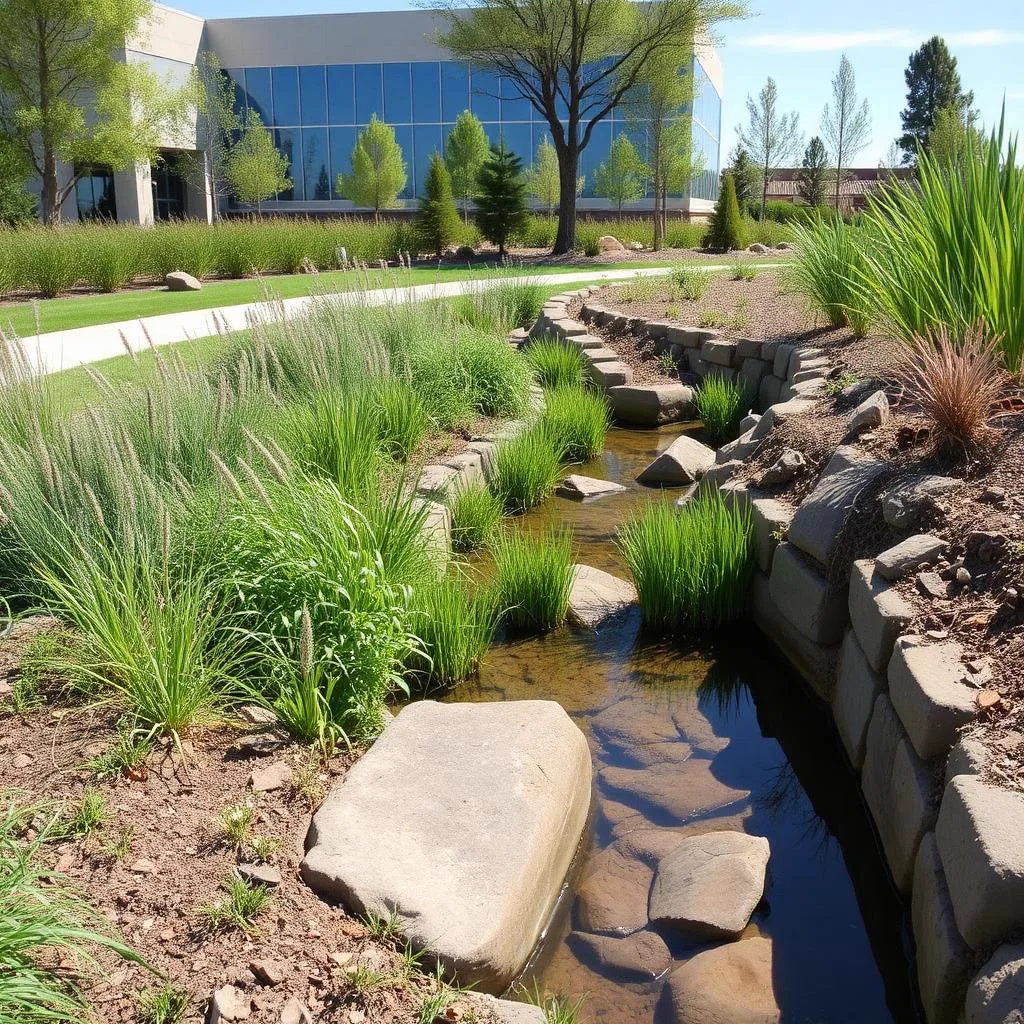
Bioswales in Orangevale, CA
Planted Channels That Soak Up Runoff
Our team designs and installs bioswales that drain your property naturally and look like part of the landscape.
No obligation. Licensed CA landscape contractor.
What Does a Bioswale Actually Do for Your Property?
A bioswale is a planted channel that slows, filters, and absorbs stormwater runoff, moving water away from the property and letting it soak safely into the ground while the plants and gravel clean it as it flows through.
- A bioswale reduces puddling and erosion across your yard
- It filters pollutants like oil and sediment before they reach storm drains
- Native plants in the channel absorb extra water naturally
- It lowers the load on Orangevale's storm drain system
- It adds green space and curb appeal at the same time
Standing Water and Runoff Are Real Problems for Orangevale Yards
Orangevale winters bring sharp rain bursts that overwhelm flat lots and clay-heavy soil in minutes. Before we suggest any fix, we walk your property and find the real source of the problem.
- Pooling spots where water sits for hours or days after a storm
- Fast-flow paths that cut channels through grass and strip topsoil
- Foundation risk areas where runoff drifts toward your house instead of away
- Borrowed water flowing in from neighbors, sidewalks, or street curbs
- Bare or thinning turf that signals repeated soil loss in one area
Clay holds water on the surface instead of letting it soak in. We also check your downspouts and hardscape edges, since roof runoff often dumps gallons of water in one spot during a single storm.
A Bioswale Beats Other Drainage Options for Many Yards
| Option | Best For |
|---|---|
| Bioswale | Larger runoff volumes and gentle slopes |
| French Drain | Small wet spots near a foundation |
| Rain Garden | Light runoff in a flat corner of the yard |
| Buried Pipe | Routing water from a downspout to a curb |
A bioswale moves more water than a rain garden because the channel keeps flow moving. It also costs less to keep up than a French drain since you can see the whole system. The gentle slopes around the Citrus Heights side of Orangevale fit bioswale design well. For technical guidance on grassed swale design, see this EPA best management practice document.
Getting Ready
We call 811 to mark utility lines before any digging and check with Sacramento County on grading or drainage permits. Clear the work area of furniture, planters, and hoses ahead of time, and let us know where your downspouts and hardscape edges sit so we plan the channel correctly. If you're in the Mesa Verde neighborhood, this matters even more, since many homes there sit on lots where the utility maps do not always match what's actually underground, so we always wait for the utility marks before any shovel hits dirt.
What Happens During Installation
- Survey and stake the channel path along your natural drainage flow
- Dig a shallow, gently sloped trench across the target area
- Line the base with gravel or river rock to help water filter and move through
- Set plants in place, spaced to slow water and hold soil firmly
- Grade the edges so water enters the channel cleanly without spilling over
Most Orangevale yards need a channel six to twelve inches deep with a gentle slope around one to two percent. We group deep-rooted natives near the inlet where water hits hardest. Most installs wrap up in one to three days.
Testing Your New Bioswale
- Place a hose at the inlet and turn it on full pressure
- Watch water travel down the channel for at least ten minutes
- Track how fast water reaches the outlet or soaks in
- Walk the edges and look for any overflow or escape points
- Check the gravel and plant beds for early signs of erosion
Water should reach the outlet or soak in within 24 to 48 hours. The real test comes with Orangevale's first fall storms. After that first storm, walk your yard with us so we can check the inlet, plant spacing, and outlet zone.
Simple Maintenance Keeps Your Bioswale Working for Decades
- Clear leaves, twigs, and trash from the inlet after every storm
- Trim back dead or overgrown plants twice a year
- Replace any plants that fail to come back in spring
- Top off gravel where heavy rain has pushed it toward the outlet
- Walk the channel edges once a year and look for cracks, gaps, or settling
- Pull weeds that crowd out your native plants
The biggest threat in Orangevale is leaf and debris buildup at the inlet, especially in the Oak Park area where oak leaves drop heavy each fall. A well-built and well-kept bioswale can last 20 years or more.
Frequently Asked Questions
Turn Your Soggy Yard Into Clean Drainage
We design and install a bioswale built for your soil and slope.
Mon–Fri, 7am–5pm. Licensed CA landscape contractor.