
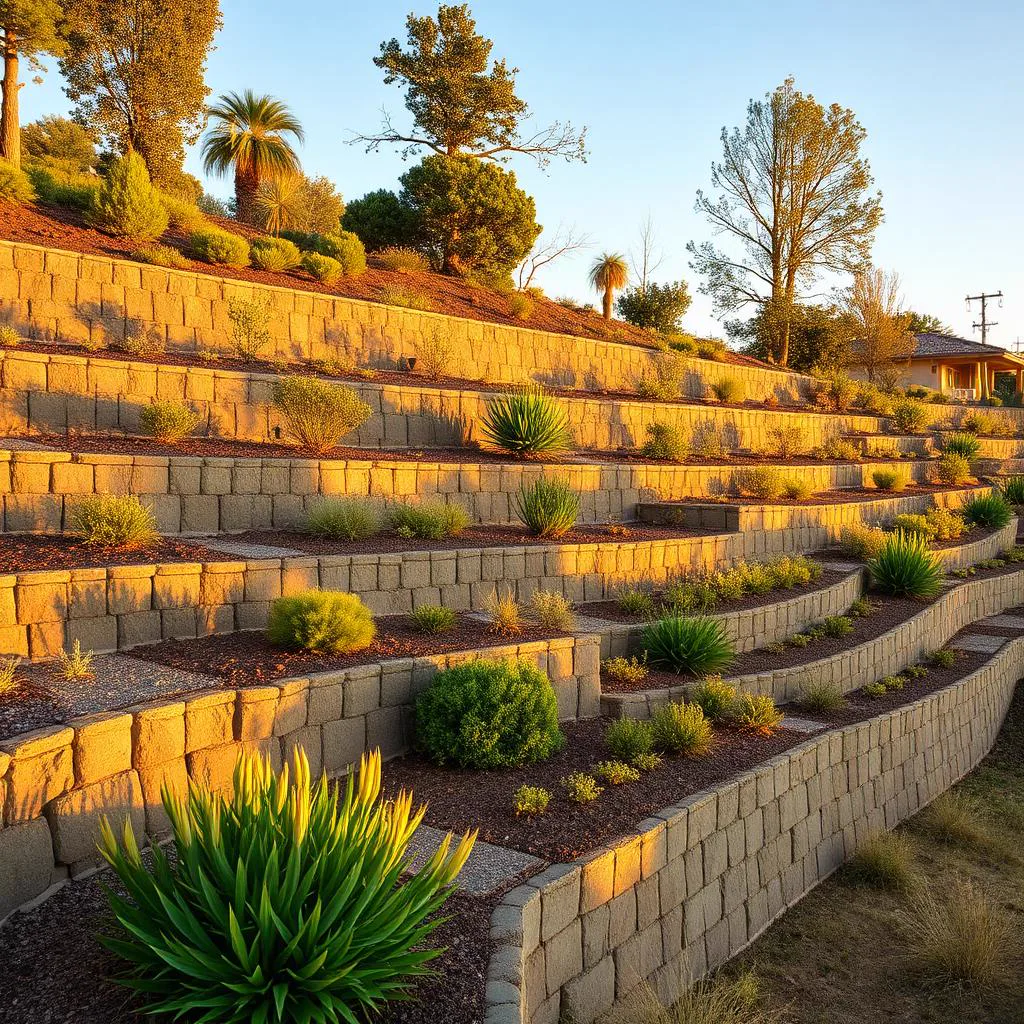
Hillside Stabilization in Orangevale, CA
Keep the Hill Where the Hill Belongs
Our crews stabilize your Orangevale hillside with proven walls, terracing, and native planting.
No obligation. Licensed CA landscape contractor.
Do I Need a Permit for Hillside Stabilization in Orangevale?
Yes, most projects require a grading permit from Sacramento County. Retaining walls over a certain height also trigger a separate building permit. Your contractor should pull all required permits before work begins.
- Sacramento County sets grading permit thresholds based on cubic yards of soil moved
- Retaining walls taller than 4 feet, measured from the bottom of the footing, need a separate structural permit
- Your landscaper can submit permit applications on your behalf to save time
- Skipping permits can lead to fines and required removal of finished work
Warning Signs Your Hillside Needs Stabilization Now
Orangevale sits in the Sierra Nevada foothills, where clay-heavy soils swell when wet and crack when dry. That cycle speeds up slope failure on local properties. Walk your hillside after every heavy rain.
- Bare soil patches — rain on exposed dirt carries that soil straight down the hill
- Cracks running through the ground show the soil is shifting underneath
- Leaning fences or tilting walls mean the soil behind them is pushing forward
- Muddy runoff reaching your driveway or your neighbor's yard signals soil leaving the property
- Dead or sparse plants on the slope — roots are what hold soil in place
If you see two or more of these signs, call for a slope inspection. Catching problems early saves thousands compared to rebuilding after a slide.
Retaining Walls and Terracing Are Both Strong Options
| Method | Best For |
|---|---|
| Retaining walls | Steep slopes needing to hold back large soil volumes |
| Terracing | Long gradual slopes where you want to slow runoff |
| Native planting | Adding root strength and surface erosion control |
| Boulder placement | Anchoring soil while boosting curb appeal |
Retaining walls hold soil back where space is tight. Terracing turns one long slope into a series of flat steps that slow water before it picks up speed. In the Citrus Heights area near Orangevale, terraced slopes have handled heavy winter rains better than single retaining walls alone. Native plants like toyon and coffeeberry act like rebar inside the soil. For broader guidance on managing runoff in sloped urban areas, see this EPA management measures resource.
What to Confirm Before Work Starts
- Confirm Sacramento County grading permit requirements before any soil moves
- Have us inspect soil type and slope angle before choosing a method
- Clear the slope of dead plants and loose debris so the full area is visible
- Call 811 at least three business days before digging to mark underground utilities
- Set clear project goals together, including drainage targets and plant coverage
Orangevale properties near tributary streams may need extra erosion review from Sacramento County before grading begins. We flag this early so your timeline stays on track.
How a Professional Crew Stabilizes Your Hillside Step by Step
- Grade and compact the slope to form a firm base before walls or plants
- Dig deep footings for retaining walls to resist the pressure of soil behind them
- Install filter fabric and drainage gravel so water flows out instead of pushing walls
- Set boulders partly buried so they lock in place during a storm
- Plant deep-rooted natives like toyon and coffeeberry to hold the hillside year after year
- Mulch and water in to slow runoff and help young roots settle quickly
We schedule grading during the dry months whenever possible. Wet winter soil shifts under heavy equipment and makes compaction hard to control.
Check These Results After Your Project Is Complete
| What to Check | When to Check It |
|---|---|
| Slope surface for erosion | After the first soaking rain |
| Wall drainage holes flowing | Within 24 hours of rainfall |
| New plant roots taking hold | Two to four weeks after install |
| Boulder and rock placement | Monthly for the first season |
| Permit close-out paperwork | Within 30 days of project end |
Pay close attention to drainage holes in any retaining wall. Water should flow clean and clear through each one. In the Shadyside neighborhood, homeowners do a post-rain walkthrough each winter to catch small problems early.
Simple Ongoing Maintenance Keeps Your Hillside Stable for Years
- Fall debris clearing — clear leaves, sticks, and silt from drainage channels before storms
- Quick plant replacement so bare soil does not wash out on the slope
- Spring wall inspection for hairline cracks, bulging, or any tilt away from level
- Yearly mulch top-off of two to three inches to slow runoff and hold moisture
- Plant trimming so growth does not trap water against walls or block drainage paths
Most local rain falls between November and March. A weekend of prep work in October can save you thousands in repair costs. Catching a small shift early is always cheaper than rebuilding a failed slope.
Frequently Asked Questions
Protect Your Slope Before the Next Storm
We design, permit, and build hillside fixes that last for years.
Mon–Fri, 7am–5pm. Licensed CA landscape contractor.