
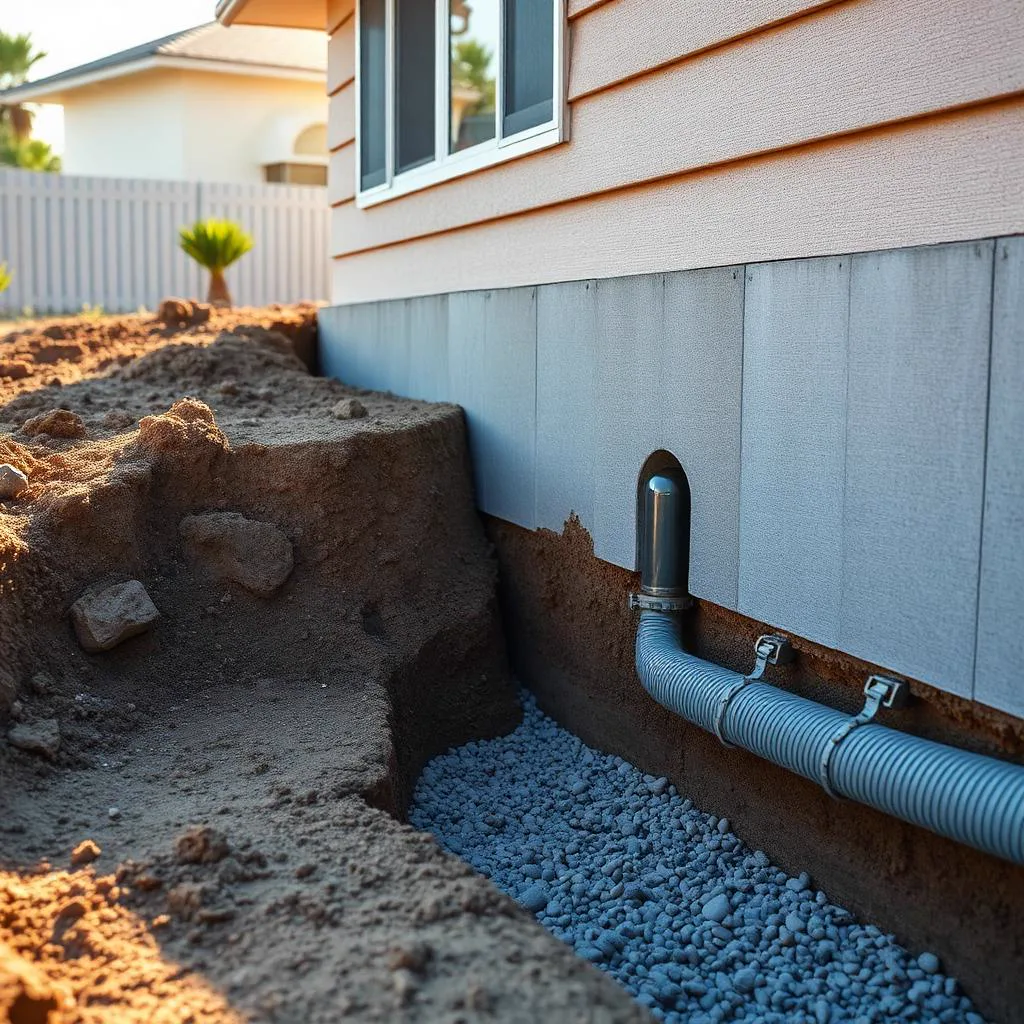
Foundation Drainage in Orangevale, CA
Protect the Slab and Crawl Space
Our crew installs drainage systems that move water safely off your property before it pushes against the foundation.
No obligation. Licensed CA landscape contractor.
Where Does Water From a Foundation Drainage System Go in Orangevale?
Water flows into a perforated pipe buried near the footing. That pipe carries water by gravity to a safe exit point away from the home, often a storm drain, a dry well, or a sloped yard area.
- Perforated pipes collect water that builds up around the foundation wall
- Water travels downhill through the pipe by gravity toward a discharge point
- A pop-up emitter or catch basin releases water far from the home
- Discharge must follow Sacramento County grading and drainage codes
We map the safest exit point on your property before any digging begins.
Clear Warning Signs Tell You Foundation Drainage Has Failed
Your home talks to you long before a foundation problem gets serious. Orangevale sits on expansive clay soils that swell when wet and shrink when dry. That constant movement puts heavy stress on your foundation walls and footings.
- Standing water near the foundation that does not drain within a few hours of rain
- Cracks in foundation walls or floors that grow wider over time, especially horizontal cracks
- Musty odors in a crawl space or basement that signal trapped moisture
- Soil pulling away from the foundation, a sign of repeated wet-dry cycles
- White chalky stains on concrete walls where water is seeping through
One sign on its own may not be a crisis. Two or more together usually means your current drainage cannot handle the load. Older Orangevale homes often have no foundation drainage at all, which makes these signs show up faster.
Choosing the Right Foundation Drainage System Saves Time and Money
The right system depends on where your water comes from and how your yard slopes. Most Orangevale properties need one of these options, or a mix.
| Drainage Type | Best Use |
|---|---|
| French Drain | Pulls subsurface water away from the foundation footing |
| Curtain Drain | Stops groundwater uphill before it reaches the house |
| Channel Drain | Catches surface runoff from driveways and patios |
| Combination System | Handles both surface water and underground water issues |
A French drain is the workhorse for most homes. A curtain drain catches groundwater higher up the slope. A channel drain handles runoff from hard surfaces. Homes near the Arcade Creek corridor often need a combination system. See Central Valley stormwater guidance for local discharge rules.
Knowing What to Expect Before Installation Reduces Surprises
- Site inspection — we confirm soil conditions, grade, and the best drain placement for your lot
- Permit check — we follow Sacramento County rules and pull a grading or drainage permit when needed
- Utility locate — we call in a marking service before any shovel hits the dirt
- Access plan — we map a clear path for the mini-excavator and wheelbarrows
- Schedule confirmation — we give you a start date and a finish window so you can plan your week
You get a written scope before we start. That document lists the trench path, the discharge point, and the materials we plan to use. No surprise charges and no guesswork once the crew shows up.
A Professional Installation Follows Proven Steps to Move Water Safely
- Mark and measure the trench path, the discharge point, and the slope grade
- Dig the trench along the foundation, often 18 to 24 inches deep, deeper in hardpan
- Lay a clean gravel base so water flows freely into the perforated pipe
- Wrap with landscape fabric to block soil and sediment from clogging the gravel
- Set the perforated pipe sloping toward the discharge point at a minimum grade
- Backfill in layers so the pipe stays in place and the soil settles evenly
- Restore the yard surface and run water through the system to confirm strong flow
You should never see standing water in the trench during install. We do not leave a job until water moves the way it should.
Checking the System After Installation Confirms It Works Correctly
Run water near the foundation for several minutes and walk to the discharge point. You should see water flowing freely from the outlet within a short time. Check the pop-up emitter or outlet for clean operation. After the first real rain, check the soil within 24 hours.
- No new cracks forming in concrete or stucco
- No fresh white staining or efflorescence on walls
- No musty smells returning to the crawl space
- No soft or sunken spots above the trench line
Simple Maintenance Habits Keep Foundation Drainage Working for Decades
- Flush the drain pipe with a garden hose each fall before the rainy season starts
- Clean your gutters twice a year so roof runoff does not flood the drainage system
- Trim back roots from nearby trees and shrubs every two or three years
- Check the discharge point after every major storm to confirm water flows out freely
- Walk the foundation each spring to spot any pooling, cracks, or sinking soil
Oak trees are everywhere in the Orangevale Oaks neighborhood and drop heavy leaves that can clog drainage outlets. A well-maintained system can last 25 to 40 years.
Frequently Asked Questions
Keep Water Away From Your Foundation
Our crew designs and installs drainage built for your yard.
Mon–Fri, 7am–5pm. Licensed CA landscape contractor.