
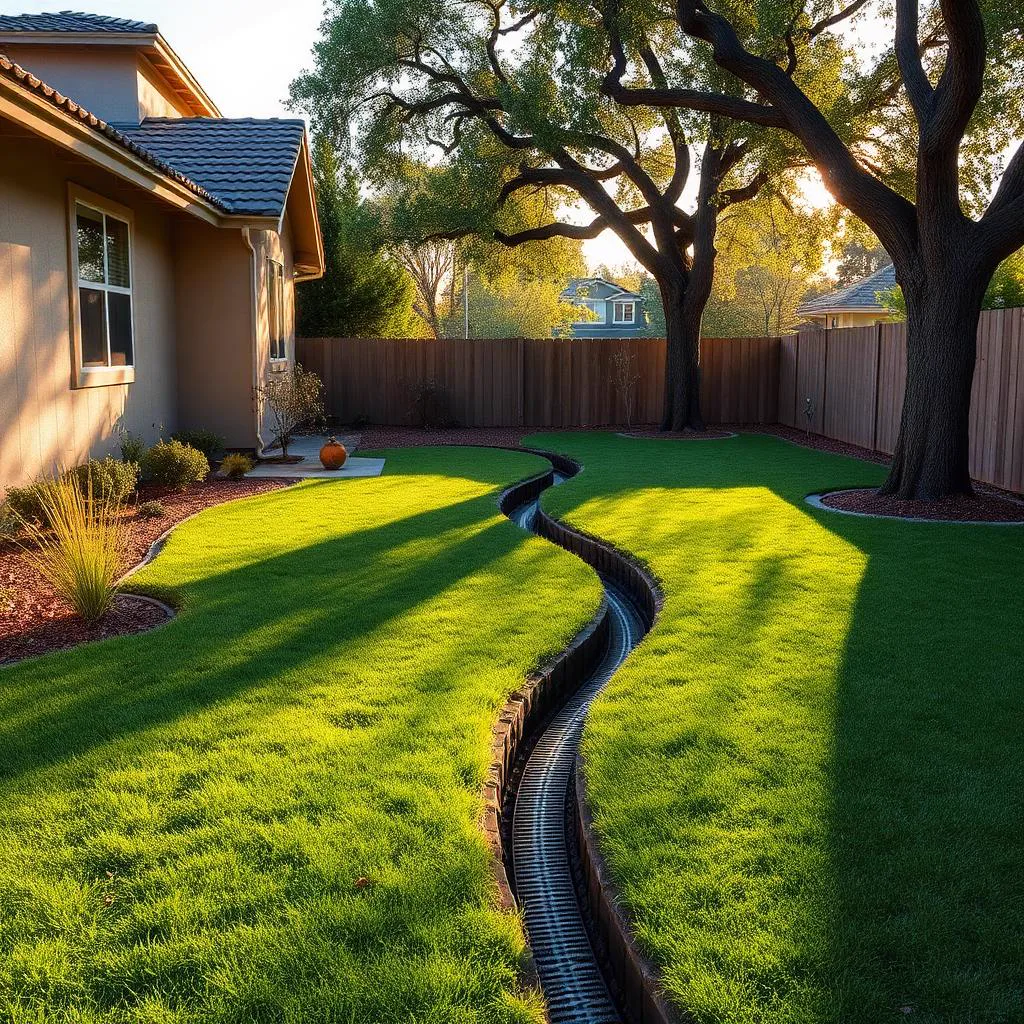
Yard Drainage in Orangevale, CA
Move Water Off Your Yard the Right Way
Our team installs drainage systems that move standing water away fast before it kills your lawn or threatens your foundation.
No obligation. Licensed CA landscape contractor.
Where Should Yard Drain Water Empty Out in Orangevale?
Yard drain water in Orangevale should empty into a safe outlet away from your home and neighbors. Common outlets include the street gutter, a dry creek bed, or a municipal storm drain. Your landscaper picks the outlet that follows local code.
- Street curb gutters are the most common outlet for channel and French drains
- Dry creek beds move water to a low spot on your property without harming neighbors
- Storm drain tie-ins may require a permit from Sacramento County
- Water must never empty onto a neighbor's lot or toward a home's foundation
Standing Water in Your Yard Is a Clear Warning Sign
Orangevale sits on clay-heavy soil that holds water instead of soaking it up. Even a light storm can leave your lawn soggy for days.
- Puddles that sit longer than 24 hours after rain or sprinklers point to poor drainage
- Soggy soil near your foundation can lead to cracks, leaks, and repair bills in the thousands
- Yellow or dead grass patches often mean water is trapped under the root zone
- Mosquitoes swarming near low spots signal standing water that becomes a health risk
- Bare soil streaks or small gullies show that runoff is cutting through without control
We walk your yard, look at every wet spot, and trace the water back to its source. Then we match the right system to the problem. That way you fix the cause, not just the symptom.
Knowing When to Hire a Drainage Contractor Saves You Time
- Water pools within five feet of your foundation after any rainfall
- Your yard stays soggy after every irrigation cycle, not just heavy storms
- Erosion lines keep coming back no matter how much mulch you add
- Runoff flows toward a neighbor's fence or driveway
- Slopes near the Hazel neighborhood show bare soil or cut channels
A licensed landscaper measures slope with a transit level, sizes pipes based on yard square footage and rainfall data, and picks outlets that follow Sacramento County rules. DIY fixes often push water sideways toward a neighbor's fence line. For background on how runoff moves across a landscape, see the USGS Water Science School.
Choosing the Right Yard Drainage System for Your Property
| System Type | Best Used For |
|---|---|
| French Drain | Underground water and soggy soil |
| Channel Drain | Runoff from driveways, patios, and walkways |
| Catch Basin | Low spots in lawns and planting beds |
| Dry Creek Bed | Heavy storm flow with a decorative look |
French drains use a perforated pipe set in gravel for clay-heavy lots that stay wet for days. Channel drains sit flush with hard surfaces and catch sheet runoff. Catch basins sit at low points and collect water through a grated top. Dry creek beds look like natural rock features but move large storm volumes. Many Orangevale homes near the Citrus Heights border deal with both surface runoff and subsurface seepage, so they need two systems working together.
What Happens During a Professional Yard Drainage Installation
- Utility marking and locate request, with every buried line flagged before digging
- Layout and staking with paint or flags for the trench path and outlet point
- Trenching along the planned path, usually six to eighteen inches deep
- Pipe and gravel placement with filter fabric, washed gravel, and pipe layered in
- Outlet connection to a curb gutter, dry creek bed, or storm drain
- Backfill, sod or mulch replacement, and full cleanup
Most residential installs finish within one to three days. Orangevale's dry summers bake the clay rock hard, so we often schedule installs in fall when the soil is softer and easier to cut.
How to Confirm Your New System Is Working Correctly
- No new puddles in areas that were dry before the install
- No water pooling near the foundation or hard surfaces
- No bubbling around catch basin covers or cleanouts
- Steady flow at the outlet with no soil washing away
- No water creeping toward fence lines or neighbor lots
Before the crew packs up, ask your landscaper to walk the full system with you. Snap photos of buried pipe locations so you know where everything sits. For homes in the Boardwalk area, run a second test during the first real rain of the season.
Simple Maintenance Keeps Your Drainage System Running for Years
- Clear the grates every fall before the first big rain hits
- Flush French drain pipes once a year using the cleanout port
- Trim nearby tree and shrub roots so they cannot crack buried pipes
- Check the outlet point each season for soil, mulch, or grass blocking the exit
- Book a pro inspection every two to three years for a full health check
Valley oak trees that shade so many local properties drop heavy leaf loads each autumn. Those leaves pile onto catch basins fast and can block water flow within a single storm. A quick grate check after every windy week from October through December keeps your system clear.
Frequently Asked Questions
Protect Your Yard From Standing Water
We design and install drainage systems built for your soil and slope.
Mon–Fri, 7am–5pm. Licensed CA landscape contractor.