
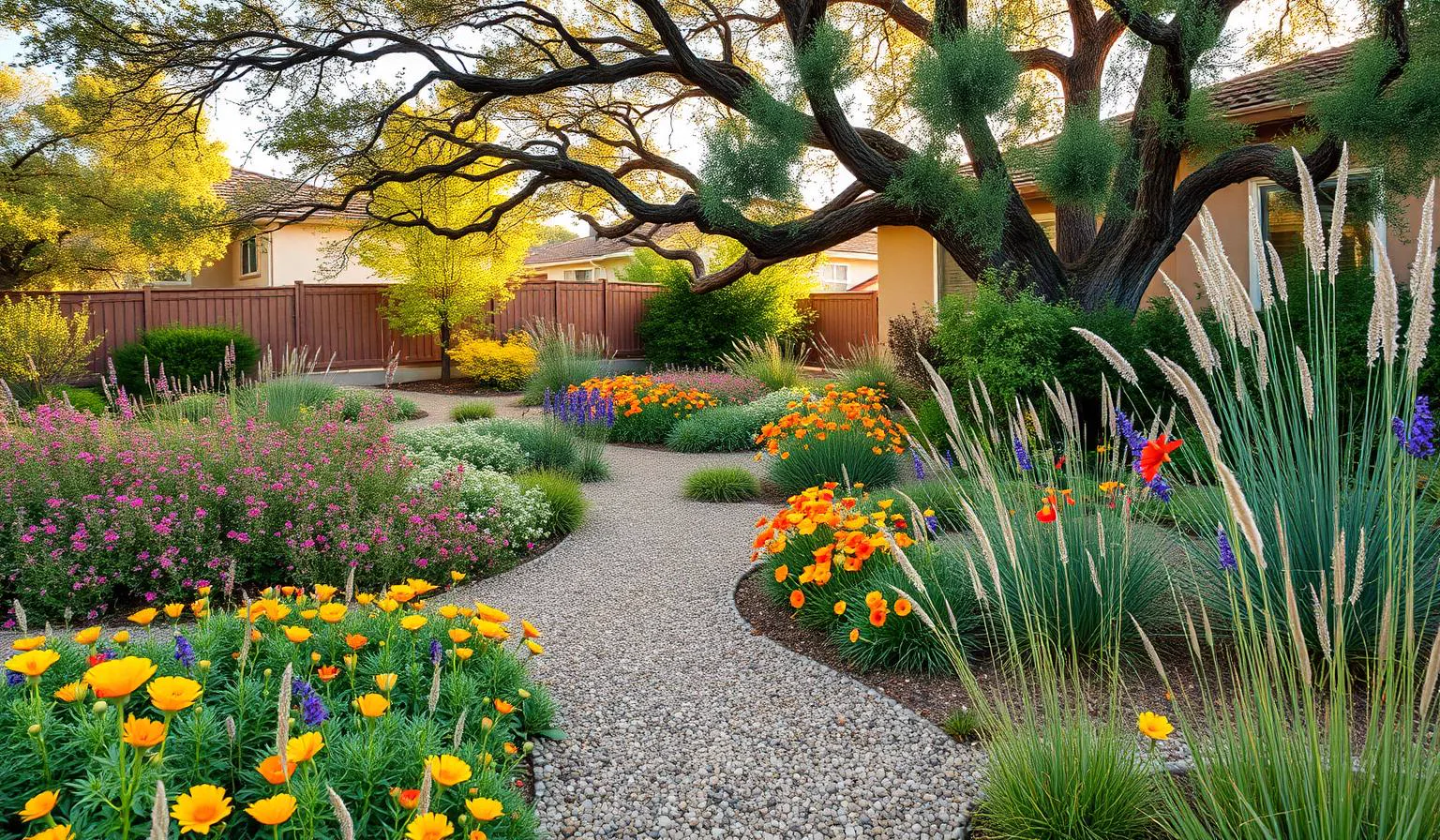
Native Landscape Design in Orangevale, CA
California Natives, Planned to Thrive Here
A native yard cuts water use, brings wildlife back, and looks like it belongs in the Sacramento Valley.
No obligation. Licensed CA landscape contractor.
Your lawn turns brown by July and the water bill keeps climbing. Orangevale homeowners want yards that stay green without wasting water every summer. Native landscape design solves this by matching plants to our hot, dry climate.
We use local plants that thrive on rainfall once their roots take hold. You get curb appeal, lower bills, and a yard that supports birds and bees.
What Local Plants Does a Native Designer Recommend for Orangevale Yards?
A good native design starts with plants built for our dry foothill climate. Designers pick species that survive on rainfall alone after the first year.
- Blue oak and valley oak give strong shade and grow well in our region.
- Toyon shrubs produce red berries and handle local clay and loam soils.
- Purple needlegrass works as a low-water lawn substitute and is California's state grass.
- Buckwheat blooms in summer and attracts native bees to your yard.
- Ceanothus adds color and feeds the soil with nitrogen.
Your Yard Needs More Than Pretty Plants. It Needs a Smart Plan.
Dying patches, rising water bills, and brown spots all point to the same problem. The wrong plants were chosen for your soil, sun, and summer heat. Native landscape design starts with a plan that fits your yard's real conditions.
- Soil insight so plants match your ground, not fight it.
- Sun and shade mapping so every plant lands in the right spot.
- Drainage checks that find slopes and pooling before planting.
- Problem area flags like clay pockets or compacted zones.
- A written plan that prevents expensive replacements later.
Native Landscaping Beats Traditional Lawn Design
| Traditional Lawn | Native Landscape |
|---|---|
| Weekly mowing all summer | Light pruning a few times a year |
| Heavy irrigation needed | Little to no water after year one |
| Fertilizer and chemicals | No fertilizer needed |
| Attracts few pollinators | Feeds birds, bees, and butterflies |
| Looks the same year-round | Seasonal blooms and color |
Native plants use up to 75 percent less water than a standard grass lawn. For groundcover suggestions, see this UC Master Gardener guide to drought-tolerant native groundcovers.
What to Do Before Native Landscape Work Begins
- Pull or spray invasive weeds like Bermuda grass and yellow star thistle.
- Strip old sod from areas you plan to replant, if you have the time.
- Mark every sprinkler head and valve with bright flags.
- Call 811 to flag underground utility lines on your property.
- Move outdoor furniture, pots, and yard art out of the work zone.
How a Professional Builds a Native Landscape Step by Step
- Step 1
Soil test and site measurement
We pull soil samples to check texture, pH, and drainage. We also measure your full yard and map sun patterns.
- Step 2
Scaled design map
A drawing that shows every plant, path, boulder, and mulch zone, with spacing for mature plants.
- Step 3
Turf removal and soil prep
Crews strip out old lawn and weeds, then amend the soil with compost so roots take hold fast.
- Step 4
Plant grouping and layout
Plants placed in zones by water need, sun level, and mature height.
- Step 5
Drip irrigation install
Drip lines run to every plant before the final mulch layer goes down.
Most Orangevale crews schedule heavy planting in October and November.
Signs Your New Landscape Is Working
- Fresh green growth appears on new plants within four to eight weeks of planting.
- Soil stays moist between waterings, which tells you mulch and drip lines are doing their job.
- Pollinators show up as bees, butterflies, and birds find your blooms during the first season.
- Your water bill drops compared to the same months last year.
- A 90-day walkthrough with your landscaper catches small issues before they grow.
Simple Yearly Habits That Keep Your Landscape Healthy
- Pull invasive weeds in early spring before they set seed.
- Add fresh wood chip mulch each fall to protect roots and block weeds.
- Prune shrubs lightly after they bloom to push healthy new growth.
- Inspect drip emitters every season to fix clogs early.
- Book one annual visit from your landscaper to catch small problems.
Back to Landscape Design services.
Frequently Asked Questions
All Landscape Design Services in Orangevale
Get a Water-Smart Yard Built to Last
We design and plant a native landscape sized for your lot.
Mon–Fri, 7am–5pm. Licensed CA landscape contractor.