
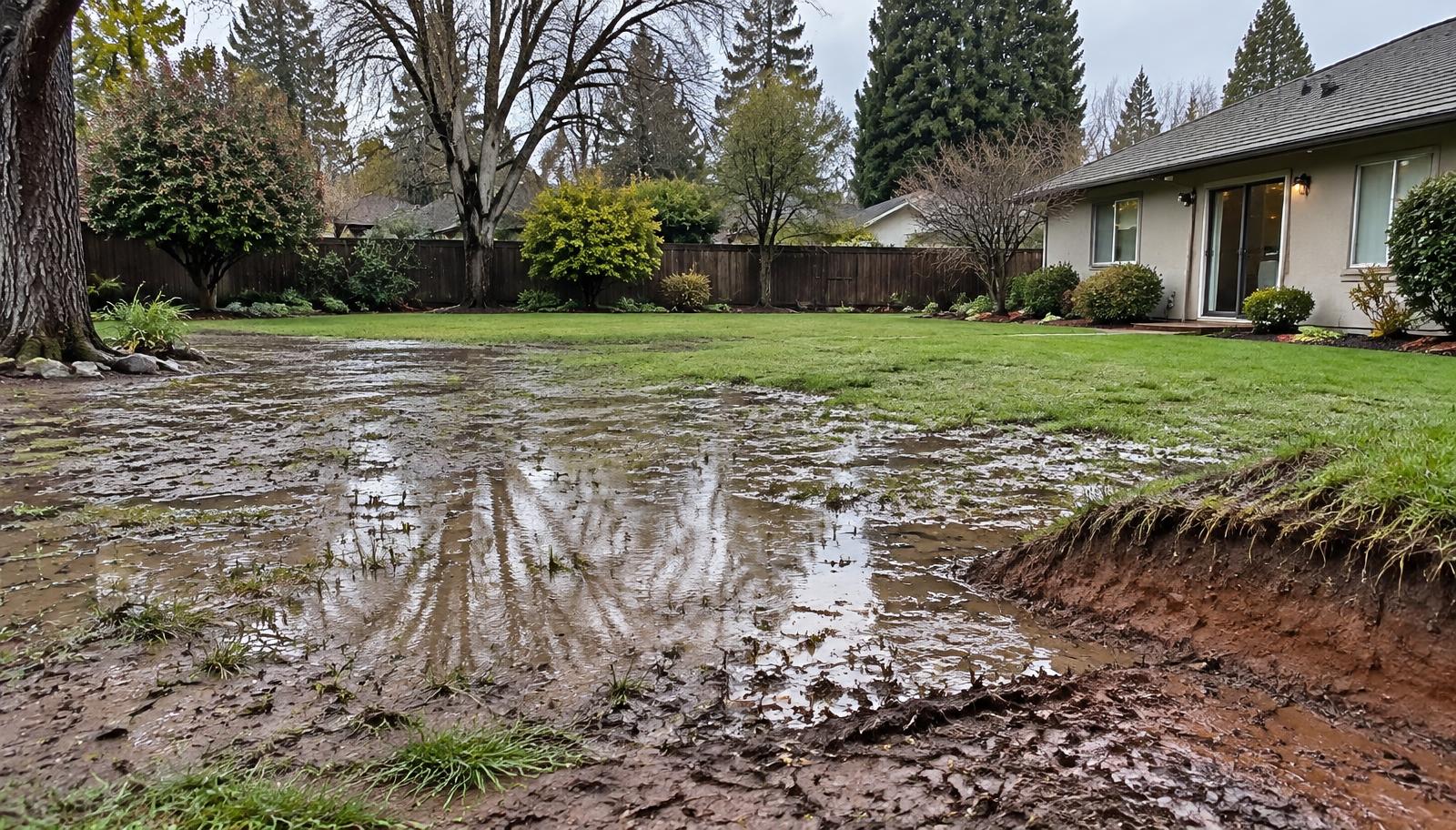
Clay Soil Drainage Problems in Orangevale, CA
Why Your Orangevale Yard Won't Drain Right
Clay-loam soil is common across Orangevale, and it changes how water moves through your yard. Here's what causes it and what actually fixes it.
No obligation. Licensed CA landscape contractor.
Orangevale sits on clay-loam soil. Clay holds water instead of letting it soak in. When rain falls faster than clay can absorb it, water pools on the surface, sits against your foundation, or runs downhill and wears a path through your yard. This is the number one reason Orangevale yards flood, stay soggy, or grow patchy grass. The fix isn't more sprinkler adjustments. It's a drainage system built for how clay actually behaves. McGuire Earth Works has worked with Orangevale clay since 1980, and we build systems that move water where it needs to go.
Why Orangevale Has So Much Clay Soil
Most homes in Orangevale sit on clay-loam soil. This soil formed slowly over thousands of years, and it holds tiny particles packed tightly together. Tight particles leave small gaps between them, and water has a hard time moving through small gaps. So it moves slowly, if it moves at all. Many Orangevale homes were built in the 1980s and 90s, and a lot of those lots were graded once and never re-checked. Older grading plus clay soil is a combination that shows up as standing water almost every winter, especially on lots that have not had any drainage work done since they were first built.
How Clay Soil Behaves When It Rains
Sandy soil drains fast. Clay does the opposite. When rain starts, the top layer of clay soaks up water first and swells. Once that top layer is full, it acts almost like a lid. Water that falls after that has nowhere to go but sideways, or on top of the ground. That's why the same low spot in your yard can flood every winter, even though nothing about the yard has changed. The soil underneath is doing the same slow, stubborn thing every year. UC Cooperative Extension's guide on managing clay soil explains why clay absorbs water slowly and also drains slowly once it's wet, which is exactly what makes Orangevale yards hold puddles for days after a storm.
Warning Signs Your Yard Has a Clay Drainage Problem
A few signs show up again and again in Orangevale yards with clay drainage trouble. Puddles that last more than a day after rain. A lawn that feels spongy even on dry days. Water marks near the base of the house. Patches of dead grass in low spots while the rest of the lawn looks fine. A slope that loses a little dirt every winter. Any one of these on its own might not be a big deal. A few of them together usually means the clay underneath needs a real plan, not a patch.
What Actually Fixes Clay Soil Drainage
Clay soil problems don't go away with one small fix. A solid plan blends a few pieces built for how water moves through clay. Full drainage solutions in Orangevale look at grading, clay soil, and old sprinkler patterns together, then build one working system instead of a handful of separate patches. Depending on the yard, that can include a French drain that pulls water from below the surface, or a catch basin that grabs pooled water before it spreads. On sloped lots, regrading work redirects water before it ever reaches the low spot. The right mix depends on where the water collects and where it needs to end up, which is why a walk-through of the actual yard matters more than a one-size-fits-all fix. None of these pieces work well by themselves if the clay soil underneath isn't part of the plan from the start.
Living With Clay Soil Year-Round
Clay soil isn't going anywhere, so the goal isn't to change the soil. It's to work with it. That means shaping the yard so water moves where you want it to go, choosing plants that don't mind wet roots in winter and dry clay in summer, and keeping an eye on any low spot that holds water more than a day after a storm. A layer of mulch over bare soil can also slow down how fast rain hits the clay directly, which gives the ground a little more time to absorb what it can. A yard built around how Orangevale clay actually behaves stays dry where it should and holds up storm after storm, year after year.
Clay Soil Isn't Going Away, but a Flooded Yard Doesn't Have to Be Permanent
Clay soil isn't going away, but a flooded yard doesn't have to be permanent. Call McGuire Earth Works at (916) 404-0944 for a free estimate before the next storm season hits. Winter rain is on its way, and Orangevale's wettest months fill our schedule fast.
Mon–Fri, 7am–5pm. Licensed CA landscape contractor.