
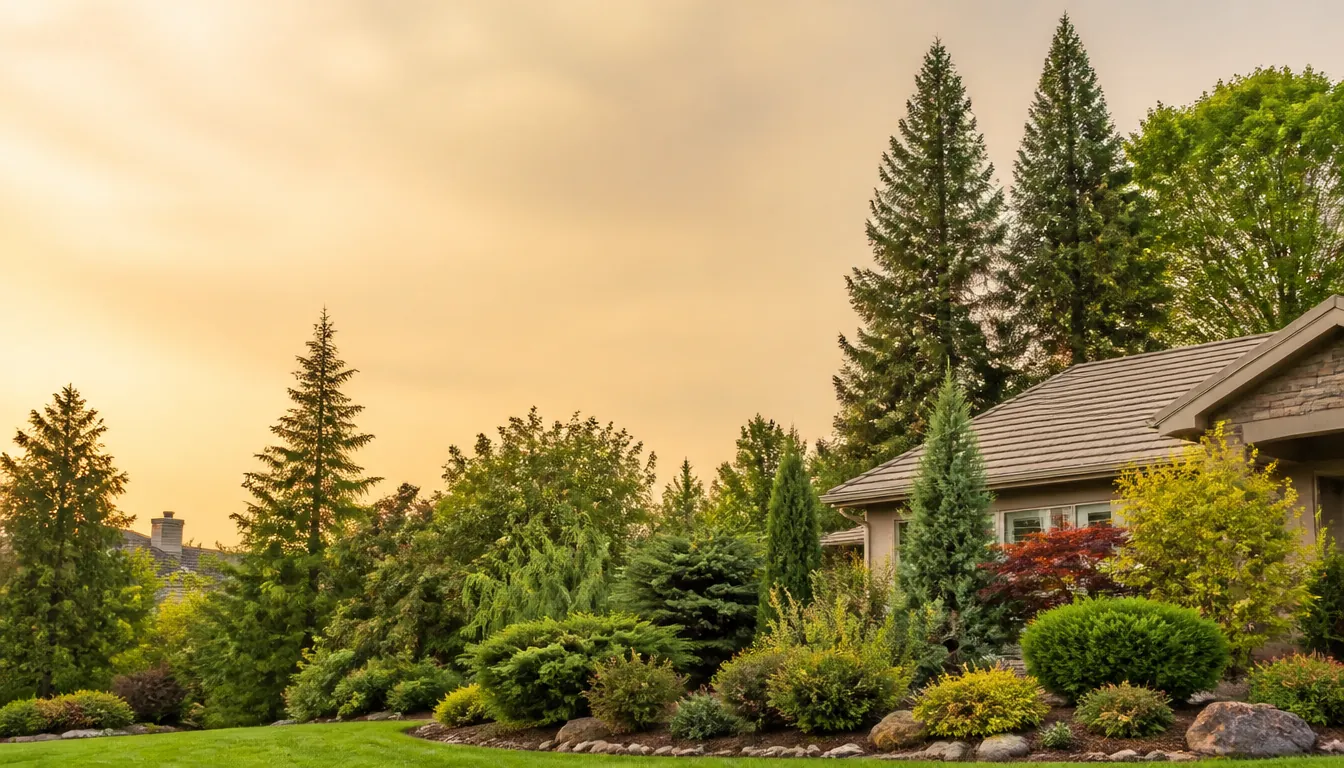
Defensible Space Landscape Design in Orangevale, CA
A Landscape Design That Protects Your Orangevale Home From Wildfire
Foothill neighborhoods near open space face real fire risk every summer. We design landscapes that meet defensible space rules without giving up a yard you actually want to look at.
No obligation. Licensed CA landscape contractor.
Defensible space landscape design means planning your yard in zones around your Orangevale home so a wildfire has less fuel to reach the house. California asks homeowners near foothill open space to keep the area right against the home lean and clean, then thin out fuel further from the house. A good design still looks finished. It just chooses plants, spacing, and materials that slow a fire down instead of feeding it.
Think of it as a set of rings around the house. The closest ring has almost nothing that can burn. The next ring has plants, but with room between them. The outer ring is kept short and open. Each ring buys time, and time is what firefighters need.
Why Orangevale Homes Need a Fire-Smart Design
Orangevale sits close to foothill open space and grassland that carries real wildfire risk in a dry summer. Homes on the eastern edge of town, near undeveloped land and drainage corridors, face more exposure than lots buried deep in an older subdivision, but embers can travel a long way in wind, so the risk is not only for homes right against open space. A landscape plan that ignores this leaves dense shrubs and overgrown trees pressed right against the house, which is exactly the fuel a fire needs to reach the structure.
Many Orangevale homes were built in the 1980s and 1990s. Their yards were planted back then and have been growing ever since. Hedges that started knee high now touch the eaves. Nobody planned those yards with fire in mind, because back then it was not part of the conversation.
The Three Zones We Design Around
Each zone gets its own set of rules. Here is how we lay them out.
| Zone | Distance From the Home | What Goes There |
|---|---|---|
| Zone 0 | 0 to 5 feet | Gravel, stone, or bare ground, no mulch or dense plants against siding |
| Zone 1 | 5 to 30 feet | Widely spaced, low-growing, fire-resistant plants, trees trimmed up from the ground |
| Zone 2 | 30 to 100 feet | Reduced grass height, thinned trees, more space between plant groups |
We follow the zone guidance from CAL FIRE's defensible space program when we design a fire-smart Orangevale yard, then adjust plant choices and layout to fit the actual lot instead of applying the same plan to every property.
Not every lot has a full 100 feet to work with. Many Orangevale homes sit on smaller parcels, and the outer zone may cross into a neighbor's yard or a public strip. In that case we focus the design on the zones you control and make them work as hard as they can.
Plant Choices That Still Look Like a Real Landscape
A defensible space design does not mean gravel and nothing else. We choose low-water, fire-resistant plants and group them with real spacing between clusters, so fire has a harder time jumping from one plant to the next. Clay-loam soils across the Sacramento Valley hold water well once a plant is established, which means many fire-smart plant choices also need less water once they are settled in, an easy win alongside MWELO water budget rules.
Plants with soft, moist leaves tend to resist fire better than plants with oily or waxy leaves. Low ground covers, succulents, and many native perennials fit this well. Stone paths and dry creek beds can break up planting areas and add another gap fire has to cross. The yard still has color, shape, and shade. It just has more breathing room.
If you are planning a full yard and not just the fire-smart zones, our landscape design in Orangevale services cover the whole property, not just the defensible space areas.
Timing a Defensible Space Project
Spring is the best time to start a defensible space redesign, before summer heat stresses new plants and before fire season restrictions on some types of ground work begin. Our guide on the best time of year to landscape in Orangevale covers this in more detail if you are planning other yard work alongside the fire-smart zones.
Some of the work can start even sooner. Clearing old plants away from the house and pulling mulch back from the siding can happen in late winter. That way the new planting goes in on time and the zone near the home is already clean before the hot months arrive.
What Happens If You Skip Defensible Space Planning
Overgrown shrubs pressed against the house, mulch beds that touch the siding, and trees with branches hanging low to the ground are common on older Orangevale properties that have not been redesigned since they were first planted decades ago. None of it looks dangerous day to day. It becomes a real problem the moment conditions turn dry and a fire moves through the area. A defensible space redesign fixes this without stripping the yard down to nothing.
Small things add up. A wood fence tied right into the house can carry fire to the walls. A pile of dry leaves under a deck can catch a single ember. A good plan looks at all of it, not just the plants.
Defensible Space and Shared Property Lines
Fire does not stop at a fence line, and neither does defensible space planning. If neighboring yards on either side of your property have not been thinned, your own defensible space zones do less good. We often suggest homeowners talk with neighbors about coordinating fuel reduction along shared boundaries, especially on Orangevale lots that back up to undeveloped land or a drainage corridor. It is not something we can require, but it is worth raising before a project starts, since the fire risk on a shared fence line is really a shared problem.
All Landscape Design Services in Orangevale
Ready to redesign your Orangevale yard with real defensible space in mind?
Call McGuire Earth Works at (916) 404-0944 or request a free estimate. Spring books up fast for full design projects, so reach out before fire season starts.
Mon–Fri, 7am–5pm. Licensed CA landscape contractor.