
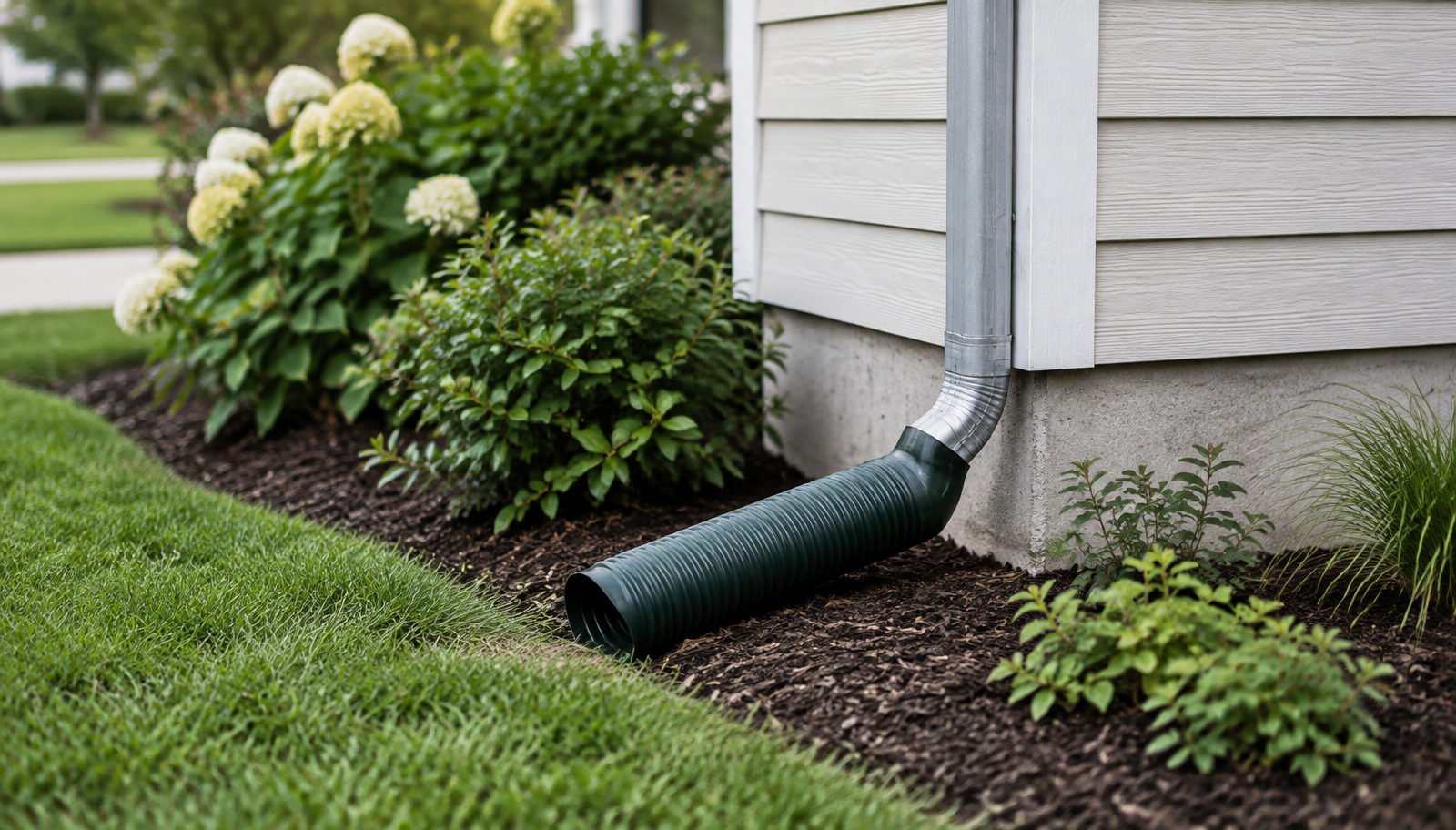
downspout drainage in Orangevale, CA
Send Roof Water Somewhere Safe
A downspout that dumps water next to the house can undo everything your gutters do right.
No obligation. Licensed CA landscape contractor.
Why Downspout Placement Matters
Gutters do half the job. They catch water off the roof. Where that water goes next is the other half. A downspout at the base of the house sends water down by the foundation. That water has to go somewhere. It often soaks into the soil right where you do not want it.
What the EPA Says About Redirecting Downspouts
The EPA Soak Up the Rain guide explains how to detach downspouts and give water a new path. Many downspouts drain onto driveways or other paved spots. This sends roof water straight into the street. Some feed buried pipes that lead to a sewer or storm drain. The EPA says a path toward a planted area can cut the amount of runoff that leaves your yard.
The same idea helps protect your home. Water by the foundation can soak straight down. Over time, it can soften soil under the slab. A planted spot a few feet into the yard gives that water more room. Soil can soak it up slowly, away from the house.
Signs Your Downspouts Need a Better Path
- Wet or dark soil right at the base of the house after every rain
- A puddle that forms at the end of a downspout and takes days to dry
- Mulch or soil washed away in a line leading from a downspout
- A damp or musty smell in a basement or crawl space after storms
- Cracks in a nearby walkway or patio that follow a wet spot
Small Mistakes That Can Send Water Back to the House
A long extension is not much help if it points the wrong way. Check where its end sits, not just how far it reaches. It should send water to a safe spot on your own lot. Do not aim it at a neighbor's yard. Water can cross a fence and leave them with the same wet soil you were trying to fix. Look at the slope past the pipe, too. The end may face your yard while the ground still slopes toward the next lot.
Buried pipes can hide trouble. Leaves and dirt may clog them over time. A pipe can also crush or break below the soil, where you cannot see it. Water then backs up at the house instead of reaching the outlet. You may get no warning until the next hard rain. Watch for water spilling out where the downspout joins the pipe. A new wet patch by the foundation is another reason to check the path.
A splash block needs a look as well. It may shift to one side or sink into the dirt. Roof water can miss it or pool at its low end. Check that it sits under the downspout and slopes away from the house. In Orangevale, slow-draining clay soil makes a safe path worth checking. A block that once worked may no longer move water where it should.
Ways to Redirect a Downspout
- Add an extension. A pipe or splash block moves water a few extra feet from the foundation.
- Route it to a planted bed. A bed built to handle extra water can soak up roof runoff on site.
- Tie it into yard drains. Buried pipes carry water to a spot that can handle it.
- Grade the ground around it. The soil near a downspout should slope away from the house, not toward it.
- Check it after storms. A quick look after heavy rain shows whether water is pooling or draining away.
Check the Path Before the Rainy Season
Late summer or early fall is a good time to check each downspout. The ground is often dry then. You can see the pipe ends and splash blocks without a pool of muddy water in the way. You also have time to plan a fix before Orangevale winter storms hit. A dry-day check is easier than trying to find the cause while roof water pours out next to the house.
Start with leaves, twigs, and dirt that could block the flow. Clear debris you can reach safely. Do not climb onto a wet roof to check a gutter. Look at each extension from the ground. Mowing or yard work can knock one loose or move its end. Make sure it is still joined to the downspout and points to the right spot. Check that a splash block has not tipped or sunk since the last wet season.
Next, look at the outlet of any buried drain. Clear leaves from around the end so water has a path out. If a pipe seems blocked, have it checked rather than guessing that it still works. Fixing a loose joint or poor slope before rain starts can help keep a small issue from becoming a wet foundation. Once the Orangevale wet season begins, check from a safe spot during or just after rain. See where the water goes. A dry-day check helps, but a storm shows how the whole path works under load.
One Piece of a Bigger Drainage Picture
A downspout fix solves one problem. It may be tied to a bigger one, though. Your yard may have several wet spots or a steep slope. The same corner of the house may flood each winter. These signs often call for a full plan, not just one extension.
Our guide to why Orangevale yards flood explains how clay soil and the slope of the ground can make it hard for water to drain here.
A safe path for roof water can make a real change. McGuire Earth Works Inc. checks the whole yard, not just one wet spot. We plan a fix to hold up through a wet Orangevale winter. Call (916) 404-0944 for a free estimate.
Frequently Asked Questions
Why does it matter where my downspout empties?
Can I just let my downspout drain onto the driveway?
Do I need a drainage system if I only have one problem downspout?
All Drainage Solutions Services in Orangevale
Let Us Route Your Downspouts the Right Way
McGuire Earth Works Inc. builds full drainage systems across Orangevale. Call (916) 404-0944 for a free estimate.
Mon–Fri, 7am–5pm. Licensed CA landscape contractor.