
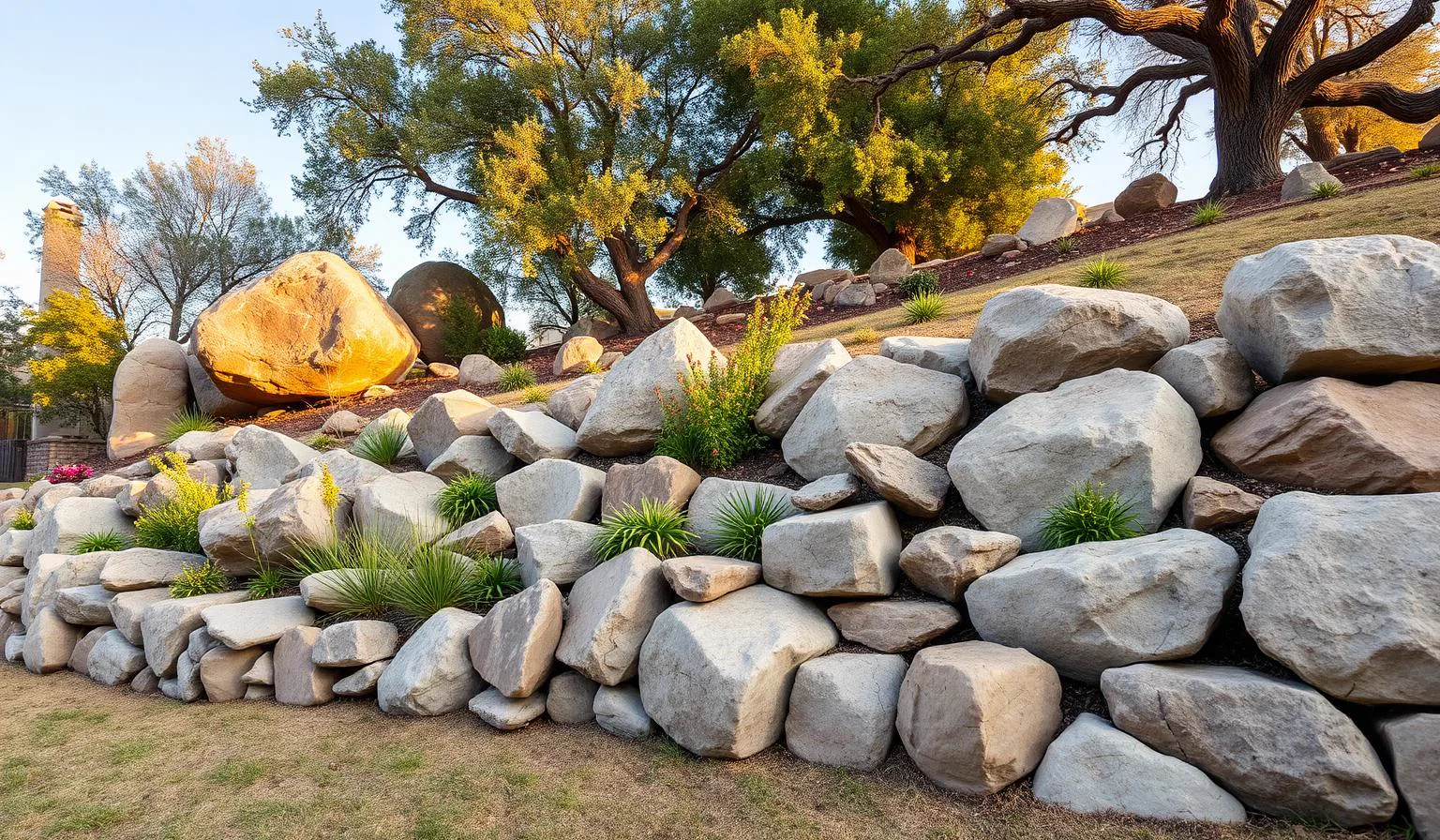
Boulder & Natural Rock Walls in Orangevale, CA
Big Boulders, Set the Right Way
Boulder walls hold slopes and add character. They only work when each rock is sized and seated right.
No obligation. Licensed CA landscape contractor.
If your yard sits on a slope, you already know what winter does to it. Every storm carries a little more topsoil downhill, and bare patches start showing up where grass used to hold. A boulder wall stops that slide using nothing but weight and gravity, no mortar, no steel, no glue.
We have set these walls all over Orangevale, from small garden borders to full hillside retention on lots that back up to open foothill ground. Here is what actually goes into one that holds.
A Wall Set Right Can Outlive the House It's Protecting
A properly built boulder wall holds for 50 years or more. Natural rock does not rot, rust, or crack, and it shrugs off the freeze-thaw swings we get most winters in the foothills. What actually determines how long the wall lasts is not the size of the rock. It is the base and the drainage.
Set boulders right and they need no hardware to stay put. A single rock can weigh a couple thousand pounds, and that mass alone holds back the hillside. Skip the compacted gravel base underneath, though, and even the biggest boulder walks downhill after a few wet winters. Drainage matters just as much. Without a way for water to escape, pressure builds behind the wall until something gives.
Signs Your Slope Is Already in Trouble
Slopes rarely fail all at once. Watch for these signs before real damage sets in.
- Soil washing downhill after rain, leaving bare dirt trails or mud at the base
- Uneven terraces or sunken lawn areas that were not there last year
- Tree roots or plant beds sliding toward the fence
- Water pooling at the base of a slope long after rain
- Cracks in patios, walkways, or driveways near a sloped area
- Fence posts leaning or timbers bowing outward under soil pressure
If you spot two or more of these signs, your slope needs professional attention. The longer you wait, the more soil you lose.
Boulders Outperform Timber and Block on Almost Every Measure
Timber walls look fine at first but start rotting within 10 to 15 years. Concrete block works but often feels out of place in a natural yard setting. Boulders give you strength, drainage, and beauty in one material.
The biggest advantage is pure mass. A single boulder can weigh several thousand pounds. That weight alone holds back soil without mortar, hardware, or concrete footings. Gravity does the heavy lifting.
| Feature | Boulders | Timber | Concrete Block |
|---|---|---|---|
| Lifespan | 50+ years | 10-15 years | 25-40 years |
| Natural drainage | Yes, through gaps | No | No |
| Chemical treatment | None | Yes | No |
| Blends with landscape | Excellent | Moderate | Poor |
| Maintenance | Very low | High | Moderate |
In Orangevale, local granite and river rock fit the natural foothill look that many neighborhoods already have. Read more about local soil and stability in this NRCS California soil health resource.
Good Prep Makes a Boulder Wall Project Go Smoothly
Boulder projects involve heavy equipment and big deliveries, so a little prep keeps the crew moving. Sacramento County requires a permit on taller walls, and yards near the Citrus Heights border sometimes need extra review. We handle that paperwork. Before the crew arrives, clear furniture and potted plants from the work zone and open up truck access if you can. We also call 811 to get utility lines marked, which is free and standard on every job.
Getting the Wall Into the Ground
We dig a level trench into the slope first, then compact crushed gravel into it in layers. This base course is what keeps the rock from shifting later, and it is the step people skip when they try this themselves. An excavator sets the base boulders next, tilted slightly back into the hillside, and smaller fill rocks lock everything together and give the face its finished look. Drainage gravel and pipe go in behind the wall last, so water has somewhere to go besides pushing against the rock.
What to Check Before You Call It Done
Walk the finished wall before you sign off. The face should lean slightly back into the hillside, not forward. You should not see daylight gaps between the base boulders and the ground. After a hard rain, water should move through the wall instead of pooling behind it, and the backfill should feel firm underfoot, not soft. Ask for photos of the drainage layer. A crew that documents it usually built it right.
Keeping It That Way
Natural rock needs very little upkeep. Trim oak roots that grow toward the wall, since they can shift boulders over the years. Pull weeds and vines off the face a couple times a year, and keep downspouts and gutter extensions pointed away from the base. A quick look each spring for a shifted rock or bulging soil is usually all it takes.
Back to Retaining Wall Installation services.
Frequently Asked Questions
All Retaining Wall Installation Services in Orangevale
Get a Slope That Stays Put for Good
We design and install boulder walls sized right for your yard.
Mon–Fri, 7am–5pm. Licensed CA landscape contractor.