
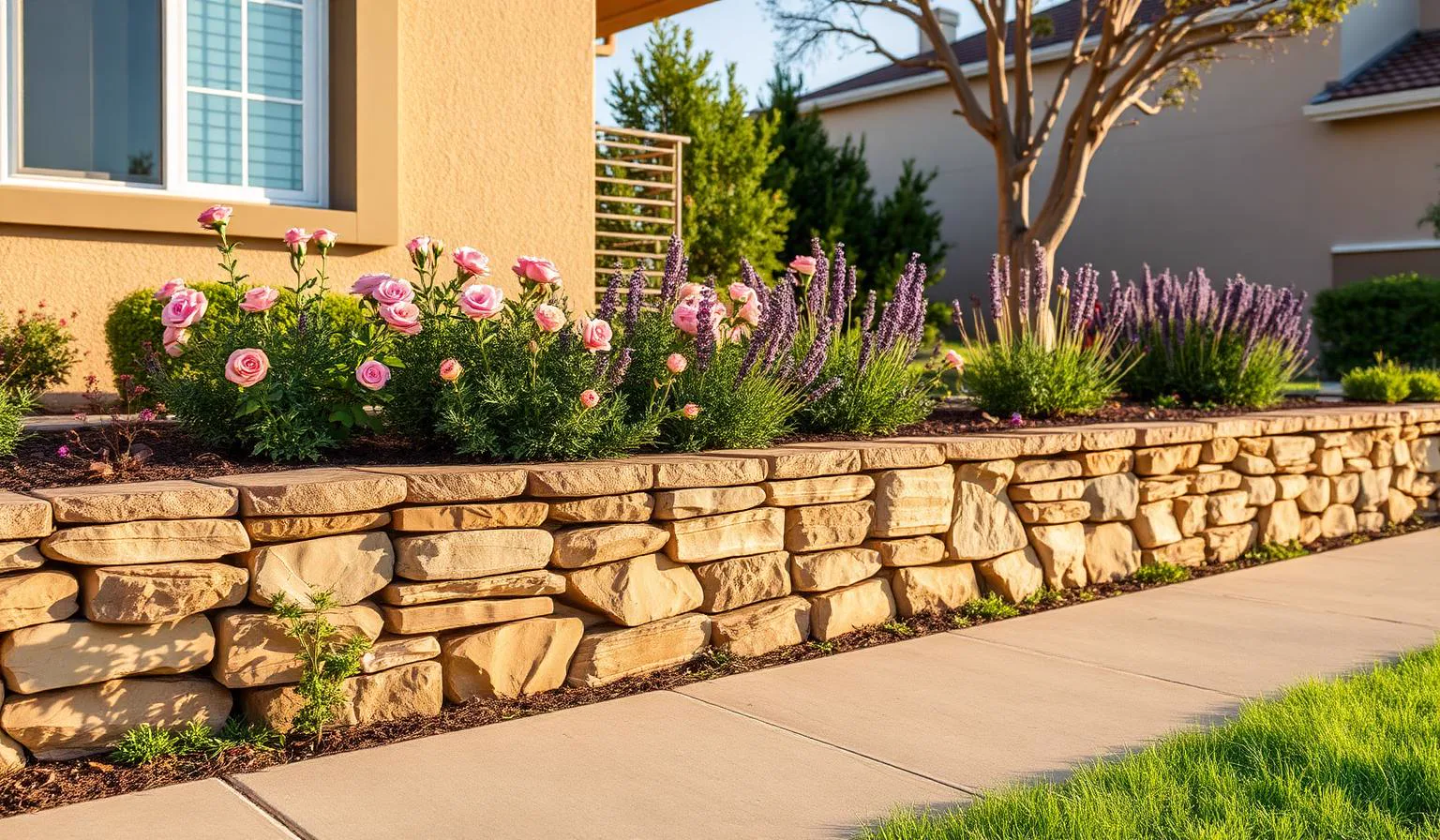
Garden Walls in Orangevale, CA
Low Walls That Frame Your Beds
A short garden wall sets a clean edge between lawn, bed, and path. It also makes weeding and mulching easier.
No obligation. Licensed CA landscape contractor.
Sloped yards, loose soil, and hot summers can wear down outdoor spaces fast in Orangevale. A strong garden wall holds back dirt, shapes your yard, and adds real curb appeal. Our garden walls are built to handle local soil and weather year after year.
What Garden Wall Material Lasts Longest in Orangevale?
Natural stone and concrete block. Both resist heat, moisture, and shifting soil. With good installation, they can last 50 years or more.
- Natural stone handles Orangevale's summer heat without cracking or fading.
- Concrete block is dense, strong, and resists heavy soil pressure over time.
- Brick lasts decades but may need mortar repairs in wet conditions.
- Treated timber is affordable but breaks down faster than stone or concrete.
- Proper drainage behind any wall adds years to its life no matter the material.
Common Garden Wall Problems to Know
Orangevale's clay-heavy soil swells when wet and shrinks when dry. That yearly push and pull adds stress to every wall on your property.
- Leaning walls point to poor drainage or a weak foundation buried below ground.
- Cracks let water seep in and grow worse with each wet season.
- Bulging sections mean soil pressure is pushing the wall out of line.
- Missing mortar lets bricks shift, and the wall loses strength fast.
- Staining or white powder shows water is moving through the material.
Choosing the Right Garden Wall Material
| Material | Best For |
|---|---|
| Natural Stone | Rustic yards, longest lifespan, heat resistance |
| Concrete Block | Sloped lots, heavy soil loads, dry summers |
| Brick | Classic style, formal landscapes, tight joints |
| Treated Timber | Tight budgets, short-term walls under 20 years |
| Gabion Cages | Modern designs, fast drainage, low maintenance |
For an overview of garden wall block systems and design options, see this Belgard garden wall reference.
Before Your Garden Wall Installation Begins
- Clear plants, mulch, and loose rock from the wall path.
- Move patio furniture, planters, and hoses well away from the site.
- Trim back tree limbs that could block a skid steer or wheelbarrow.
- Mark a clear path from the driveway to the work area for material drops.
- Set up a spot where crews can stage gravel, block, and tools.
Call 811 at least two business days before digging. Confirm permit needs early with Sacramento County to avoid stop-work orders and delays.
How We Build Garden Walls Step by Step
- Step 1
Layout and marking
Snap lines to mark the wall path and check the grade across the full run.
- Step 2
Trench excavation
Dig down to firm soil so the base sits below the frost and root zone.
- Step 3
Gravel base
Compacted gravel spreads weight evenly along the trench.
- Step 4
First course
Bottom row is set and leveled block by block since it controls the whole wall.
- Step 5
One-third rule
About one-third of wall height goes below ground to lock against soil pressure.
- Step 6
Course stacking
Each row checked for level and pitched slightly back into the slope.
- Step 7
Drainage system
Perforated pipe and clean gravel backfill carry water away.
- Step 8
Cap and cleanup
Cap stones go on last, then backfill the front and haul off debris.
Signs Your Wall Needs Repair or Replacement
| What You See | What It Means |
|---|---|
| Small cracks or loose mortar | Usually a repair, not a rebuild |
| Wall leaning more than one inch | Call a pro for assessment right away |
| Damage across more than half the wall | Replacement often costs less than patchwork |
| Soft or sunken ground at the base | Drainage problem below the wall |
| Bulging sections or shifted stones | Soil pressure is pushing the wall out |
Simple Maintenance Keeps Garden Walls Strong
- Spring weed and root check. Pull weeds and small roots from wall joints.
- Post-rain drainage check. Clear leaves, mud, or debris from outlets.
- Sealing every few years. Seal natural stone or brick to slow water absorption.
- Fall crack repair. Fill small cracks before winter rains start.
- Professional inspection every three to five years to catch early movement.
Back to Retaining Wall Installation.
Frequently Asked Questions
All Retaining Wall Installation Services in Orangevale
Get a Garden Wall Built to Last
We design, dig, and build strong walls sized for your yard.
Mon–Fri, 7am–5pm. Licensed CA landscape contractor.