
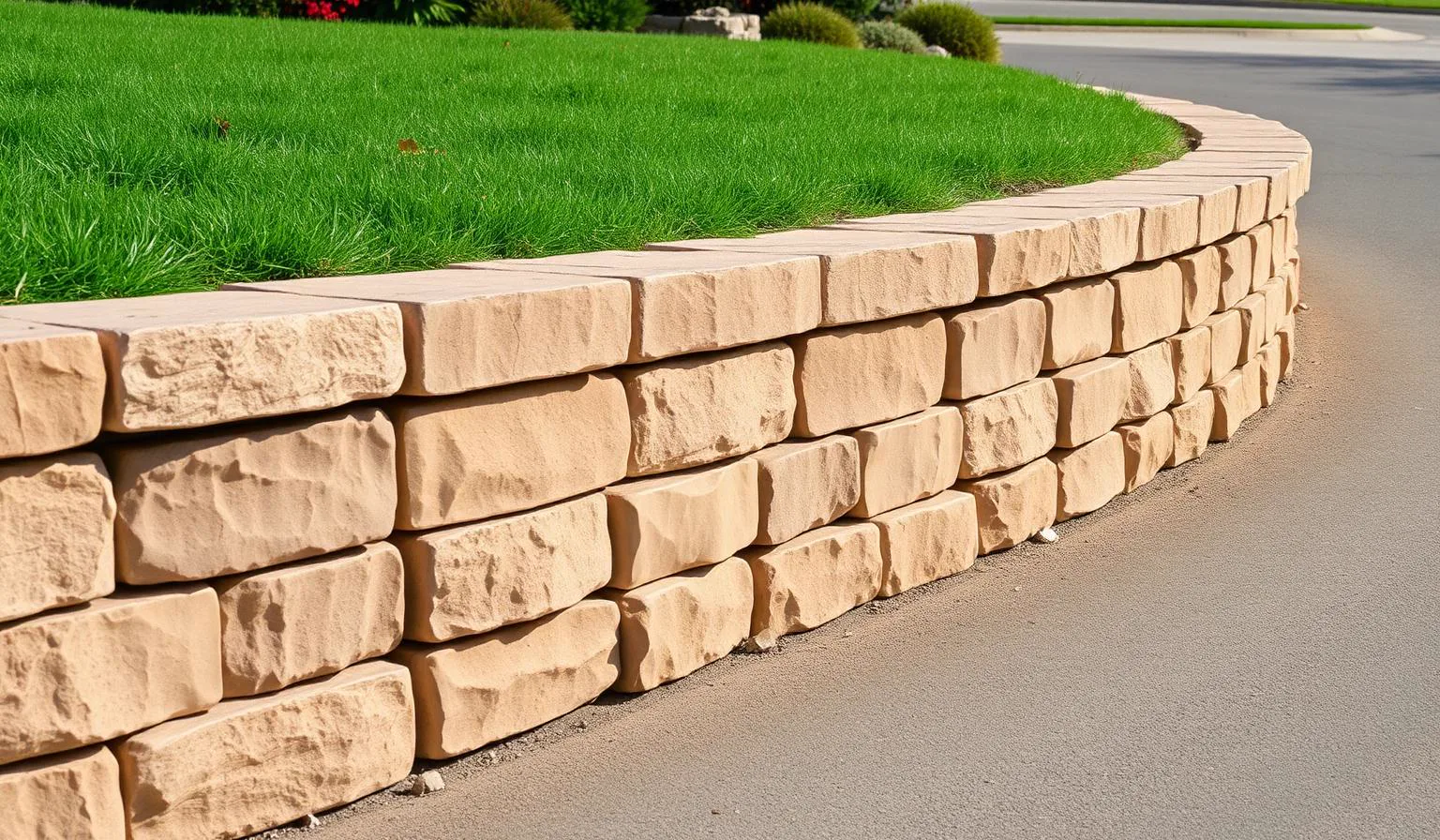
Concrete Block Retaining Walls in Orangevale, CA
Block Walls Built to Hold the Hill
Concrete block walls are the workhorse of Orangevale retaining work. Built right, they last decades.
No obligation. Licensed CA landscape contractor.
Sloped yards lose soil every winter in Orangevale, and once a slope starts sliding it does not stop on its own. Concrete block is the material we reach for most, because it holds up to our soil and our summers without the drawbacks of timber or poured concrete.
Built on the right base, a block wall here lasts fifty years or more. Built without one, it starts showing trouble within a few seasons. Here is the difference.
How Long Will a Concrete Block Retaining Wall Last in Orangevale?
A professionally installed concrete block retaining wall in Orangevale can last 50 years or more. Proper drainage, good base prep, and quality blocks make the biggest difference.
- Concrete blocks resist rot, pests, and heavy rain common in the Sacramento Valley.
- A solid gravel base below the first course prevents shifting over time.
- Proper drainage behind the wall stops water pressure from cracking blocks.
- Professional contractors use the right block size and wall batter for long-term strength.
- Routine inspections every few years help catch small issues early.
What Failure Actually Looks Like
A wall that is starting to fail tells you before it collapses. Leaning or tilting blocks mean the base course was too thin or missing. Cracks across the face usually mean water pressure has been building up behind the blocks. Gaps opening between rows mean the wall is settling unevenly, and soil spilling out at the base means the foundation sits too high. Standing water near the wall almost always means the drainage gravel or pipe got skipped during the build. Orangevale's clay makes all of this worse, since it expands when wet and shrinks when dry, which puts steady stress on any wall built without a real footing.
Concrete Block Is a Smart Choice for Most Wall Projects
Wood retaining walls might look nice at first. But timber rots, attracts termites, and breaks down fast under Sacramento Valley heat. Concrete blocks handle summer temperatures above 100 degrees without warping or cracking.
Poured concrete walls are strong but come with trade-offs. If a section cracks, the repair is expensive and messy. With a block wall, your contractor can remove and replace individual blocks without tearing out the whole structure.
| Feature | Concrete Blocks | Poured Concrete | Timber |
|---|---|---|---|
| Upfront Cost | Lower | Higher | Lowest |
| Lifespan | 50+ years | 50+ years | 10-20 years |
| Repair Difficulty | Easy, block by block | Hard, full section | Moderate |
| Heat Resistance | Excellent | Excellent | Poor |
| Pest Resistance | Full | Full | Low |
Blocks also come in dozens of colors, textures, and sizes. For care tips that extend block wall life, see this Belgard wall maintenance guide.
Permits and Site Prep Come Before Any Block Gets Placed
A retaining wall project starts long before the first block hits the ground. Sacramento County requires a building permit for any retaining wall over four feet tall. Your contractor should handle the permit application for you.
- Call 811 to have all underground utility lines located and marked on your property.
- Your contractor measures the wall run and marks the trench layout with stakes and string.
- The crew digs the base trench to the right depth for your soil and wall height.
- Compacted gravel fills the trench to create a flat, stable foundation.
- Your landscaper confirms the block style, color, and quantity before placing the order.
This prep phase usually takes a day or two on most Orangevale projects, and rushing it is what causes problems months later.
The Block Wall Installation Process Follows Ordered Steps
A block retaining wall goes up in a set order. Each step builds on the one before it. Skipping or rushing any step weakens the whole structure.
- Step 1
Excavate the trench
Flat, level trench along the full length of the wall, deep enough to bury the first course below grade.
- Step 2
Set the gravel base
Crushed gravel compacted in layers. If this is off by even half an inch, the wall leans over time.
- Step 3
Lay the first course
Bottom row sits on the compacted gravel. Every block is checked for level and alignment.
- Step 4
Stack rows with drainage
Perforated drain pipe and gravel backfill go behind the wall to move water away.
- Step 5
Add geogrid on taller walls
Geogrid fabric between rows extends into the hillside soil to tie wall and earth together.
- Step 6
Cap and secure the top
The final row gets locked down with construction adhesive so top blocks do not shift.
Before You Sign Off
Walk the entire wall and look closely. Every course should sit flat and flush with the row below it, and drain outlets at the base should move water freely instead of pooling near the foundation. Check for gaps, cracks, or crooked blocks, and press on the backfill to make sure it feels firm rather than soft. Ask for copies of every inspection record and the completed permit before you consider the job done.
Keeping It Solid
A few habits protect what you paid for.
- Spring weed removal. Pull weeds and small roots from the joints between blocks before they grow deep.
- Drain outlet checks after heavy rain. Look for water flowing out of the drain pipes. Blocked drains cause early failure.
- Watch for movement year-round. Any new tilting, shifting, or gaps need attention right away.
- Point your sprinklers away from the wall. Irrigation water hitting the wall adds moisture the drainage was not designed to handle.
- Mind oak roots in the Fair Oaks border area. Roots spread wide and can push blocks. Trim roots within two feet of the base.
Back to Retaining Wall Installation services.
Frequently Asked Questions
All Retaining Wall Installation Services in Orangevale
Get a Retaining Wall That Lasts for Good
We handle permits, prep, and installation so your yard stays solid.
Mon–Fri, 7am–5pm. Licensed CA landscape contractor.