
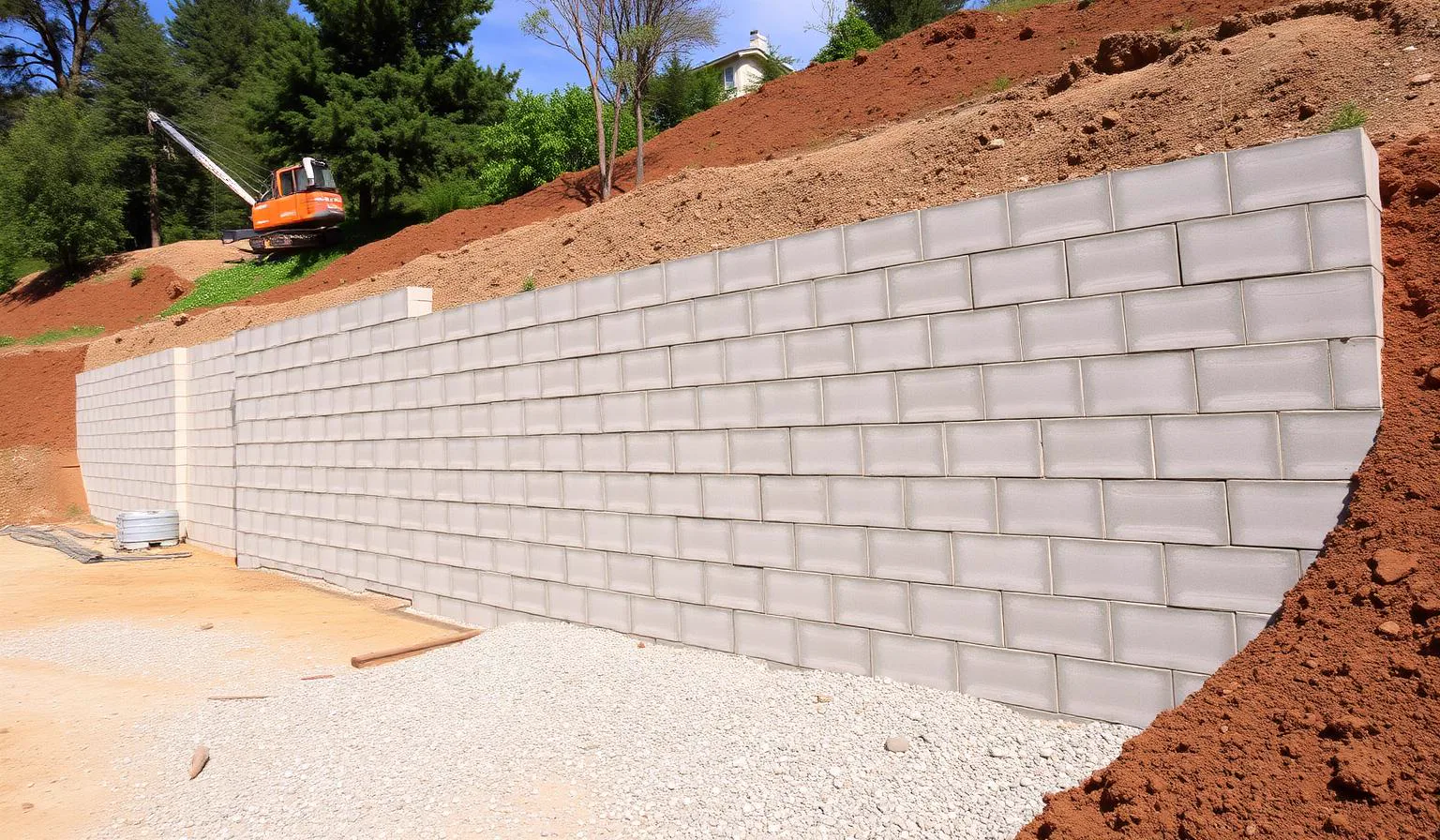
Engineered Retaining Walls in Orangevale, CA
Walls Built to Stamped Drawings
Anything over four feet in Orangevale needs engineered plans. We handle the drawings and the build.
No obligation. Licensed CA landscape contractor.
Homeowners in Orangevale deal with sloped yards, clay soil, and hillside erosion every season. Engineered retaining walls solve these problems with designs built to last decades. A failing slope or a cracked wall puts your property and your peace of mind at risk.
This page explains how engineered walls differ from basic ones. You will learn about the build process, permit requirements, and soil factors specific to Orangevale.
Our landscaping team designs and installs retaining walls that protect your property and look great doing it.
When Does a Retaining Wall in Orangevale Require an Engineer?
Most retaining walls over four feet tall require a licensed engineer's stamp. Sacramento County also requires engineering review for walls near property lines or under surcharge loads.
- Walls taller than four feet trigger permit and engineering requirements.
- Walls near driveways, pools, or structures carry extra surcharge loads and need review.
- A geotechnical report may be required when clay or expansive soil is present.
- An engineer stamps the drawings so the county building inspector can approve the permit.
- Skipping engineering on a tall wall can lead to fines, forced removal, or wall failure.
Sloped Yards and Poor Soil Signal You Need Engineered Support
Your yard is telling you something if you spot cracks in an existing wall or soil sliding down a slope. These are not cosmetic issues. They are early signs that the ground is moving and your current structure cannot hold it back.
Orangevale sits on clay-rich soil that swells during winter rains and shrinks through dry summers. That constant expand-and-contract cycle puts heavy pressure on walls that were not designed for it. A standard block or timber wall built without engineering calculations will take the worst of that pressure year after year.
- Any slope with more than two feet of rise usually needs engineered support, and the steeper the grade, the harder the wall has to work.
- Standing water pooling near a wall base adds hydrostatic pressure. Without proper drainage, the pressure builds until the wall shifts or fails.
- Leaning or bowing walls are no longer safe. If you can hold a level against the face and see a gap, the structure has already moved.
- Wet spots on the downhill side point to water moving under the wall instead of around it.
Engineered Walls Outperform Standard Walls on Tough Sites
A standard block or timber wall works fine for small garden borders. But when your slope rises three feet or more, that basic wall faces forces it was never built to handle.
- Calculated footings. A structural engineer sizes footing width and depth based on your actual soil pressure, not a general guess.
- Drainage built into the design. The plan specifies gravel backfill depth, pipe diameter, and outlet locations.
- County-approved plans. Stamped drawings and a closed permit protect resale value when you list your home.
- Material flexibility. Concrete block, poured concrete, or soldier pile systems all qualify based on wall height, soil type, and budget.
In hillside lots near Antelope and Citrus Heights, grade changes over three feet almost always need full engineering. For wall installation reference material, see this Belgard install guide.
Permits, Soil Reports, and Site Prep Come First
Before anyone picks up a shovel, you need a grading and building permit from Sacramento County. This is not optional. Plan check turnaround currently runs two to four weeks.
- Geotechnical report. An engineer drills test holes and samples your soil to set footing depth and drainage needs.
- Property line survey. A licensed surveyor places stakes so the wall does not creep onto a neighbor's lot.
- Site prep. Clear plants, roots, old fencing, and irrigation at least five feet beyond the wall path.
- Utility marking. Call 811 so gas, water, electric, and cable lines are flagged before any excavation.
- Drainage outlet planning. Pipes need a clear path to carry water away from the wall and the neighbor's yard.
The Build Process Follows a Clear Sequence
Once your permit is approved and your plans are stamped, the real work begins. Most engineered walls in Orangevale take two to four weeks of on-site construction.
- Step 1
Excavate to engineered grade
Crew cuts into the hillside and shapes a level bench for the footing, matching depth to the soil report.
- Step 2
Pour the concrete footing
Width, depth, and rebar layout come straight from the engineer's calculations for your soil.
- Step 3
Set wall materials course by course
Each course gets leveled and checked. Rebar and grout fill block cores as the wall rises.
- Step 4
Install drainage pipe and gravel
Perforated pipe and clean gravel keep hydrostatic pressure off the back of the wall.
- Step 5
Request county inspection
A Sacramento County inspector checks rebar, footing size, drainage, and height before any backfill goes in.
Inspection and Documentation Protect the Investment
The county building inspector compares the finished wall to the approved engineering drawings. They check footing dimensions, rebar placement, and drainage details before sign-off.
- Drainage outlet placement should send water away from the footing and the neighbor's yard
- Visual alignment along the face should look level and consistent end to end
- A signed inspection card belongs in your property file
- A letter of substantial conformance from the structural engineer protects you at resale
Regular Maintenance Keeps the Wall Strong for 50 Years
Your engineered wall is built to last decades, but only if you take care of it. A simple seasonal routine stops small problems before they become expensive repairs.
- Fall drainage check. Clean every drainage outlet before winter rains so water cannot back up behind the wall.
- Spring weep hole inspection. Poke out any sediment blocking weep holes along the face.
- Tree and root management. Keep deep-rooted trees at least five feet from the wall face.
- Joint resealing. Reseal concrete and mortar joints every five to seven years to block moisture intrusion.
- Watch for cracks wider than a quarter inch. Early repair is always cheaper than rebuilding a failed section.
Back to Retaining Wall Installation services.
Frequently Asked Questions
All Retaining Wall Installation Services in Orangevale
Keep Your Hillside Safe for Good
We design and build engineered walls sized for your slope and soil.
Mon–Fri, 7am–5pm. Licensed CA landscape contractor.