
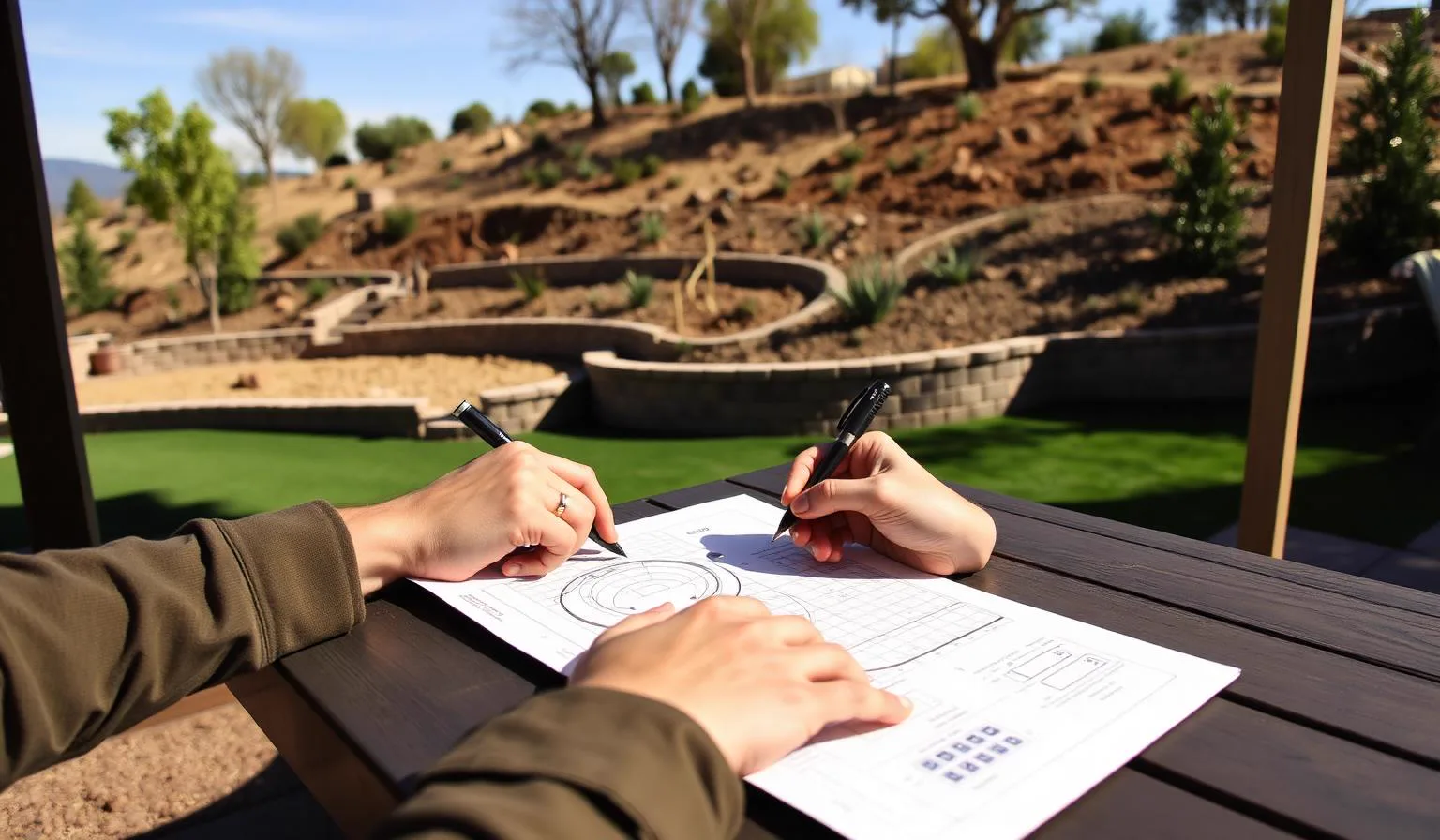
Custom Retaining Wall Design in Orangevale, CA
Walls That Match the Look of Your Yard
A wall is a piece of your yard, not just a slope holder. Custom design ties the wall into the planting, paving, and lighting.
No obligation. Licensed CA landscape contractor.
Clay-heavy ground on a slope does not stay put through an Orangevale winter. Every storm pushes a little harder against the fences, patios, and beds below it. A wall built for your specific soil and grade holds where a stock block kit will not.
We start every custom wall with the slope itself: how steep it is, what the soil does when it is wet, and where the water actually wants to go. That reading of the land is what the rest of the wall gets built around.
What Is the One-Third Depth Rule for Retaining Wall Design in Orangevale?
The one-third depth rule means a wall must be buried one-third of its total height underground. A 6-foot wall needs at least 2 feet below grade. That buried section holds the wall steady against soil pressure.
- Burying the base stops the wall from tipping forward under soil load.
- Clay soils in Orangevale push harder on walls, making this rule even more important.
- Skipping this rule is one of the top reasons walls fail early.
- Sacramento County inspectors check footing depth during permit inspections.
Sloped Lots Need More Than a Standard Wall
If your yard slopes hard or sits on a hillside, a basic block kit will not hold up. Orangevale soil moves more than people expect. Every winter rain pulls more dirt down the slope.
- Soil washing out after every storm, leaving roots and rocks exposed
- Garden beds slumping or splitting at the edge
- Fence posts leaning where the ground no longer supports them
- Cracks forming in patios sitting above or below a slope
- Water pooling at the bottom of the hill long after the rain stops
Custom design starts with a real site assessment. We walk your lot, measure the slope angle, and check how water moves across the ground. That visit tells us what kind of wall your yard actually needs, how deep the footing has to go, and where drainage must run.
The Right Material Makes Your Wall Last Longer
The material you pick shapes how your wall looks, how long it holds, and how much you spend. Orangevale weather plays a big role too. Hot, dry summers followed by wet winters cause stress on porous materials.
| Material | Best Use |
|---|---|
| Concrete block | Curved designs, budget builds, walls under 4 feet |
| Natural stone | Foothill-style looks that blend with native plants |
| Timber | Short-term garden borders in dry, well-drained spots |
| Poured concrete | Tall walls over 4 feet or heavy load areas |
Your wall height, soil type, and slope angle drive the final call. For finish ideas that tie wall caps to your patio and paths, see this paver pattern guide.
Permits and Site Prep Come Before the First Block
Sacramento County requires a permit for any wall over 3 feet, and any wall holding back a driveway, pool, or structure needs one regardless of height. We handle that process. Before we break ground, we survey the slope and test the soil, draft stamped plans showing footing depth and drainage, and call in utility marking so gas, water, and power lines are flagged. Old fencing and roots along the wall path come out, then we cut the base trench to the depth the one-third rule requires.
The Custom Design and Build Process
Every strong wall starts with a clear plan. We walk your property, measure the slope, and check the soil before any design work begins.
- Step 1
Site visit and measurement
We measure slope angle, wall length, and check soil conditions across your yard.
- Step 2
Custom design layout
Our designer drafts a plan showing wall height, footing depth, drainage outlets, and material choice.
- Step 3
Excavation to spec
Crews dig down to the depth set by the one-third rule, so the base sits well below grade.
- Step 4
Drainage install
We place gravel backfill and perforated pipe behind the wall to move water away from the structure.
- Step 5
Wall construction in courses
Blocks, stone, or concrete go in layer by layer, and we check level at every course.
Clay subsoil across Orangevale holds water for weeks after a storm. We add extra drainage gravel on local jobs to break up that pressure before it cracks your wall.
A Finished Wall Must Pass Inspection and Load Tests
Sacramento County inspectors usually schedule the final check within a few business days. They are looking at footing depth against the one-third rule, the batter angle leaning back into the slope, working drainage outlets, solid backfill, and clean alignment across every course. Once it passes, we walk you through the finished wall and pour water at the top so you can watch the drainage work in real time, with no pooling at the base.
A Little Yearly Care Goes a Long Way
A custom wall built right can stand for 50 years or more with a few hours of attention each year.
- Fall cleanup before the rains. Clear leaves, mulch, and debris from every drainage outlet at the base of your wall.
- Spring face inspection. Walk the wall and look for new cracks, bulging blocks, or sections that lean forward.
- Root control. Trim back tree roots growing near the wall base. Roots lift footings and crack lower courses over time.
- Watch the load. Avoid stacking heavy planters, soil piles, or firewood right against the wall face.
Back to Retaining Wall Installation services.
Frequently Asked Questions
All Retaining Wall Installation Services in Orangevale
Protect Your Slope Before the Next Storm
We design and build walls sized for your soil and grade.
Mon–Fri, 7am–5pm. Licensed CA landscape contractor.