
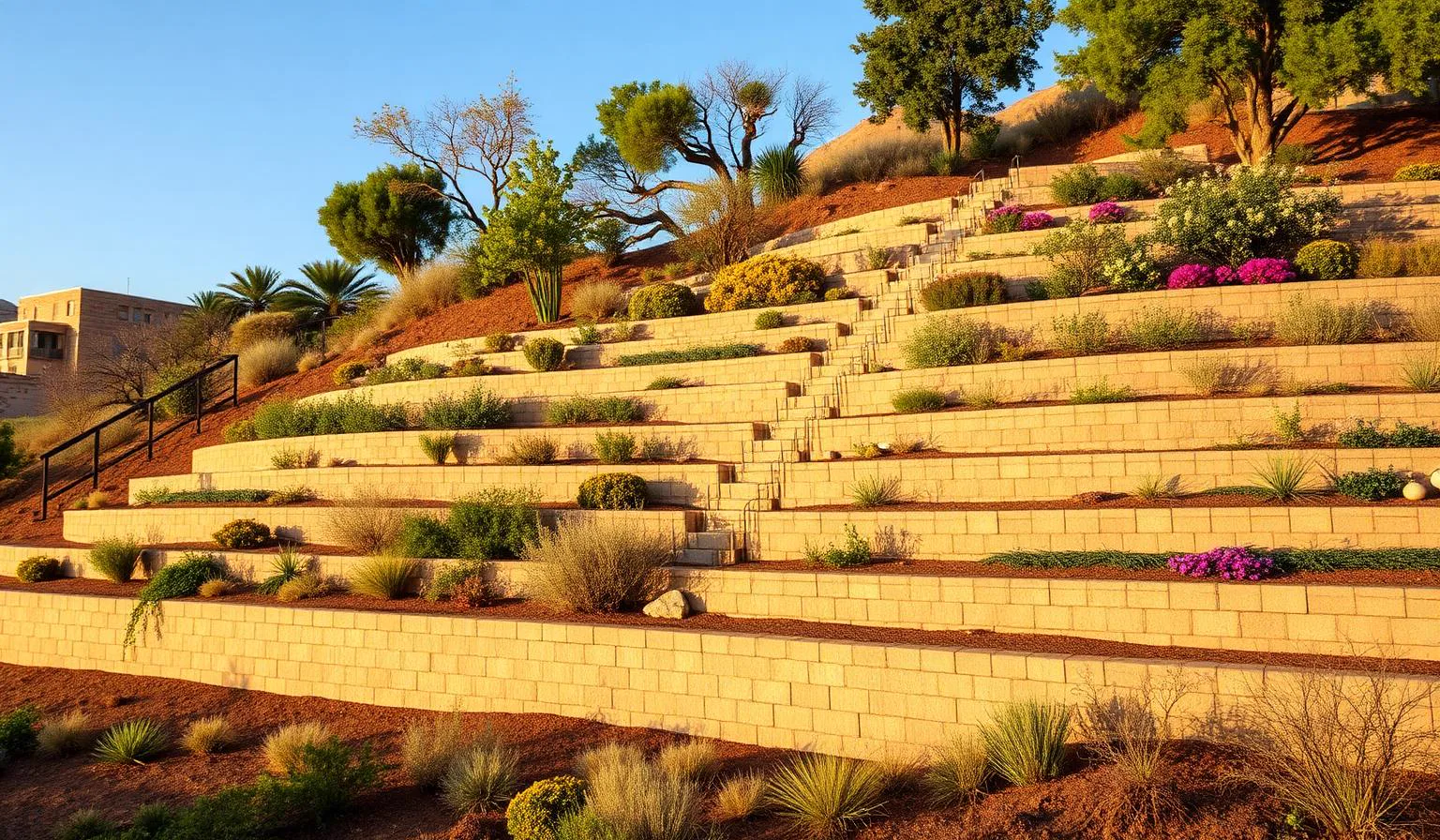
Terraced Hillside Wall Systems in Orangevale, CA
Turn a Useless Slope Into Usable Yard
A series of short walls beats one tall wall on most hills. Terraces are easier to build, easier to plant, and easier to enjoy.
No obligation. Licensed CA landscape contractor.
Concrete blocks, natural stone, and timber each work for terraced systems. The best choice depends on slope steepness, soil type, and budget. Concrete blocks offer the longest life and strongest hold on steep grades.
- Concrete blocks resist moisture, pests, and clay soil movement
- Natural stone blends with the foothill landscape
- Timber costs less upfront but breaks down faster
- All materials need proper drainage to prevent pressure buildup
- A local landscaper matches material to slope angle and soil
Steep Slopes Cause Real Erosion and Land Loss
- Active erosion near foundations or fence lines
- Slope angle decides how many terraces you need
- Cracks, leaning plants, and creeping flower beds signal shifting soil
- Raw slopes turn rain into runoff that strips topsoil
Choosing the Right Terraced System
| Material | Expected Life Span | Best For |
|---|---|---|
| Concrete blocks | 30 to 50 years | Steep slopes, heavy clay soil |
| Natural stone | 25 to 50 years | Garden terraces, visual appeal |
| Timber | 10 to 20 years | Light slopes, lower budgets |
See more on terracing and berm design at UC ANR's terracing and berm article.
Permits and Site Prep
- Clear the slope of loose vegetation and debris
- Open at least six feet of equipment access to the slope
- Discuss the drainage plan before any block goes down
How a Terraced Wall System Gets Built
- Crews mark terrace layout on the slope
- Excavation begins at the lowest wall location
- Trench bottom compacted with a plate compactor
- First course placed perfectly level
- Wall built course by course with geogrid where required
- Drainage pipe and gravel backfill behind every wall
Crews always build from the bottom up so each level stabilizes before the next.
Checking the Quality of Your New Walls
- Walk each terrace and check for gaps or leaning sections
- Test drainage outlets after the first rain
- Confirm gravel backfill and perforated pipe behind each wall
- Verify the base sits below grade on compacted soil
- Request final permit inspection sign-off if applicable
Protecting Your Terraced Walls From Failure
- Clear weep holes and drains before winter
- Plant trees at least 10 feet from any wall face
- Inspect walls every spring for shifted blocks
- Avoid heavy loads, vehicles, or large planters near edges
Frequently Asked Questions
All Retaining Wall Installation Services in Orangevale
Concrete Block Retaining WallsEngineered Retaining WallsNatural Stone Retaining WallsBoulder & Natural Rock WallsTimber Retaining WallsGravity Wall ConstructionReinforced Retaining WallsSoil Stabilization SystemsErosion Control WallsRetaining Wall DrainageRetaining Wall RepairRetaining Wall ReplacementCustom Retaining Wall DesignMasonry Wall ConstructionGarden WallsPlanter Walls
Back to Retaining Wall Installation in Orangevale, CATurn Your Steep Slope Into Flat, Usable Space
We design and build terraced walls sized for your yard and budget.
Mon–Fri, 7am–5pm. Licensed CA landscape contractor.