
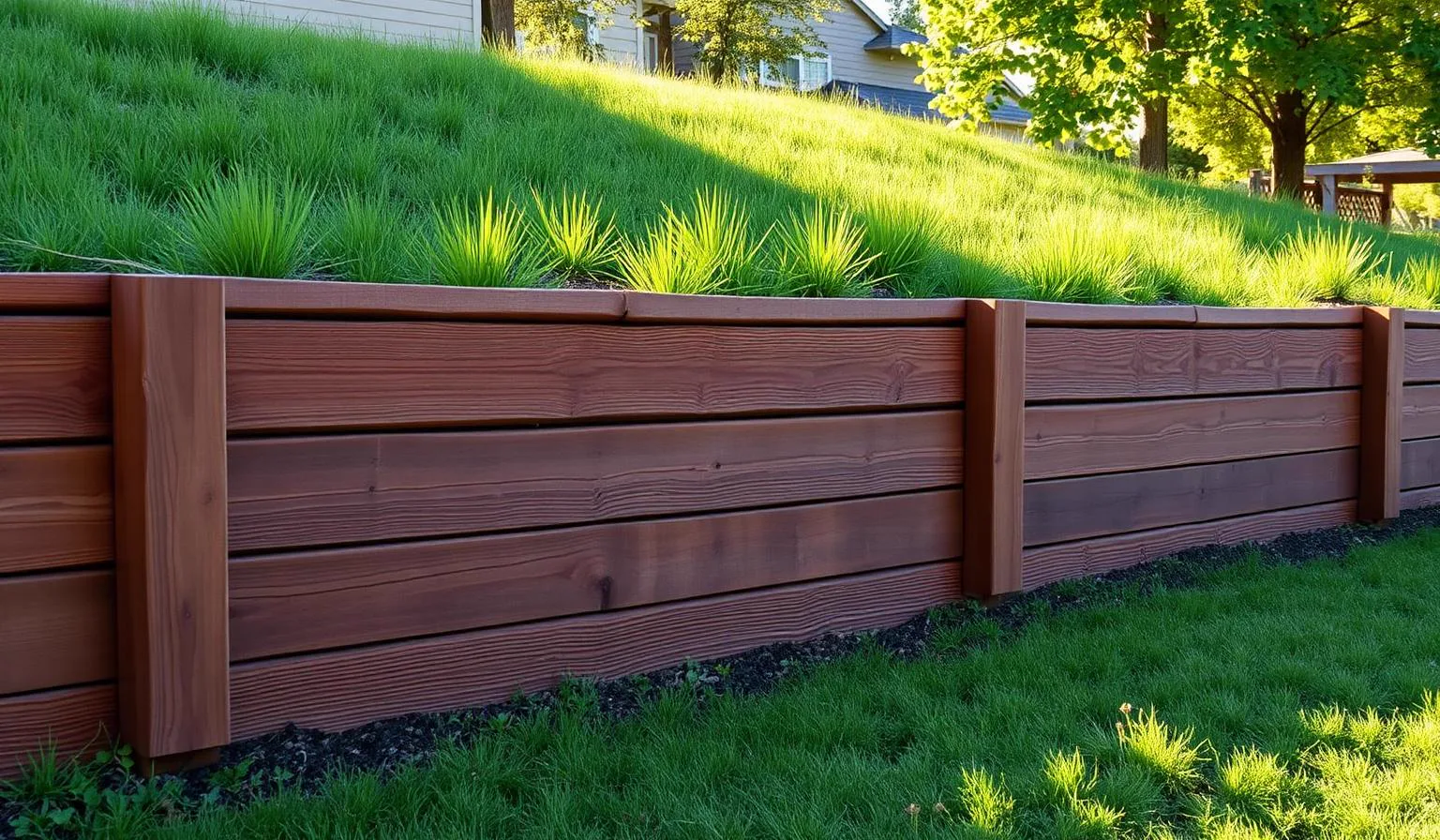
retaining wall lifespan by material in Orangevale, CA
How Long Does a Retaining Wall Actually Last?
The material you choose has more to do with how long a wall holds up than almost anything else. Here's how the common options compare for an Orangevale yard.
No obligation. Licensed CA landscape contractor.
Retaining Wall Lifespan in Orangevale: The Quick Answer
The material a wall is built from is one of the biggest factors in how long it lasts. Treated wood walls last roughly a decade when the treatment is kept up, and as little as 3 to 5 years without it. Concrete and block wall systems last much longer than wood. But material is not the whole story. How well a wall is drained and how deep its footing goes matter just as much as what it is built from. A great material on a bad footing still fails early.
How Long Treated Wood Actually Lasts
Wood is the shortest-lived common wall material, and the numbers behind that come from an industry comparison of timber and concrete block retaining walls. According to that source, a treated timber wall lasts a little over a decade when it is properly treated. Without upkeep, the same source puts the lifespan at only about 3 to 5 years. That is a wide gap, and it comes down to one thing: the chemical treatment.
Timber needs regular chemical pressure-treatment to reach even that longer lifespan. Without reapplying it, the treatment fades and the wood is left exposed. The same source describes timber as highly susceptible to rot, splintering, and warping. It also notes that wood is mainly decorative rather than load-bearing for tall walls. In other words, wood can frame a garden bed nicely, but it is not the material you want holding back a tall bank of soil for the long haul.
Why Concrete and Block Walls Outlast Wood
The same manufacturer source says concrete and block wall systems outlast timber by a wide margin. It does not give a specific number of years for concrete, so we will not invent one here. The honest takeaway is comparative: block systems last much longer than wood, and the gap is large.
The manufacturer also describes these systems as needing very little upkeep by comparison, and as installing quickly without mortar. Those are the manufacturer's claims, and they line up with what we see in the field. A block wall does not rot, does not splinter, and does not need a chemical treatment reapplied to keep its strength. Once it is built on a proper footing with proper drainage, it mostly just stands there doing its job.
What This Comparison Doesn't Tell You
It is worth being upfront about where these numbers come from. The comparison above is published by Unilock, a company that makes and sells concrete block wall systems. That does not make the figures wrong, but it does mean you should read them as one source's figures, not a universal standard. A manufacturer comparing its own product to a competing material has an obvious reason to frame things favorably.
The bigger point the comparison cannot capture is this: the real-world lifespan of any wall depends heavily on how well it is built. A block wall with no drainage behind it can fail sooner than a wood wall that was built carefully. Material sets the ceiling. Workmanship decides how close a wall gets to it.
What Actually Shortens a Retaining Wall's Life in Orangevale
In Orangevale, the things that kill walls early are usually not the material at all. Poor drainage behind a wall is the biggest one. Water that cannot escape builds up pressure behind the wall, and that pressure pushes the wall out of place over time. Our retaining wall drainage guide explains what a proper drain system includes and why it matters so much here.
The footing is the second big factor. A footing that is not deep enough for the wall's height and soil type lets the wall shift or lean as the ground moves. We cover that in detail in our retaining wall footing depth guide. The third factor is the soil itself. Orangevale's clay soil expands and contracts with moisture, which stresses a wall's footing and backfill more than sandier soil does. That seasonal movement is why walls here punish shortcuts that might go unnoticed in other ground.
Comparing the Options for Your Orangevale Yard
So which material makes sense for your yard? It depends on the wall and on you. A short garden wall on a tight budget can still make sense in wood, as long as you are realistic about the upkeep it needs to reach even a decade of life. If the wall is short, decorative, and easy to reach, reapplying treatment is a manageable job.
Most homeowners who want a wall they will not have to think about again lean toward block or engineered systems. The upfront commitment is higher, but the wall asks very little of you after that. The right choice comes down to three things: how tall the wall needs to be, what your budget allows, and how much upkeep you honestly want to do. Taller walls and walls holding back slopes or driveways push the answer toward block almost every time.
Choosing a Retaining Wall Built to Last in Orangevale
Whatever material you pick, the wall only reaches its full lifespan if it is built right for Orangevale's soil. That means a footing sized for the wall and the ground under it, drainage that moves water away instead of letting it build up, and backfill placed the right way. Our retaining wall installation in Orangevale page walks through how we build every wall from the ground up.
If you are weighing wood against block for a wall on your property, we are happy to look at the site and talk through the tradeoffs in plain terms. Call McGuire Earth Works Inc. at (916) 404-0944 for a free estimate on a retaining wall built for the long run.
All Retaining Wall Installation Services in Orangevale
Get a Wall Built for the Long Run
McGuire Earth Works Inc. builds retaining walls in Orangevale with real footings and real drainage. Call (916) 404-0944 for a free estimate.
Mon–Fri, 7am–5pm. Licensed CA landscape contractor.