
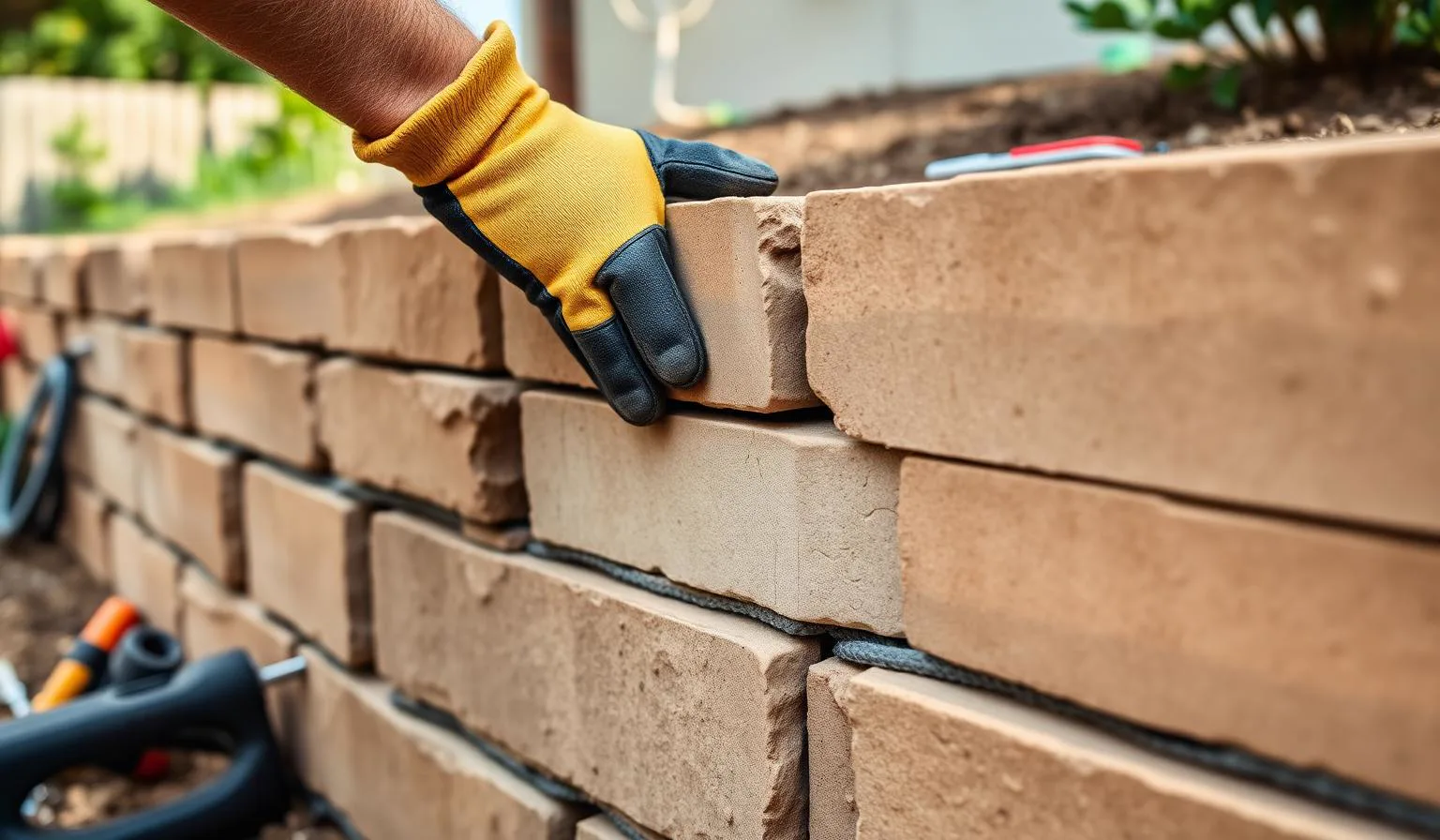
retaining wall drainage in Orangevale, CA
Walls Do Not Fail From Weight. They Fail From Water.
A retaining wall holds back soil. What breaks it is the water trapped in that soil. Here is how drainage behind a wall works, and why it matters even more on Orangevale clay.
No obligation. Licensed CA landscape contractor.
Why Orangevale Clay Soil Makes Wall Drainage a Must
Orangevale sits on clay-loam soil. Clay holds water instead of letting it pass through. When rain soaks the ground behind a wall, that water has nowhere to go, and wet soil gets much heavier than dry soil. The wall was built to hold back soil, not a tank of water. This is the single most common reason a wall leans, cracks, or bulges a few years after it goes in. That is why we plan the drain before anything else on every retaining wall installation job we take on.
The Three Parts of a Working Wall Drain
A wall drain is not one thing. It is three things working together.
- Drainage rock placed behind the wall and inside the block cores, so water has an easy path down instead of pressing on the wall
- A perforated drain pipe at the base, set low enough to catch the water the rock delivers
- A barrier that keeps fine soil from washing into the rock and clogging it over time
Allan Block, a wall system manufacturer, keeps a clear guide to water management behind a retaining wall. It calls for drainage rock extending at least 12 inches behind the block, and a drain at the base for walls that are reinforced, taller than 4 feet, or carrying a slope above them.
Where the Water Has to Go
A drain pipe that fills up and stops is not a drain. The pipe has to run downhill to a spot where water can leave, either daylighting at a lower point on the lot or tying into a storm drain line. On flat Orangevale lots this is the part that takes real planning. We walk the lot and find the low point before we set a single block, because once the wall is built, changing where the water exits means taking it apart.
Signs an Orangevale Retaining Wall Is Draining Badly
- The wall leans out at the top, even slightly
- Blocks near the middle bulge forward while the ends stay put
- White chalky staining on the face, which is minerals carried out by water
- Soggy ground or standing water at the base days after rain
- Soil washing out through the joints
One of these on its own may be nothing. Two or three together usually means water is sitting behind the wall.
Drainage and Wall Height in Orangevale
Height changes the rules. A short garden wall holding back a foot of soil carries very little water pressure. Once a wall passes 4 feet measured from the top of the footing, Sacramento County treats it differently, and so should the drainage plan. Taller walls hold back more soil, which means more water, which means the drain has to be sized and placed with more care.
Build the Drain Once, Build It Right
The drainage is buried. Nobody sees it, and it adds a day to the job. That is exactly why it gets skipped, and exactly why so many walls in the Sacramento Valley need rebuilding. We build the drain as part of the wall, not as an extra. Call McGuire Earth Works for a free estimate and we will tell you what your lot actually needs.
Frequently Asked Questions
All Retaining Wall Installation Services in Orangevale
Build the Drain Right the First Time
McGuire Earth Works Inc. has built retaining walls in Orangevale since 1980. Call (916) 404-0944 for a free estimate on a wall that drains the way it should.
Mon–Fri, 7am–5pm. Licensed CA landscape contractor.