
Best Wood for a Retaining Wall in Orangevale, CA
Which Wood Holds Up Best in a Retaining Wall?
Wet clay soil is hard on wood. The right lumber, rated for ground contact, decides how long a wall stays straight.
No obligation. Licensed CA landscape contractor.
What Is the Best Wood for a Retaining Wall in Orangevale?
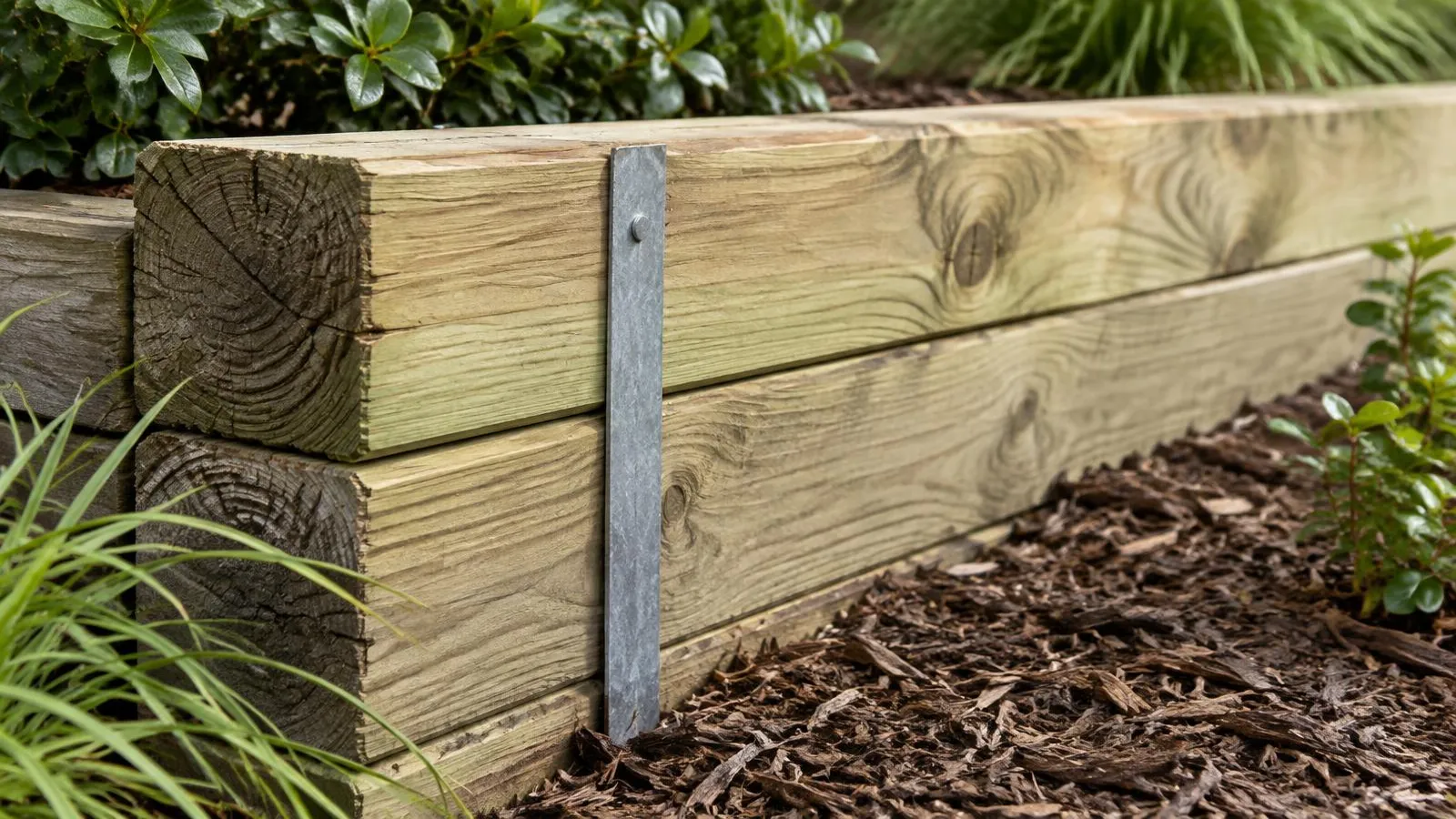
Pressure-treated lumber rated for ground contact is the best wood for most Orangevale retaining walls. Pine and Douglas fir are the usual treated choices. Redwood resists rot on its own but costs more. Untreated softwood is the wrong pick, because wet clay soil breaks it down fast.
How the Main Wood Choices Compare
Every wood below can build a wall. They differ in how they fight rot, how they look, and what they cost to start with.
| Wood | How It Fights Rot | Best For |
|---|---|---|
| Pressure-treated pine | Preservative is pushed deep into the wood | Low walls and garden terraces |
| Pressure-treated Douglas fir | Treated for ground contact, dense and strong | Walls that need heavier, stiffer timbers |
| Redwood | Resists decay naturally, with no treatment | Walls people see up close, when a higher cost is fine |
| Untreated softwood | Little protection against wet soil | Not for retaining walls |
Whichever wood you pick, the wall still needs deadman anchors and drainage. Wood choice helps, but it cannot fix a wall that traps water. Our page on timber retaining walls in Orangevale shows how we build the whole wall.
Why Ground Contact Rating Matters
A retaining wall sits against soil on one side all year. That is the hardest place for wood to live. Lumber made for decks and fences is treated for lighter use. Lumber rated for ground contact carries more preservative, and it is the grade that belongs against dirt.
Some woods fight decay without treatment. The American Wood Council lists redwood and cedar as naturally durable species. It also points to pressure-treated wood when durability is a concern. For most Orangevale walls, treated lumber gives the best balance of strength and starting cost, while redwood suits visible walls where looks come first.
What Orangevale Clay Does to Wood
Orangevale's clay holds water through the wet months. Wood that stays damp for weeks is the wood that rots first, no matter what species it is. In summer the same clay dries and shrinks, then swells again with the first big rain. That cycle pushes on the wall from behind every year.
Gravel and a drain pipe behind the wall let water leave instead of sitting against the timbers. We plan that drainage first, then match the wood to it. A well-drained wall in treated pine can outlast a poorly drained wall in a better wood.
What to Check on the Lumber Before It Goes in the Ground
- A tag or stamp on the end of each timber showing a ground contact rating
- Straight timbers with no deep splits or twists
- Timbers thick enough for the height of the wall
- Galvanized spikes and rebar, so the hardware does not rust away
- The grade and species written on your estimate
If a supplier cannot show the ground contact rating, treat that lumber as the wrong choice for a wall.
Hardware matters as much as the lumber. Plain steel spikes rust in damp soil, and a rusted spike lets the rows slide apart long before the wood gives out. Galvanized hardware resists that rust, so we use it on every timber build. When you compare bids, ask each contractor what spikes, rebar, and drainage they plan to use, and get the answer in writing.
Is Treated Wood Safe Next to a Garden Bed?
Many walls sit beside planting beds, so this question comes up often. University extension guidance says creosote-treated railroad ties are not suited to food gardens. It also says CCA-treated wood should not be used for food-crop beds.
- Ask your supplier what preservative is in the lumber
- Keep food crops out of beds built from old railroad ties
- Extension sources suggest a heavy plastic liner between treated wood and growing soil
- Tell us about any vegetable beds when we walk the yard
We plan the wall and the planting beds together, so the wood you choose fits how you use the yard.
How to Choose Wood for Your Wall
- Measure how tall the wall needs to be.
- Note anything that sits above it, such as a driveway, a patio, or a fence.
- Decide if wood is the right material at that height, or if block or stone fits better.
- Pick treated pine or Douglas fir for most walls, or redwood for a wall people will see up close.
- Plan the drainage and the anchors before you order a single timber.
Wood works best on short walls. When a wall gets tall or carries a load, we move to engineered block or stone through our retaining wall installation in Orangevale. We tell you when that is the safer call.
What Goes Wrong When the Wrong Wood Is Used
- Soft, untreated timbers rot at the bottom row first
- Lumber meant for fences cannot handle constant wet soil
- Thin timbers bow out under the weight of wet clay
- Rusting hardware lets the rows slide apart
These problems rarely show up in the first year. They show up after a few wet winters, when fixing them means taking the wall apart. Choosing the right wood on day one is the cheapest fix there is.
All Retaining Wall Installation Services in Orangevale
Pick the Right Wood Before You Buy
McGuire Earth Works Inc. matches the lumber to your wall's height, soil, and drainage. Call (916) 404-0944 for a free estimate.
Mon–Fri, 7am–5pm. Licensed CA landscape contractor.