
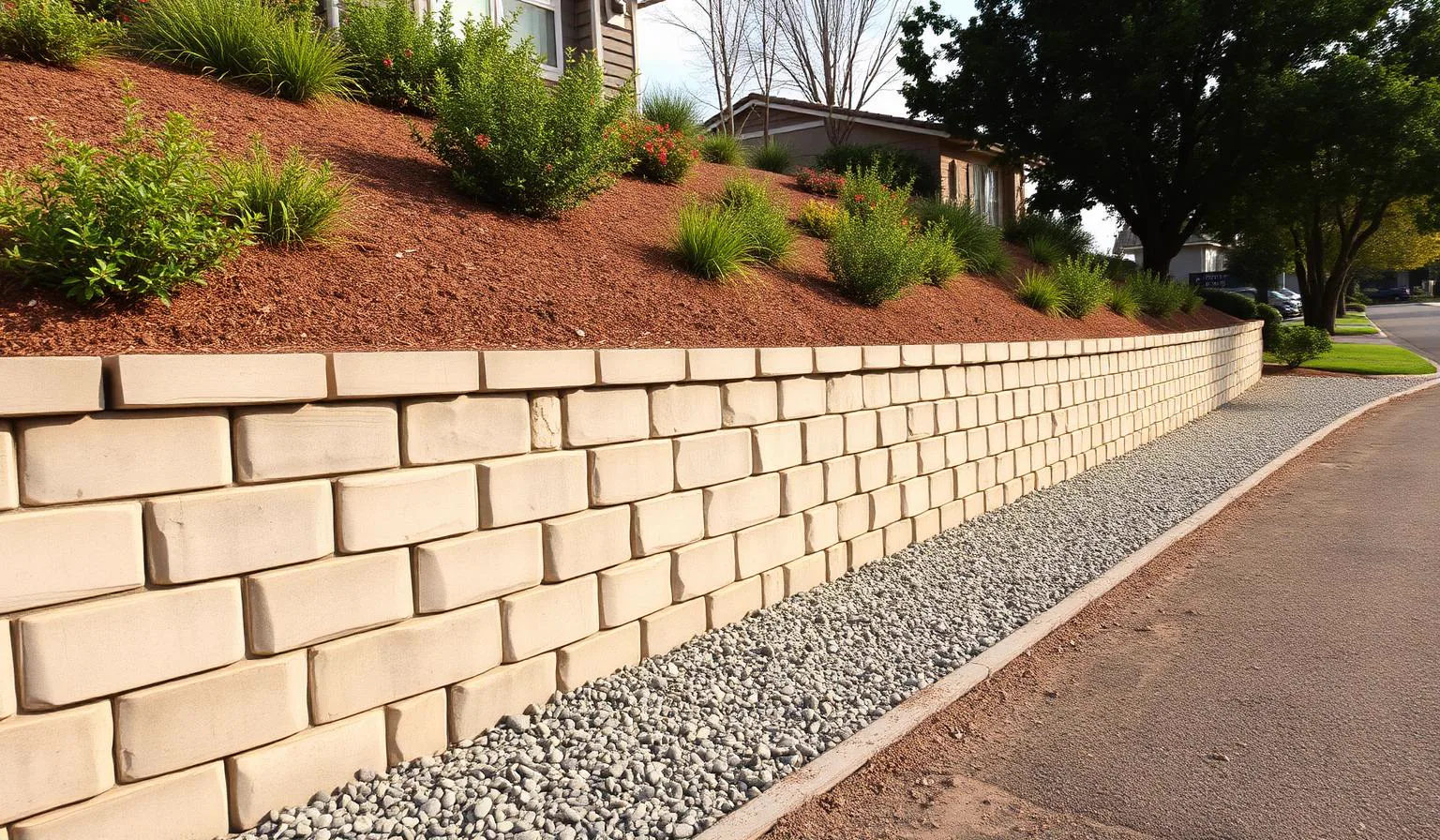
Erosion Control Walls in Orangevale, CA
Walls That Stop Soil From Washing Away
An erosion wall does two jobs. It holds the soil and it routes the water.
No obligation. Licensed CA landscape contractor.
Sloped yards in Orangevale lose soil every time a big storm rolls through. That bare patch near your fence or the rut cutting across your lawn gets worse each season. Erosion control walls give your property a permanent fix.
This page breaks down how these walls work, which types fit different yards, and what the build process looks like from day one to final walkthrough.
You will learn what permits you need, how to pick the right materials, and how to keep your wall strong for decades.
What Is the Difference Between a Retaining Wall and an Erosion Control Wall?
A retaining wall holds back a large mass of soil or a steep slope. An erosion control wall stops water from washing soil away. Both protect your property, but they solve different problems.
- Retaining walls bear heavy lateral soil pressure from slopes or terraces.
- Erosion control walls redirect or slow water flow across the ground surface.
- Orangevale yards with gentle slopes often need erosion control walls, not full retaining walls.
- Some properties need both wall types to fully protect the land.
Orangevale Soil and Slopes Create Real Erosion Problems
You do not need a pro to spot erosion. The signs show up in plain sight if you know where to look. Most Orangevale homeowners notice the damage after a few back-to-back winter storms.
- Bare soil on a slope where grass or ground cover has washed away
- Small ruts and channels cutting across the hillside after rain
- Soil piling up against fences, driveways, or foundation walls
- Tree roots exposed where topsoil used to cover them
- Muddy water flowing off your property and carrying topsoil with it
Orangevale sits on clay-heavy soils that crack during dry summer months. When winter storms hit those cracked surfaces, water runs off fast instead of soaking in. Catching the signs early gives you time to act before the damage spreads to your foundation, driveway, or neighbor's lot.
The Right Wall Type Makes All the Difference
The material you pick affects how long the wall lasts, how it looks, and how much you spend. Each type handles water and soil pressure in its own way.
| Wall Type | Best For |
|---|---|
| Gabion walls | Heavy water flow near creeks or drainage paths |
| Segmental block walls | Most residential slopes with a clean, finished look |
| Timber walls | Budget projects on gentle slopes with lighter erosion |
| Boulder walls | Natural landscapes where the wall blends into the yard |
| Cantilever concrete walls | Tall or steep slopes that need engineered strength |
Gabion walls use wire cages filled with rock so water passes right through. They fit lots near seasonal creeks. Segmental block is the most common pick for residential yards. Timber costs less upfront but breaks down faster in wet Orangevale winters. For more on hillside planting and stabilization, see this UC Master Gardeners hillside guide.
Permits and Site Prep Come First
Sacramento County requires a grading permit for most erosion control wall projects, especially walls over three feet tall. Permit timelines can run two to four weeks. We handle the paperwork so you do not chase down county offices.
- Your landscaper measures slope grade and tests soil to set footing depth and drainage volume.
- Call 811 to mark gas, water, electric, and cable lines before any digging.
- Schedule the build for late spring or early fall when ground is firm and weather is dry.
- Clear at least six feet of equipment access so a skid steer can reach the work area.
- Move patio furniture, planters, and yard decor out of the staging zone before crew day.
A Pro Builds the Wall Step by Step
Once permits are in hand, the real work begins. Most residential walls in Orangevale take two to five days to finish.
- Step 1
Clear and grade
Crew removes brush, loose soil, and old landscaping in the wall path, then cuts the slope to the right angle.
- Step 2
Install the drainage layer
Compacted gravel and perforated drain pipe go in first, wrapped in more gravel for free water flow.
- Step 3
Stack the wall in tight rows
Whether blocks, boulders, or gabions, every row starts at the bottom and gets leveled before the next.
- Step 4
Compact backfill in lifts
Soil behind the wall is packed in layers so air pockets cannot settle later.
- Step 5
Final inspection and cleanup
Sacramento County signs off on walls over four feet, and we restore lawn or beds disturbed during construction.
Check the Finished Wall Before You Sign Off
A quick walkthrough catches small problems before they grow into big repairs. Walk the full length of the wall and inspect each section closely.
- Every course should feel tight, level, and free of leaning or gaps
- Drain outlets should sit open and clear of soil or debris
- A hose test should send water through the system, not pool behind the wall
- Lawn, garden beds, or paths disturbed during work should be restored
- Sacramento County final inspection sign-off should be on file for walls over four feet
Simple Maintenance Keeps the Wall Strong for Decades
Your wall will protect your yard for thirty to fifty years with a little attention each year. The work is simple and takes very little effort.
- Fall drain cleanout. Walk the base every October and clear every outlet of leaves, dirt, and debris.
- Post-storm inspections. Look for cracks, shifted blocks, or wet spots behind the wall after heavy rain.
- Fill voids quickly. A bag of gravel and ten minutes stops a small gap from becoming a big repair.
- Keep tree roots away. Plant nothing with large root systems within two feet of the wall face.
- Watch the Gold River corridor. Properties near concentrated storm runoff need drain checks twice each fall.
Back to Retaining Wall Installation services.
Frequently Asked Questions
All Retaining Wall Installation Services in Orangevale
Keep Your Yard Intact for Good
We build erosion control walls that hold your soil where it belongs.
Mon–Fri, 7am–5pm. Licensed CA landscape contractor.