
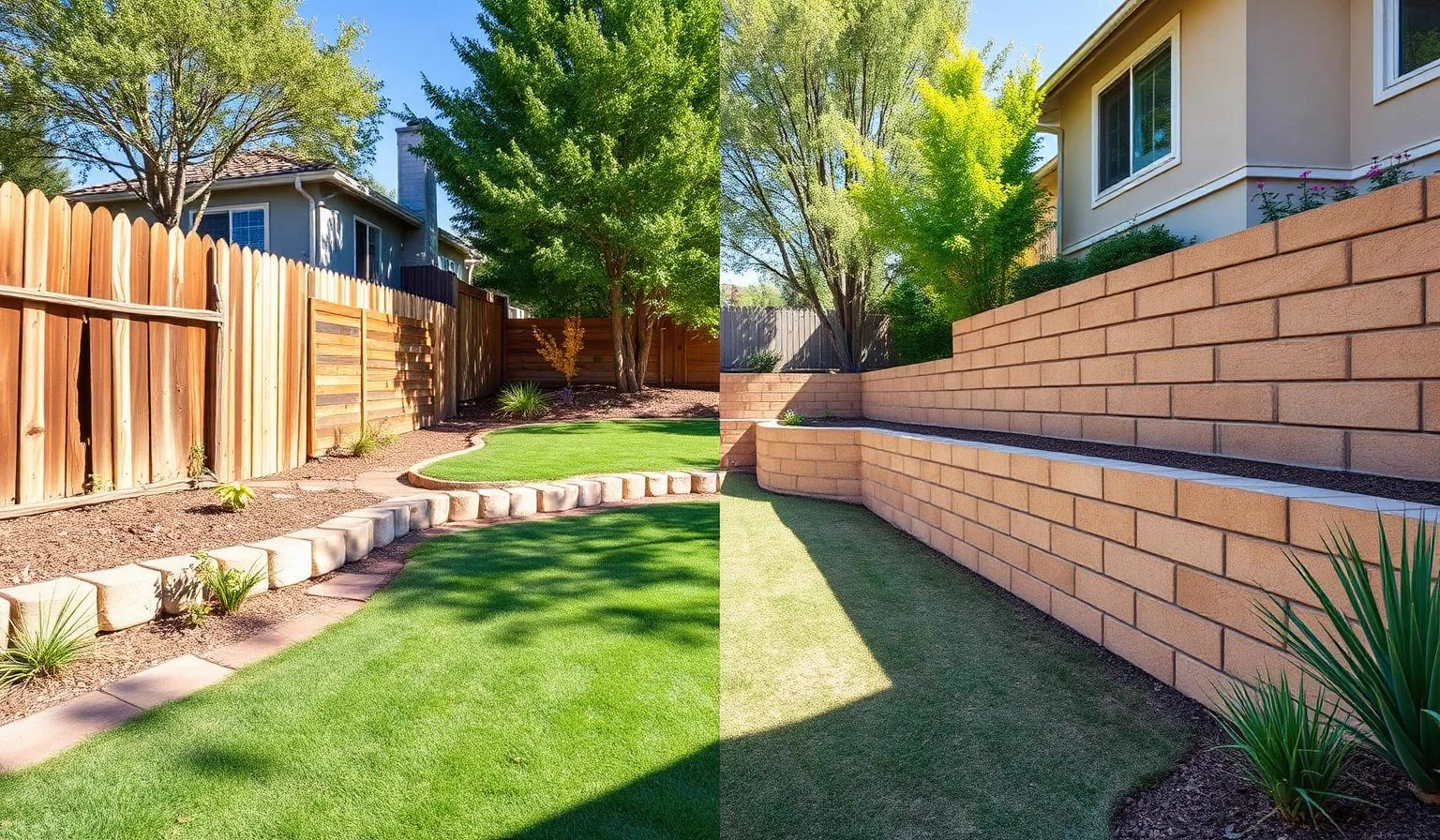
Retaining Wall Replacement in Orangevale, CA
When Repair Is Not Enough
Some walls are past saving. Replacing them with the right base and drainage gets it right for the long run.
No obligation. Licensed CA landscape contractor.
The one-third rule means the wall must be buried one foot for every three feet of visible height. The buried base resists soil pressure and stops the wall from tipping. We follow this on every replacement project.
- A wall three feet tall needs one foot buried in the ground
- Skipping this rule causes walls to lean or collapse within a few years
- Clay-heavy soils in Orangevale increase lateral pressure on the wall
- Taller walls often need extra reinforcement beyond the minimum
Clear Warning Signs Your Wall Needs Replacement
- Leaning or bulging blocks that signal deep structural failure
- Cracks wider than a quarter inch
- Water pooling near the base from a broken drainage system
- Soil spilling through gaps in the face
- A wall older than 20 years, especially timber
Timber walls show damage first: rot at the base, rusted spikes, and bowed boards. Concrete and stone walls last longer but still crack when drainage fails.
Repair vs Full Replacement
| Repair Makes Sense | Replacement Makes Sense |
|---|---|
| Damage under 20% of the wall | Lean, bulging, or cracks across most of the wall |
| Drainage system still works | Water pools or pushes through the base |
| Wall under 15 years old | Wall 20+ years old or built from timber |
| Blocks stay tight together | Soil spills through gaps or joints |
Older timber walls near the Citrus Heights border often need full replacement, not repair. Those walls were never built to hold up against decades of clay soil pressure.
Permits Keep Your Replacement Project Legal
- Site review: measure wall height and check soil
- Stamped drawings showing design, drainage, and reinforcement
- Permit pull through Sacramento County
- Staged inspections at base, mid-build, and final
- Final approval and closed permit on record
Walls taller than three feet almost always need a permit. Skipping it can trigger a tear-down order or kill a home sale during inspection. See CSLB licensing classifications.
Step-by-Step Replacement Process
- Day 1: demo and haul-off of the old wall
- Days 1-2: excavation and base prep, with compacted foundation
- Day 2: gravel drainage layer behind the wall
- Days 2-3: wall build, course by course with backfill in lifts
- Days 3-4: final grade, cleanup, and walkthrough
Most single-wall replacements finish in two to four days. Crews working the Fair Oaks Village corridor often hit oak roots and add root barriers so the new wall stays protected.
Confirm the Finished Wall Was Done Right
- Photos of the buried base showing depth and compaction
- Photos of the gravel drainage layer before backfill
- Copy of the final county permit approval
- Written workmanship warranty with clear terms
- Site plan showing finished grade and runoff direction
Run a hose at the top for five minutes. Water should flow clean through the drain outlets, not pool or seep through the face.
Maintenance Habits That Protect Your New Wall
- Clear drain outlets every fall before winter rain
- Keep heavy planters and vehicles off the top edge
- Trim oak and shrub roots near the wall yearly
- Walk the wall after every major storm
- Book a professional check every 3-5 years
Frequently Asked Questions
All Retaining Wall Installation Services in Orangevale
Get a Wall That Holds for Decades
We design, permit, and build your new wall start to finish.
Mon–Fri, 7am–5pm. Licensed CA landscape contractor.